

For Students
Resume Report & Recruiter Checks: Grade Your Resume Before You Apply
A written grade on your resume’s grammar and wording, plus nine specific checks recruiters actually look for — catch problems before a recruiter does.
Updated 22 Sept 2026
Short answer: Resume report gives you a grade plus written feedback on grammar and wording. Recruiter checks runs nine specific checks for the things recruiters actually look for in the first few seconds. Both are Pro-only, deliberately low-limit (2 a day each) since each produces a full written review, not a quick action.
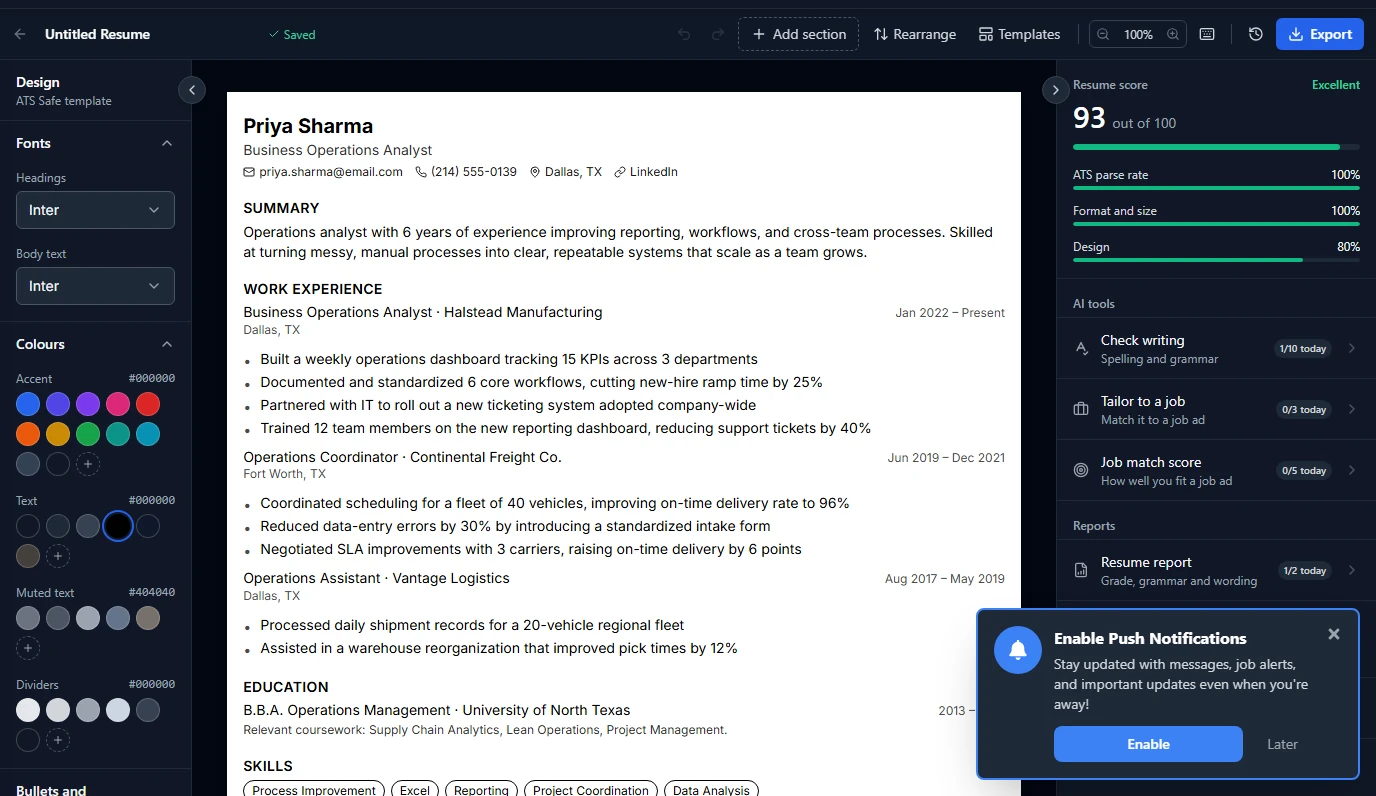
Resume report
A one-click, full read of your resume that grades it and calls out specific grammar and wording issues — more thorough than Check writing's spelling/grammar sweep, since it also comments on how things are phrased, not just whether they're spelled correctly. 2 times a day on Pro.
Recruiter checks
Nine specific things recruiters look for in the first few seconds of scanning a resume — consistent formatting, quantified achievements, no gaps left unexplained, and similar. Each check comes back pass or fail with a note on what's missing if it fails. 2 times a day on Pro.
🎯 Run Recruiter checks after you've finished editing, not while you're still filling sections in — most of its checks (consistent dates, quantified bullets throughout) only make sense once the resume is actually complete.
How these differ from the resume score
The resume score (always visible, no click needed) checks whether your resume will parse cleanly and looks properly formatted. Resume report and Recruiter checks go further into content quality — wording, grammar, and the specific signals a human recruiter scans for, not just whether software can read the file. See the complete guide for how this fits with the rest of the toolkit.
Common questions
Should I run both, or is one enough?
They check different things — Resume report focuses on writing quality, Recruiter checks on recruiter-specific signals. Running both after a full edit gives the most complete picture.
Why only 2 a day?
Both produce a full written review rather than a quick suggestion, so the limit is set low — in practice, running one after you've finished a real editing pass (not after every small change) is the right cadence.
Does a low grade mean I shouldn't apply?
No — treat it as a checklist of specific fixes, not a pass/fail gate. Fix what it flags, then apply.