


The Science Behind Building Better Habits
Every day, we make countless decisions—whether to wake up early, exercise, check our phones, eat healthy, or procrastinate on important tasks. While these choices may seem insignificant on their own, they gradually shape who we become. The truth is, our lives are largely a reflection of our habits.
Many people believe that achieving success requires extraordinary motivation or immense willpower. However, science tells us something different. Lasting change is less about motivation and more about building systems and habits that work consistently, even on days when motivation fades.
Understanding the science of habit formation can help us make positive behaviors automatic and break the cycle of bad ones.
What Are Habits?
Habits are behaviors that become automatic through repetition. They are the brain's way of conserving energy by turning frequently performed actions into routines that require minimal effort.
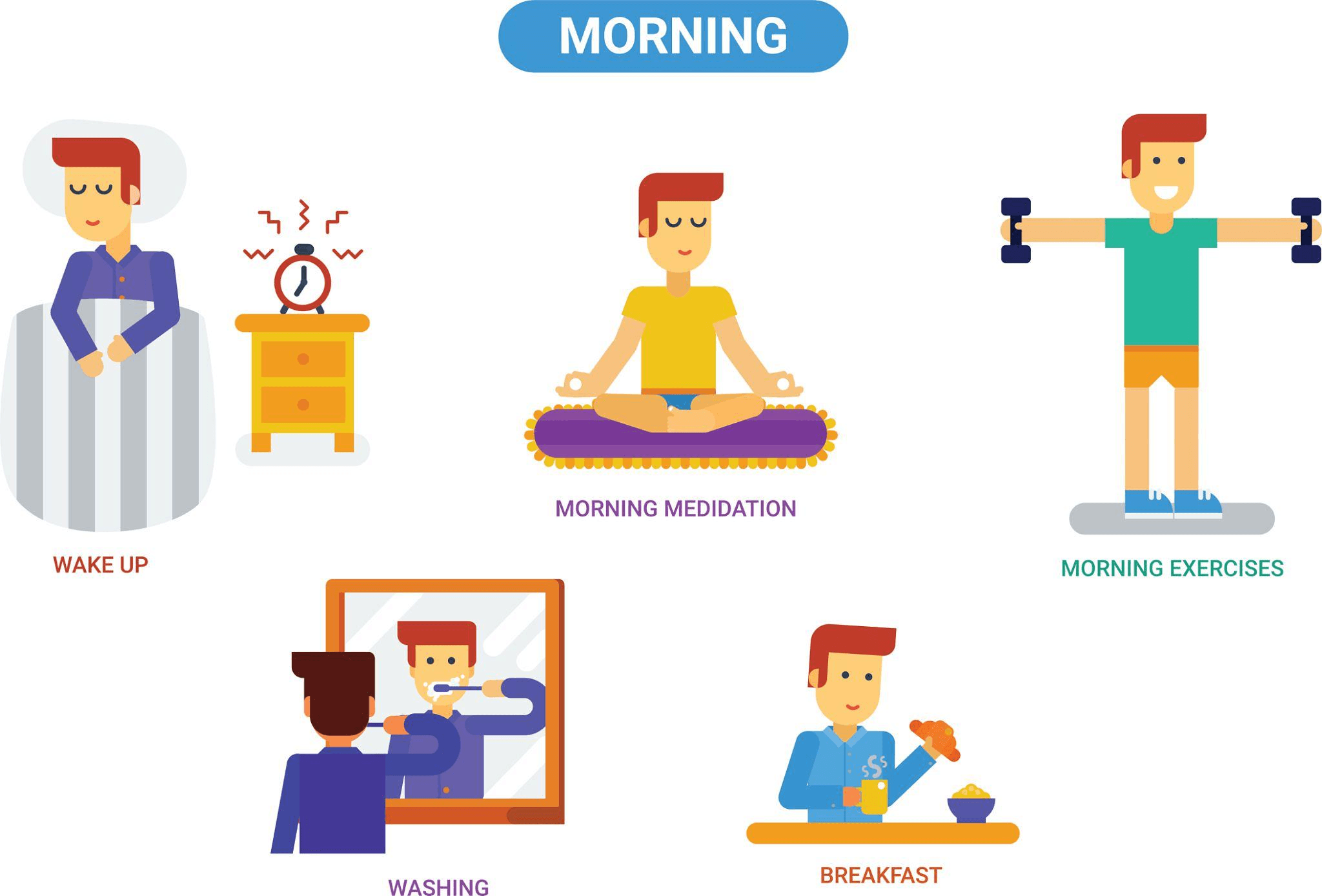
Think about brushing your teeth or locking your door before leaving home. You rarely have to consciously think about these actions—they've become second nature.
A large portion of our daily activities are habitual. This means that improving our habits can significantly impact our productivity, health, relationships, and overall happiness.
Why Habits Matter More Than Motivation
Motivation is temporary. It changes based on our mood, energy levels, and circumstances. Habits, on the other hand, provide consistency.
Imagine two people who want to become healthier:
- Person A waits until they feel motivated to work out.
- Person B exercises for just 15 minutes every morning as part of their routine.
After a few months, Person B is far more likely to achieve their goal—not because they were more motivated, but because they built a sustainable habit.
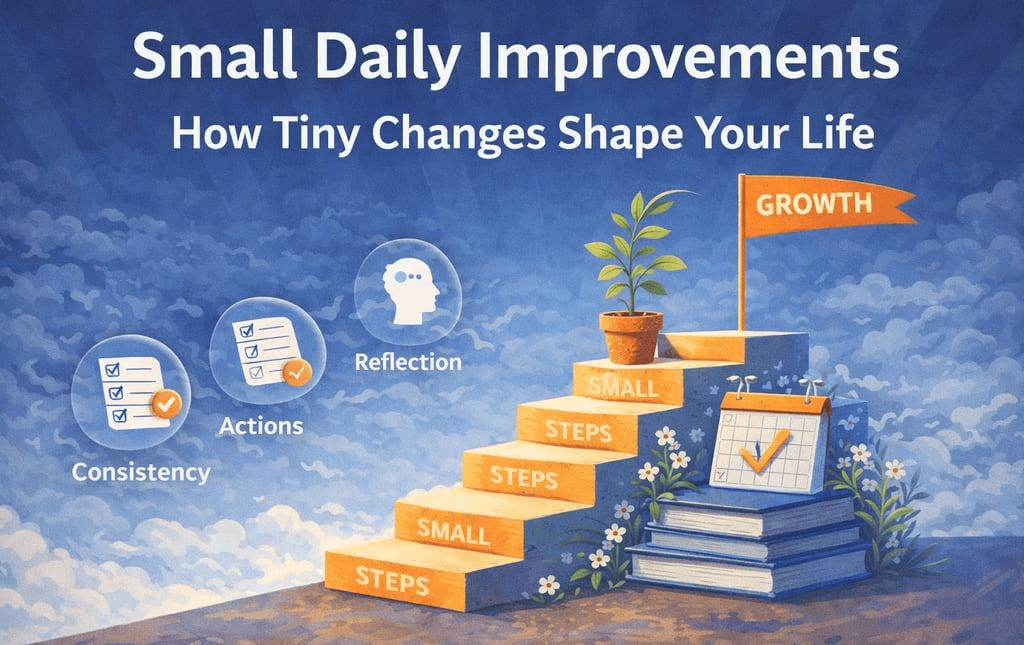
Success is rarely the result of one major decision. More often, it is the outcome of small actions repeated consistently over time.
The Science Behind Habit Formation
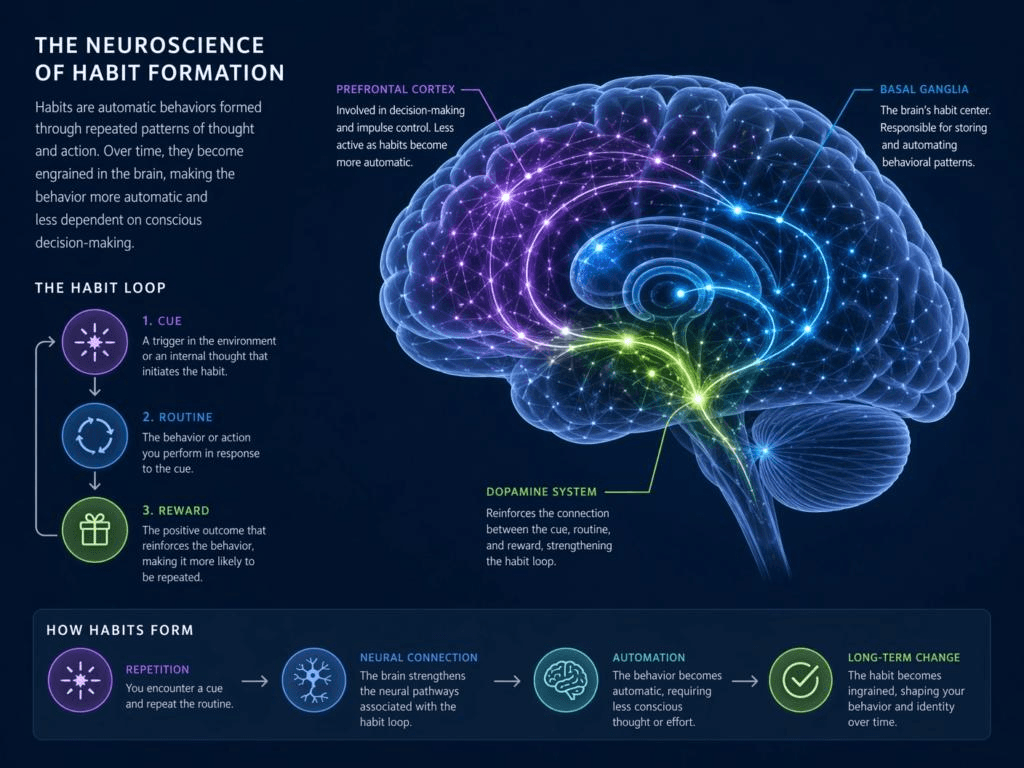
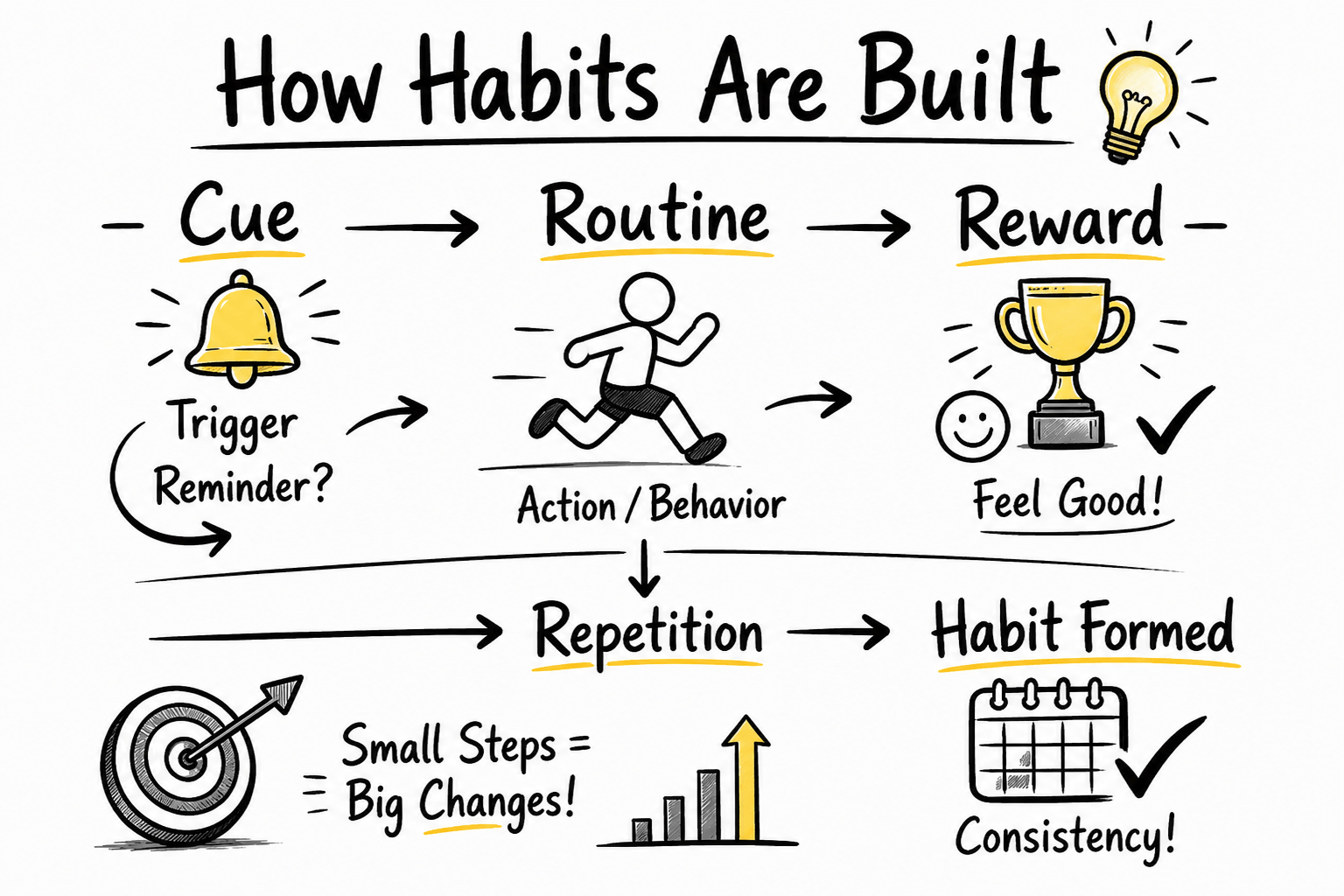
Habit formation is a fascinating process rooted in psychology and neuroscience. Our brains are designed to conserve energy by turning repeated actions into automatic behaviors. Every habit follows a simple cycle: a cue triggers a behavior, the behavior is performed, and a reward reinforces it. Over time, repeated exposure to this cycle strengthens the neural pathways associated with the habit, making it easier and more automatic. This is why habits such as brushing your teeth, checking your phone, or exercising regularly eventually require little conscious effort. Scientific research suggests that lasting habits are not built through motivation alone but through consistency, repetition, and small, manageable actions. By understanding how our brains respond to cues and rewards, we can intentionally develop positive habits that support our goals and create meaningful, long-term change in our lives.
How Your Brain Builds Habits
The brain is constantly trying to save energy. When you repeat a behavior regularly, your brain stores that routine in areas responsible for automatic actions.
At first, a new habit requires conscious effort. However, with repetition, the brain strengthens the neural pathways associated with that behavior, making it easier over time.
This is why:
- Driving becomes easier with practice.
- Exercising regularly eventually feels natural.
- Checking social media can become an automatic response.
Your brain doesn't distinguish between good and bad habits—it simply reinforces behaviors that are repeated and rewarded.
Why Most Habits Fail
Many people struggle to build good habits because they make them too difficult or rely solely on motivation.
Common mistakes include:
- Setting unrealistic goals.
- Trying to change multiple habits at once.
- Expecting immediate results.
- Ignoring environmental influences.
- Giving up after missing a day.
For example, deciding to read 50 pages every day when you've never read regularly is often unsustainable. Starting with just five pages is far more likely to become a lasting habit.
Small habits are easier to maintain and are more likely to grow into bigger achievements.
Habit Stacking: Build Habits Effortlessly
One of the most effective habit-building techniques is habit stacking.
The concept is simple:
Attach a new habit to an existing habit.
Examples include:
- After brushing your teeth, meditate for two minutes.
- After making coffee, write down your daily goals.
- After finishing lunch, take a short walk.
- After returning home, spend ten minutes learning something new.
Since existing habits are already automatic, they serve as reliable triggers for new behaviors.
The Two-Minute Rule
Starting is often the hardest part of building a habit.
The Two-Minute Rule suggests that every new habit should take less than two minutes to begin.
Examples:
- Want to exercise? Put on your workout shoes.
- Want to study? Open your notebook.
- Want to write? Write one sentence.
- Want to meditate? Sit quietly for two minutes.
The goal isn't to accomplish everything immediately—it's to make getting started easy.
Once you've started, continuing becomes much easier.
Design Your Environment for Success
Your environment influences your behavior more than you might realize.
Make Good Habits Easy
- Keep healthy snacks visible.
- Place books near your workspace.
- Prepare your workout clothes in advance.
- Keep a water bottle nearby.
Make Bad Habits Difficult
- Turn off unnecessary notifications.
- Keep distractions away from your desk.
- Limit easy access to social media.
- Remove temptations from your surroundings.
The easier a habit is to perform, the more likely it is to stick.
Track Your Progress
Tracking habits provides visual proof of consistency and can increase motivation.
Simple tracking methods include:
- Habit journals
- Daily checklists
- Calendar tracking
- Habit-tracking apps
One useful mindset to adopt is:
Never miss twice.
Missing one day won't ruin your progress. Missing several days in a row is what turns setbacks into failures.
Consistency always beats intensity.
Common Habit-Building Mistakes to Avoid
Avoid these common pitfalls:
- Waiting for motivation.
- Setting unrealistic expectations.
- Trying to change everything at once.
- Comparing your progress with others.
- Quitting after a setback.
- Ignoring your environment.
- Pursuing perfection instead of consistency.
Remember that habit formation is a gradual process. Progress is rarely linear.
A Simple 21-Day Habit Challenge
Week 1 – Start Small
- Drink more water.
- Read five pages daily.
- Walk for ten minutes.
Week 2 – Build Consistency
- Add habit stacking techniques.
- Track your progress.
- Remove distractions.
Week 3 – Strengthen the Routine
- Increase the duration slightly.
- Reflect on your improvements.
- Reward yourself for consistency.
The objective isn't perfection—it's creating sustainable routines that fit naturally into your lifestyle.

Final Thoughts
The science of habit formation teaches us an important lesson: lasting change doesn't happen overnight. It is built through small, intentional actions repeated consistently over time.
You don't need extraordinary discipline or endless motivation to improve your life. You simply need systems that make positive behaviors easier to repeat.
Every great achievement begins with a small habit. Whether your goal is to become healthier, more productive, or more confident, the path forward starts with the choices you make today.
Build one good habit. Repeat it tomorrow. Then repeat it again.