

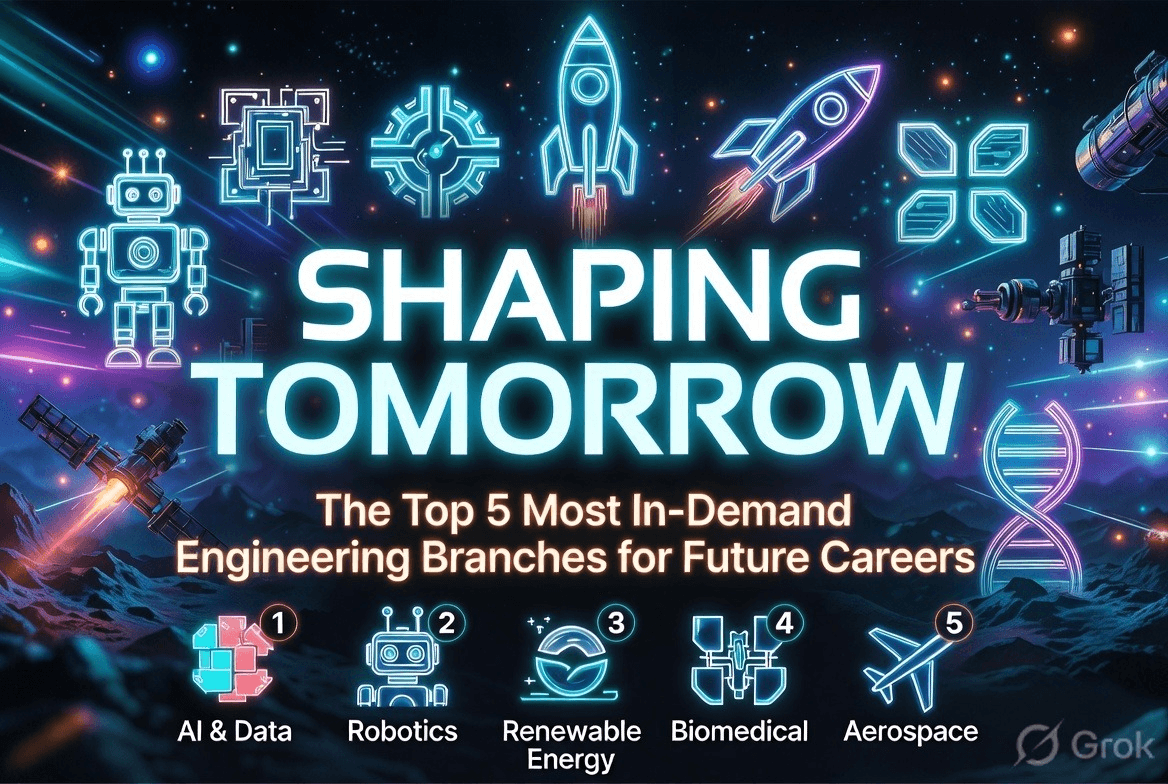
The field of engineering is undergoing a massive transformation. Driven by rapid advancements in automation, climate urgency, and next-generation computing, the classic question of "Which engineering branch should I choose?" has a very different answer today than it did a decade ago.
While core foundational principles remain essential, the future job market belongs to disciplines that bridge the gap between physical infrastructure, smart automation, and sustainability. Whether you are a student planning your academic journey or a professional looking to pivot, these are the top 5 engineering branches offering the highest growth potential for your future career.
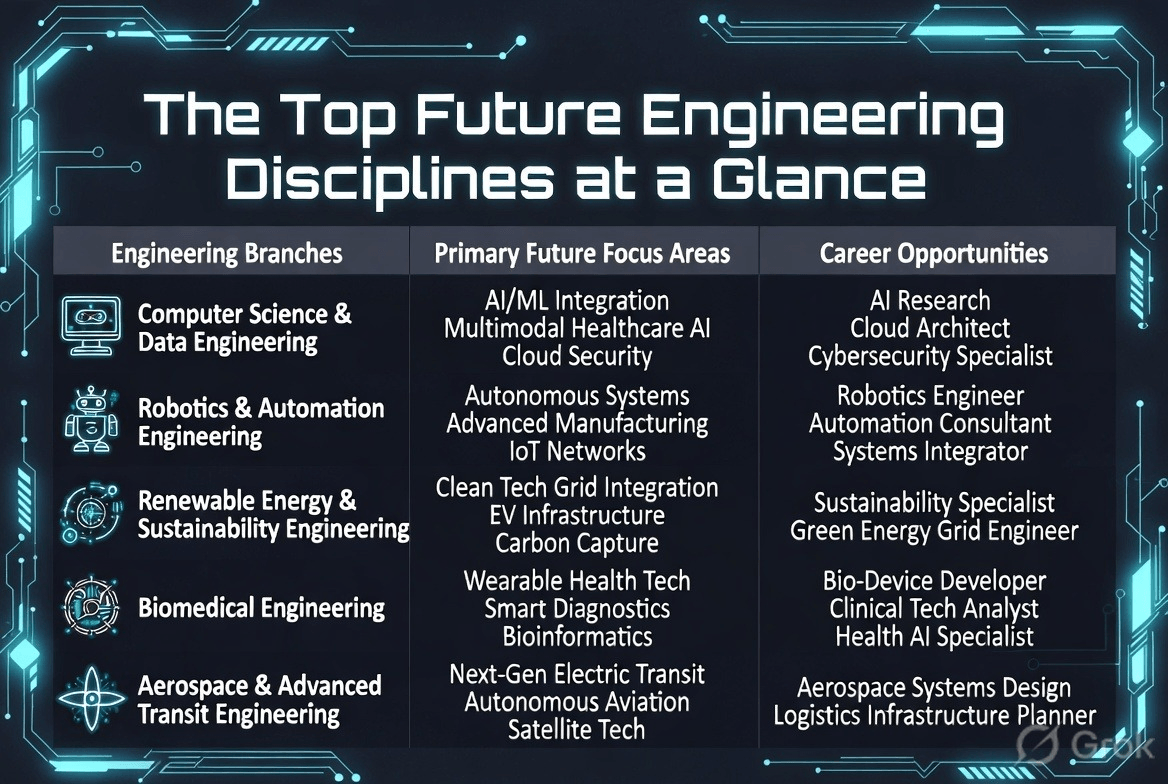
1. Computer Science & Next-Gen Data Engineering
It is no surprise that Computer Science continues to lead the pack, but the nature of the field has evolved. Standard software development is giving way to highly specialized data ecosystem management.
Why It’s the Future:
The global economy runs on data. Top industries are aggressively investing in architectural pipelines capable of handling massive, unstructured data pools securely.
- The Big Pillars: Artificial Intelligence (AI), Machine Learning (ML), Cloud Architecture, and Advanced Cyber-Physical Systems.
- The Career Edge: Engineers who can design frameworks that prioritize secure data hygiene and build highly optimized processing systems are in absolute demand across both the corporate world and national research sectors.
2. Robotics & Automation Engineering
As factories, logistics networks, and supply chains become smarter, the boundary between mechanical hardware and digital intelligence has blurred. This intersection is exactly where Robotics and Automation engineering thrives.
Why It’s the Future:
Industries are moving away from isolated machinery toward fully integrated, autonomous smart environments.
- The Big Pillars: Internet of Things (IoT) networking, first-principles algorithmic logic, and industrial automation interfaces.
- The Career Edge: This branch requires a deep, fundamental understanding of how software controls physical matter. Developing strong conceptual clarity in logic, discrete mathematical modeling, and hardware-software co-design early on makes you highly competitive in this field.
3. Renewable Energy & Environmental Engineering
Global shifting toward net-zero carbon goals has turned green technology from a niche specialization into a foundational global requirement.
Why It’s the Future:
Traditional energy infrastructure is being overhauled. The world needs engineers who can reinvent how we harvest, store, and distribute energy safely without depleting natural resources.
- The Big Pillars: Electric Vehicle (EV) grid optimization, high-capacity battery technology, solar/wind storage integration, and carbon footprint reduction architectures.
- The Career Edge: Government initiatives and massive corporate sustainability investments ensure that green energy engineers enjoy excellent job security and direct paths into major public sector and civil planning infrastructures.
4. Biomedical Engineering (Healthcare Tech)
The intersection of engineering principles with biological sciences is creating one of the fastest-growing job sectors globally. Modern healthcare relies as much on technological infrastructure as it does on medicine.
Why It’s the Future:
From advanced health trackers to smart diagnostic machines, the future of medicine is completely digital and personalized.
- The Big Pillars: Wearable health monitoring systems, advanced smart diagnostics, data privacy in healthcare technology, and medical device engineering.
- The Career Edge: If you enjoy solving problems that directly improve human lives, this field bridges complex technical development with highly impactful, real-world biological applications.
5. Aerospace & Advanced Transit Engineering
The way humans and goods move across the globe—and beyond it—is entering a new era. Aerospace and transit engineering are expanding rapidly past traditional aviation.
Why It’s the Future:
The modern focus is heavily geared toward high-frequency, high-efficiency transit infrastructure, autonomous commercial aviation, and satellite technology networks.
- The Big Pillars: High-efficiency rail network planning, electric aviation, satellite communications, and autonomous delivery drone logistics.
- The Career Edge: This sector offers incredible opportunities for individuals interested in large-scale infrastructural planning, complex aerodynamics, and global logistics systems.
Final Strategy: How to Choose Your Path
Every single one of these branches offers a direct route to a lucrative, impactful career. When making your choice, remember to look beyond just the theoretical textbook:
Focus on Practical Portfolios: The modern hiring ecosystem prioritizes actual proof of skills. Look for structured apprenticeships or deep-dive internships that let you work on real engineering projects early on. Proving you have handled real core subject challenges is what will set you apart from the competition.
Identify the intersection where your personal analytical interests meet global demand, focus on mastering the underlying fundamentals, and start building the future today!