

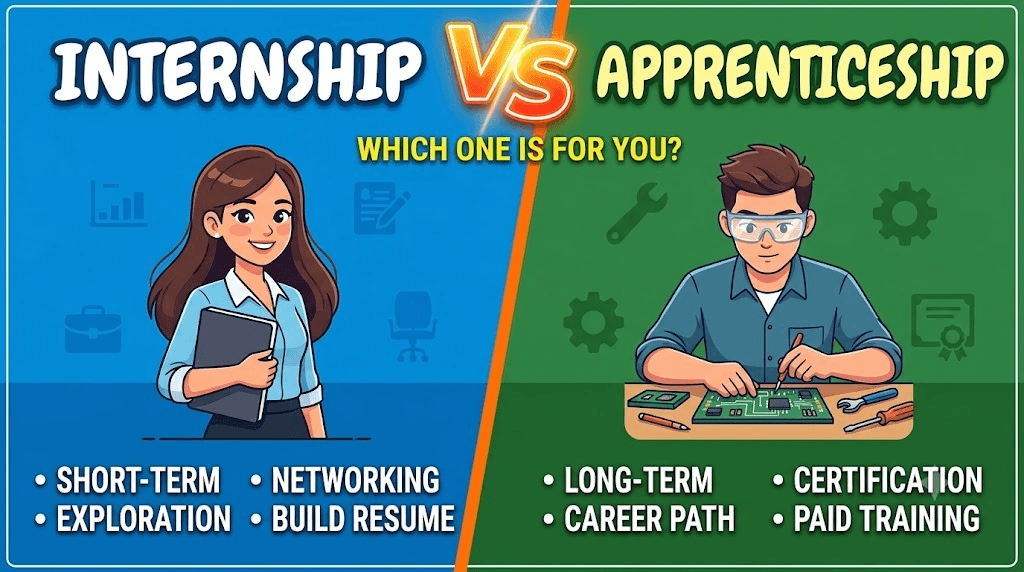
When you're trying to break into a new industry, get your foot in the door, or transition careers, you’ll constantly run into two words: Internship and Apprenticeship.
At first glance, they seem to serve the exact same purpose—giving you hands-on experience so you don't get caught in the classic "need experience to get a job, need a job to get experience" paradox. However, underneath the surface, these two pathways are structured entirely differently, have different financial models, and lead to vastly different career outcomes.
Let’s break down exactly how they stack up against each other so you can choose the right path for your goals.
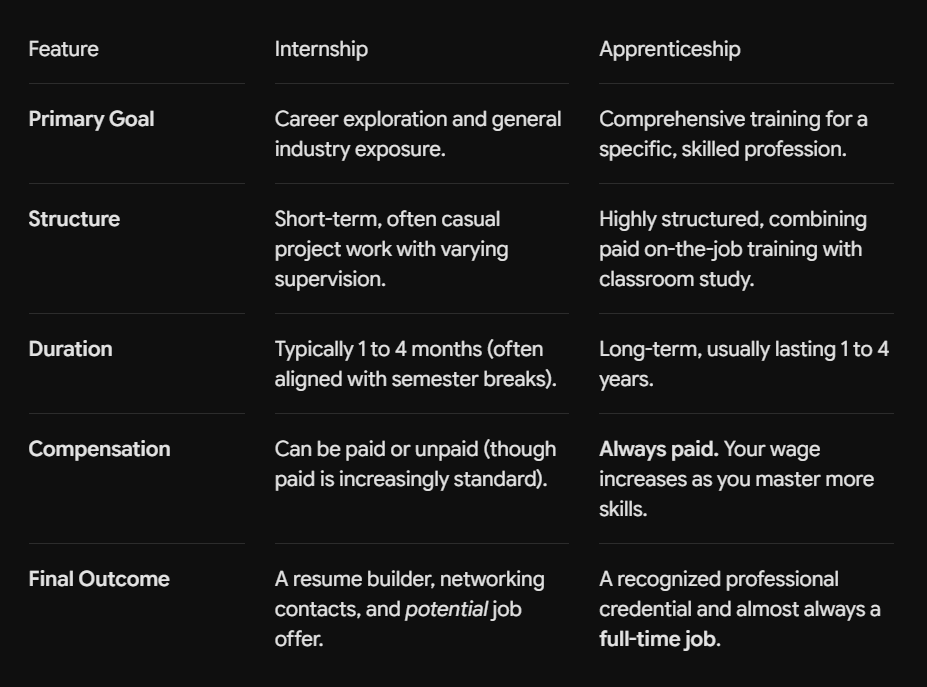
The Core Differences at a Glance
If you only have a minute, here is the essential breakdown of how internships and apprenticeships compare:
Deep Dive: What is an Internship?
An internship is a short-term program designed to give students or recent graduates an introduction to an industry. Think of it as a professional "test drive."
Key Characteristics:
- The Focus is Academic & Exploration: Internships are designed to help you figure out if you actually like a specific career path. You might work on a variety of small projects, shadow executives, or assist different departments.
- Flexible and Short: They are explicitly built around school schedules. Most internships happen over the summer or last just one academic semester.
- Mentorship over Training: While you will learn new skills, internships focus heavily on networking, understanding corporate culture, and building a portfolio.
Best For: College students or fresh graduates who want to explore different career options, build up their resumes, and build a professional network without committing to a single company long-term.
Deep Dive: What is an Apprenticeship?
An apprenticeship is a formal, long-term training program that prepares you to fully step into a highly skilled occupation. Instead of just observing an industry, you are actively entering a profession from day one.
Key Characteristics:
- Earn While You Learn: This is the golden rule of apprenticeships. You are hired as an employee from the start. As you progress through your training and hit skill milestones, your paycheck automatically grows.
- Structured Education: Apprenticeships combine hands-on work with formal classroom instruction (often paid for by the employer).
- Industry Credentials: Upon completion, you receive a nationally recognized certification or credential certifying that you are fully qualified to work in that trade or field.
- A Guaranteed Career Track: Employers invest heavily in apprentices. The explicit goal of an apprenticeship is that you will transition directly into a permanent, full-time role with the company upon completion.
Best For: Individuals who know exactly what profession they want to enter—whether in tech (like cybersecurity or software engineering), healthcare, or traditional skilled trades—and prefer a structured, paid, hands-on learning environment over traditional classroom-only degrees.
Which One Should You Choose?
Deciding between the two comes down to where you are in your career journey and what your immediate financial and professional needs look like.
Choose an Internship if:
- You’re undecided: You want to see what daily life looks like in marketing vs. sales vs. HR before making a final decision.
- You're in the middle of a degree: You need something that fits cleanly into a 2-month summer break.
- You want to stack multiple experiences: You want to work at 2 or 3 different companies over a couple of years to see which company culture suits you best.
Choose an Apprenticeship if:
- You’re ready to commit: You know exactly what job you want and want to dive straight into mastering it.
- You need reliable income: You want financial security with guaranteed, scaling pay while getting your education.
- You want an alternative to traditional higher ed: You want to bypass or supplement a college degree with a direct, practical route to a full-time career.
Final Thoughts
Both paths are incredibly valuable, but they serve different chapters of your career. An internship helps you ask, "Is this the right field for me?" while an apprenticeship says, "This is the field for me—now teach me how to master it."
Evaluate your timeline, your financial needs, and your level of certainty about your career goals, and take the leap that moves you closer to where you want to be!