
Landing your first internship is a massive win. It’s your chance to build a real portfolio, get hands-on experience, and actually see how the industry works. But with everyone hiring online now, a really sketchy trend has blown up: fake internship scams.
Fraudsters are actively targeting students and fresh grads, using the promise of career growth to steal your cash or even worse, your identity.
If you're out there hunting for a role right now, here is the honest breakdown of how these scams work, the major red flags to watch out for, and how to protect yourself.
The Red Flags: How to Spot a Fake
Most malicious hiring scams follow a pretty predictable pattern. If you notice any of these signs during your job hunt, stop immediately.
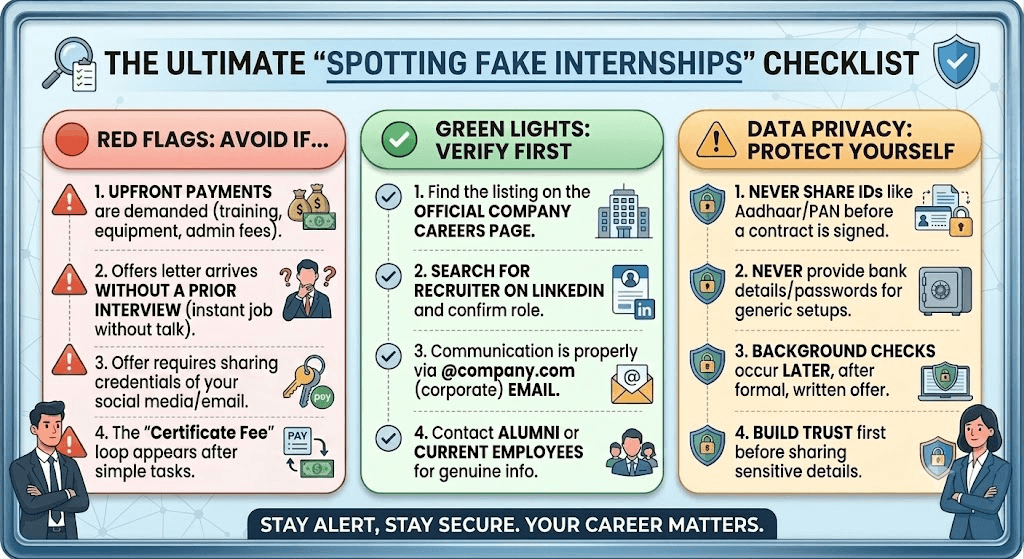
- The "Pay-to-Work" Trap: This is the ultimate red flag. Legitimate companies never charge you money to work. If an organization demands an upfront cost for "training modules," "security deposits," "software licenses," or an "administrative fee" before you start, it is a 100% scam.
- The Certificate Fee Loophole: Watch out for setups that assign basic, generic tasks like spending 4 weeks building a simple to-do list app with zero guidance, only to demand a "certificate processing fee" at the very end. If a platform forces you to pay just to get proof of your work, it’s a scam, not a professional opportunity.
- Zero Interview Process: If you receive an official-looking offer letter within hours of applying without ever having a formal technical or behavioral conversation, be highly suspicious. Real teams invest actual time in vetting their candidates.
How to Verify if an Offer is Legitimate
Before you sign an agreement or hand over any details, take a few minutes to double-check who you're dealing with:
- Look Closely at the Domain: Check the sender's email address. Scammers love using "look-alike" domains to mimic trusted brands (e.g., [email protected] instead of microsoft.com).
- Check Them on LinkedIn: Search for the person who messaged you. Do they actually work at the company? Does the company have a verified page with real employees listed?
- Check the Official Source: Go straight to the company’s official careers page or a trusted portal listing. If the opportunity only exists in a random, unverified chat group, proceed with extreme caution.
- Talk to Alums: Find a peer on LinkedIn who previously trained or interned there. Drop them a polite message asking if the hiring process you're experiencing matches what they went through.
What a Real Internship Looks Like
Getting relevant experience shouldn't come with a price tag. Real professional training programs focus on collaborative growth, not exploitation.
At UptoSkills, we firmly believe that everyone deserves access to quality internship experience, especially today, when practical exposure is absolutely essential to landing a full-time job. That is why our internship program never charges you a single rupee. It is completely free.
Instead of pushing solo, trivial tasks, we focus on building high-quality teamwork skills. Our interns get hands-on experience by working on real-world projects alongside structured product development teams. You experience true collaboration, push live code, and learn how real tech teams operate. You can learn more about how we build real skills for free at UptoSkills.
What to Do if You've Been Targeted
If you realize you've accidentally engaged with a fraudulent offer, don't panic just act fast:
- Cut Contact Immediately: Block their numbers, emails, and social handles. Don't try to argue with them.
- Protect Your Money: If you shared any bank details or financial credentials, contact your bank to freeze your accounts right away.
- Report It: Report the fake posting on the platform where you found it to protect other students, and file a quick complaint on your national cybercrime reporting portal.
The Hidden Danger: Identity Theft
With fake internships, your personal data is usually the main target. Scammers love using the guise of a standard "HR onboarding process" to collect highly sensitive documents before an interview even happens.
Handing over copies of your government IDs or bank details to an unverified source opens the door to serious risks:
- Loans Taken in Your Name: Sophisticated identity thieves can exploit leaked government IDs linked to phone numbers to open fraudulent digital wallets or apply for instant micro-loans. You won't know until debt collectors start calling.
- The "Money Mule" Trap: Fraudsters might ask for your bank account details under the pretext of setting up "stipend direct deposits," only to use your account to route stolen funds from other cybercrimes. This can land you right in the middle of a legal investigation.
- Phishing & Account Hacking: By collecting your full name, date of birth, and email, attackers build a profile to launch targeted phishing attacks or attempt to guess your passwords on other platforms.
The Golden Rule: A legitimate organization will never ask for your official government identity proofs or bank routing information until after you have received, reviewed, and signed a verified, official internship agreement.