
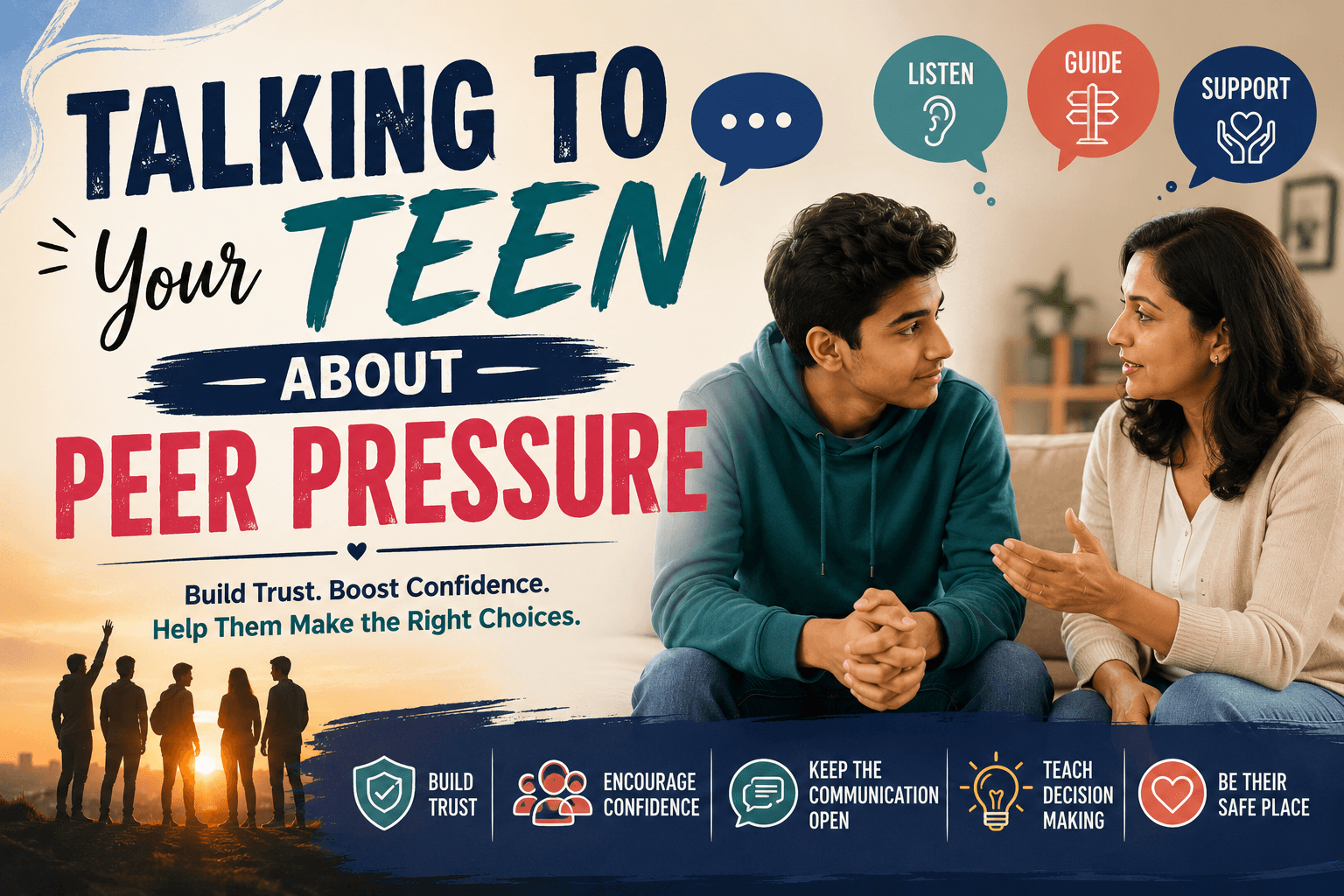
As children enter their teenage years, they begin to spend more time with friends and classmates. While friendships are an important part of growing up, they can also bring peer pressure. Teenagers may feel pushed to fit in, whether it's trying something risky, following trends, or making choices they aren't comfortable with. That's why honest conversations between parents and teens are more important than ever.
What Is Peer Pressure?
Peer pressure is the influence friends or social groups have on a person's decisions and behavior. It isn't always negative. Friends can motivate each other to study harder, play sports, or develop healthy habits. However, peer pressure becomes harmful when it encourages risky behavior, such as vaping, drinking, cheating, bullying, or participating in dangerous online challenges.
Start the Conversation Early

Don't wait until there's a problem. Make discussions about friendships and decision-making a regular part of family life. Choose a relaxed time to talk and listen carefully without interrupting or judging.
Ask simple questions like:
- How are things going with your friends?
- Have you ever felt pressured to do something you didn't want to do?
- What would you do if someone asked you to break a rule?
These conversations help your teen feel comfortable opening up.
Teach Confidence, Not Fear
One of the best ways to protect teenagers from negative peer pressure is to build their confidence. Encourage them to think for themselves and remind them that it's okay to say "no."
Practice simple responses such as:
- "No thanks, I'm not interested."
- "That's not for me."
- "I'm leaving."
Knowing what to say in advance makes it easier to handle difficult situations.
Be Supportive
Your teenager should know they can always come to you without worrying about being punished immediately. If they make a mistake, focus first on understanding what happened before reacting. A supportive relationship builds trust and makes it more likely they'll seek your advice in the future.
Final Thoughts
Peer pressure is a normal part of adolescence, but it doesn't have to control your teen's choices. By maintaining open communication, encouraging confidence, and leading by example, parents can help teenagers make smart decisions and stay true to their values. The goal isn't to control every choice they make, but to give them the confidence and judgment to make the right ones, even when no one is watching.