
Introduction
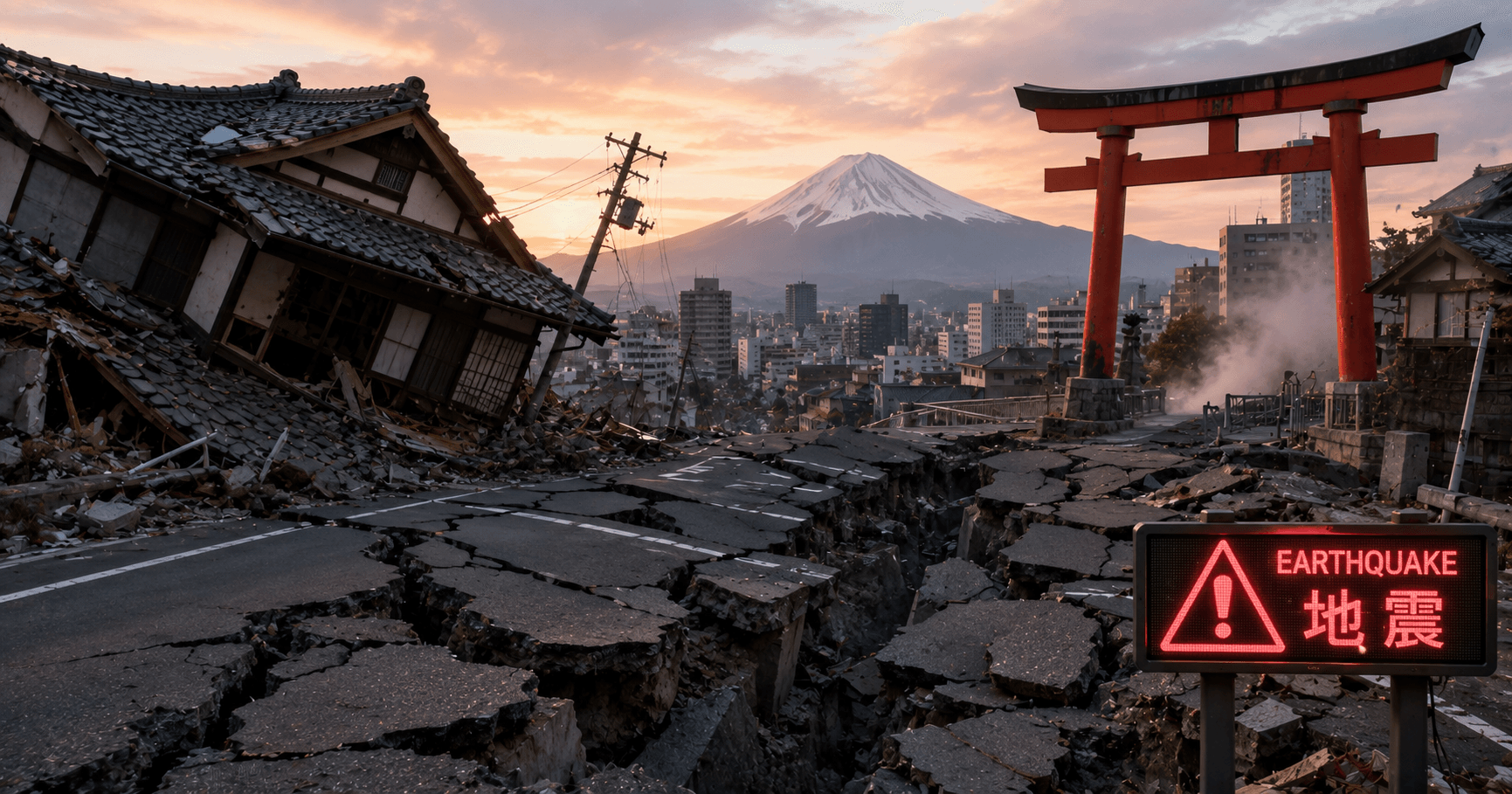
Japan is one of the most earthquake-prone countries in the world. Every year, thousands of earthquakes—ranging from tiny tremors to powerful seismic events—are recorded across the country. While many are too small to be felt, some have caused devastating damage, triggered tsunamis, and reshaped communities.
Despite this constant seismic activity, Japan is internationally recognized for its advanced earthquake monitoring systems, strict building regulations, early warning technology, and disaster preparedness programs. These innovations have helped save countless lives and made Japan a global leader in earthquake resilience.
In this comprehensive guide, we'll explore why Japan experiences so many earthquakes, how earthquakes are measured, the country's most significant historical events, earthquake preparedness strategies, recent seismic activity, and what the future may hold.
Why Does Japan Experience So Many Earthquakes?
Japan lies along the Pacific Ring of Fire, one of the world's most seismically active regions.
Here, several major tectonic plates interact:
- Pacific Plate
- Philippine Sea Plate
- Eurasian Plate (or Amur Plate in some tectonic models)
- North American Plate (or Okhotsk Plate in some models)
As these plates collide, subduct, and slide past one another, stress builds within the Earth's crust. When this stress is suddenly released, earthquakes occur.
Because Japan sits near multiple active plate boundaries, it experiences frequent seismic activity.
What Causes Earthquakes?
Earthquakes occur when rocks beneath the Earth's surface suddenly break along geological faults.
The released energy travels through the Earth as seismic waves, producing ground shaking.
Major causes include:
- Plate movement
- Subduction zones
- Active fault systems
- Volcanic activity (in some regions)
Most earthquakes in Japan are caused by plate tectonics rather than volcanic eruptions.
Japan and the Pacific Ring of Fire
The Pacific Ring of Fire stretches around the Pacific Ocean and accounts for roughly 75% of the world's active volcanoes and about 90% of global earthquakes.
Japan's location within this zone explains why earthquakes occur so frequently.
The same tectonic forces are also responsible for many volcanic eruptions and tsunami-generating earthquakes.
How Are Earthquakes Measured?
Japan uses advanced seismic monitoring systems.
Magnitude
Magnitude measures the energy released during an earthquake.
The Moment Magnitude Scale (Mw) is now the internationally accepted standard for measuring large earthquakes.
Seismic Intensity
Japan also uses the Japan Meteorological Agency (JMA) Seismic Intensity Scale, which measures how strongly the ground shakes at specific locations.
Unlike magnitude, intensity varies depending on distance from the earthquake and local ground conditions.
Japan's Earthquake Early Warning System
Japan operates one of the world's most sophisticated Earthquake Early Warning (EEW) systems.
When seismic sensors detect the first, weaker seismic waves, automated alerts can be issued seconds before stronger shaking arrives.
Warnings may be sent through:
- Mobile phones
- Television
- Radio
- Public loudspeakers
- Railway systems
- Industrial facilities
Although warning times are often brief, even a few seconds can help people protect themselves and allow trains and factories to take emergency actions.
Strong Building Codes Save Lives
Japan has invested heavily in earthquake-resistant construction.
Modern buildings often include:
- Base isolation systems
- Shock absorbers
- Flexible structural designs
- Energy-dissipating dampers
- Reinforced concrete and steel frameworks
These engineering techniques significantly reduce damage during major earthquakes.
Famous Earthquakes in Japan
1. Great Kantō Earthquake (1923)
- Magnitude: Approximately 7.9
- Region: Tokyo–Yokohama
- Resulted in widespread destruction and significant loss of life.
2. Great Hanshin (Kobe) Earthquake (1995)
- Magnitude: 6.9
- Caused severe urban damage.
- Led to major improvements in building standards and disaster response.
3. Great East Japan Earthquake (2011)
- Magnitude: 9.0
- One of the strongest earthquakes ever recorded.
- Triggered a devastating tsunami.
- Led to the Fukushima Daiichi nuclear accident.
- Prompted major reviews of disaster preparedness and infrastructure.
Tsunamis and Earthquakes
Large offshore earthquakes can displace enormous volumes of seawater, generating tsunamis.
Japan has developed:
- Coastal tsunami barriers
- Evacuation routes
- Tsunami warning systems
- Hazard maps
- Community evacuation drills
These measures help reduce risk in vulnerable coastal regions.
Recent Earthquake Activity in Japan
Japan experiences thousands of earthquakes each year, most of which are minor.
The Japan Meteorological Agency (JMA) continuously monitors seismic activity and publishes verified information on earthquake magnitude, intensity, epicentres, and tsunami advisories.
Because seismic activity is ongoing, residents are encouraged to rely on official updates rather than rumours or unverified social media posts.
How Japan Prepares for Earthquakes
Preparedness is deeply integrated into Japanese society.
Earthquake Drills
Schools, businesses, and communities regularly conduct evacuation exercises.
Emergency Kits
Families are encouraged to prepare kits containing:
- Drinking water
- Non-perishable food
- Flashlights
- First-aid supplies
- Portable radios
- Batteries
- Important documents
Public Education
Earthquake safety is taught from an early age, helping citizens respond calmly during emergencies.
Smart Technology
Artificial intelligence, satellite observations, GPS monitoring, and dense seismic sensor networks continue to improve forecasting research and emergency response.
Can Earthquakes Be Predicted?
Despite major scientific advances, earthquakes cannot currently be predicted with precise timing, location, and magnitude.
Scientists can:
- Identify earthquake-prone regions.
- Estimate long-term probabilities.
- Monitor tectonic activity.
- Issue rapid alerts after an earthquake begins.
However, no scientific method can reliably predict exactly when a major earthquake will occur.
Climate Change and Earthquakes
There is no scientific evidence that climate change directly causes tectonic earthquakes.
However, climate change can influence related hazards such as:
- Coastal flooding
- Landslides after heavy rainfall
- Emergency response challenges
Earthquakes themselves are primarily driven by tectonic plate movement.
Why Japan Is a Global Leader in Disaster Resilience
Japan combines:
- Advanced engineering
- Scientific research
- Public education
- Early warning technology
- Government preparedness
- Continuous infrastructure improvements
These measures have become a model for many countries vulnerable to earthquakes.
Frequently Asked Questions (FAQs)
Why does Japan experience so many earthquakes?
Japan sits on the Pacific Ring of Fire where multiple tectonic plates interact, creating frequent seismic activity.
Can earthquakes be predicted?
No. Scientists can estimate long-term seismic risk but cannot accurately predict the exact time, location, or magnitude of future earthquakes.
What is Japan's Earthquake Early Warning system?
It is a nationwide system that detects the first seismic waves and rapidly sends alerts before stronger shaking arrives.
What was Japan's strongest recorded earthquake?
The 2011 Great East Japan Earthquake had a moment magnitude of 9.0, making it the strongest earthquake ever recorded in Japan.
How does Japan reduce earthquake damage?
Japan relies on strict building codes, advanced engineering, early warning systems, disaster education, and regular emergency drills.
Sources (Verified & Authoritative)
- Japan Meteorological Agency (JMA) – Earthquake monitoring, seismic intensity scale, and earthquake early warning information.
- United States Geological Survey (USGS) – Earthquake science, tectonic plates, and seismic monitoring.
- National Research Institute for Earth Science and Disaster Resilience (NIED), Japan – Seismic observation and disaster research.
- Cabinet Office, Government of Japan – Disaster management and preparedness policies.
- UNESCO Intergovernmental Oceanographic Commission (IOC) – Tsunami science and warning systems.
- International Federation of Red Cross and Red Crescent Societies (IFRC) – Earthquake preparedness guidance.
- Encyclopaedia Britannica – Historical and geographical background on Japan's earthquakes.