

Introduction
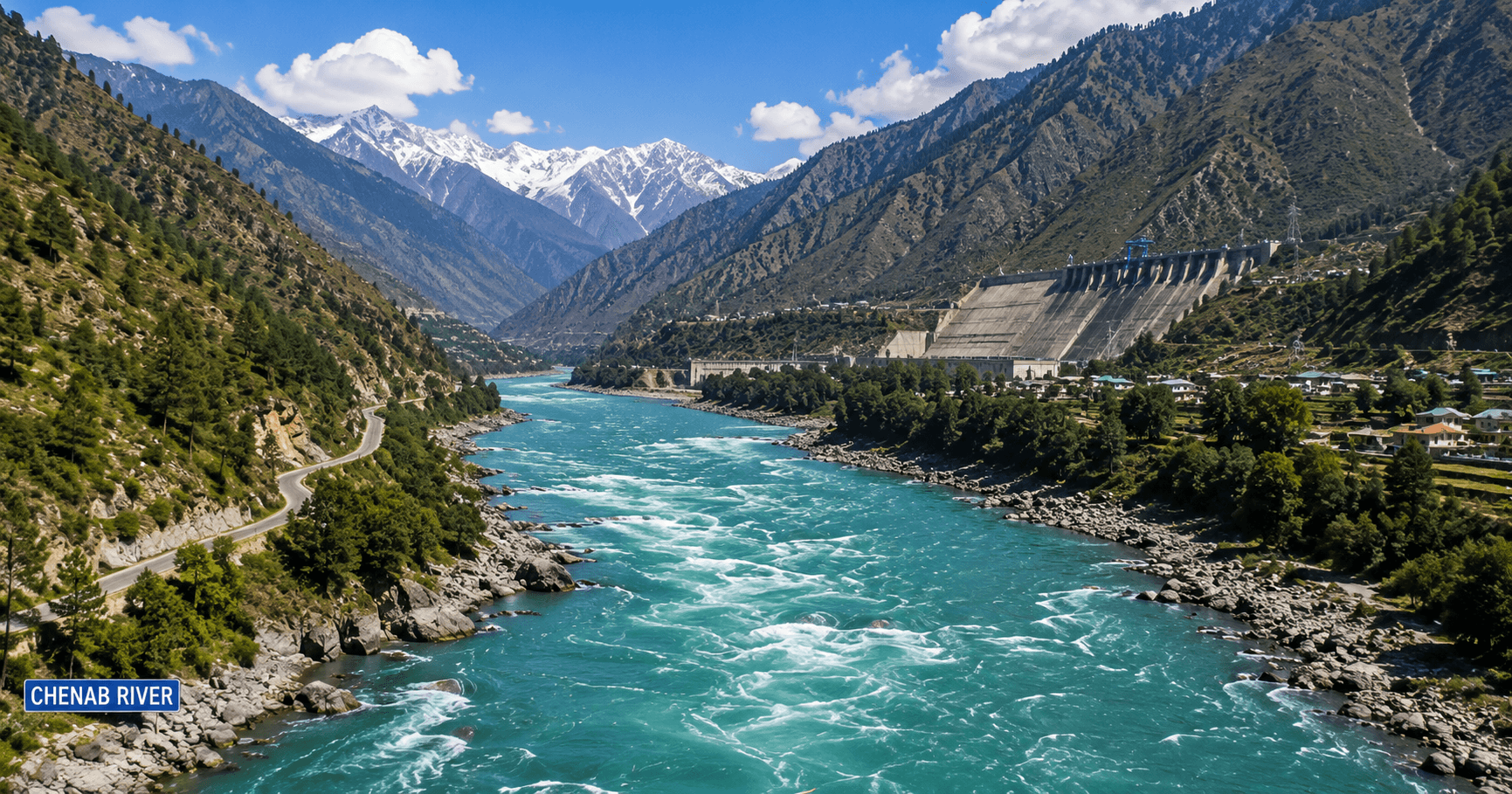
Flowing through the majestic Himalayas and carving breathtaking valleys across northern India and Pakistan, the Chenab River is one of South Asia's most significant rivers. Beyond its natural beauty, the Chenab plays a vital role in agriculture, hydropower generation, water resource management, biodiversity, and regional geopolitics.
As one of the six major rivers of the Indus River system, the Chenab River has been central to civilization, trade, and culture for centuries. Today, it is equally important for renewable energy projects, irrigation, and international water-sharing agreements.
In this comprehensive guide, we'll explore the Chenab River's origin, course, tributaries, dams, hydropower projects, ecological importance, challenges, and its strategic role under the Indus Waters Treaty.
What is the Chenab River?
The Chenab River is one of the largest rivers in the Indus River basin. It originates in the Lahaul and Spiti district of Himachal Pradesh, India, where the Chandra and Bhaga rivers meet at Tandi. From there, it flows through the Union Territory of Jammu and Kashmir, enters Pakistan, and eventually joins the Indus River.
The river is renowned for its swift currents, deep gorges, and immense hydropower potential.
Origin of the Chenab River
The Chenab begins at the confluence of:
- Chandra River
- Bhaga River
These two rivers originate from glaciers in the Greater Himalayas.
The confluence occurs at:
Tandi, Lahaul and Spiti, Himachal Pradesh
From this point onward, the combined river is known as the Chenab.
Course of the Chenab River
The river travels through several important regions.
In India
- Himachal Pradesh
- Jammu region
- Doda
- Kishtwar
- Ramban
- Reasi
- Jammu Division
In Pakistan
After crossing the international border, the Chenab flows through Punjab province before joining the Indus River.
The total length of the river is approximately 960 kilometres.
Major Tributaries of the Chenab River
Several rivers contribute to the Chenab's flow.
Left Bank Tributaries
- Marusudar River
- Bhut Nala
- Lidrari Nala
Right Bank Tributaries
- Tawi River
- Ans River
- Various Himalayan mountain streams
These tributaries significantly increase the river's discharge, particularly during the monsoon and snowmelt seasons.
Importance of the Chenab River
The Chenab River is crucial for multiple sectors.
1. Water Resources
The river supplies freshwater for domestic, agricultural, and industrial purposes.
2. Agriculture
The Chenab supports irrigation for millions of hectares of farmland, particularly downstream in Pakistan and parts of Jammu and Kashmir.
Major crops include:
- Wheat
- Rice
- Cotton
- Sugarcane
- Vegetables
3. Hydropower Generation
The steep Himalayan terrain makes the Chenab one of India's most important rivers for hydroelectric power.
Several major projects have been developed along its course.
4. Biodiversity
The river basin supports:
- Himalayan fish species
- Riverine vegetation
- Wetland ecosystems
- Migratory birds
Protecting these ecosystems is essential for maintaining ecological balance.
Major Hydropower Projects on the Chenab River
India has developed several hydroelectric projects on the Chenab River and its tributaries.
Baglihar Hydroelectric Project
Located in Ramban district, the Baglihar project is one of India's major run-of-the-river hydroelectric stations.
Dul Hasti Hydroelectric Project
Situated in Kishtwar district, this project contributes significantly to power generation in northern India.
Ratle Hydroelectric Project
The Ratle project is expected to further strengthen renewable energy generation in the region upon completion.
Pakal Dul Hydroelectric Project
Located on the Marusudar River (a tributary of the Chenab), Pakal Dul is among India's largest hydropower developments under construction.
Chenab River and the Indus Waters Treaty
The Chenab River has major geopolitical significance.
The Indus Waters Treaty, signed in 1960 between India and Pakistan with the World Bank as a facilitator, governs the use of the Indus river system.
Under the treaty:
- The Chenab is classified as one of the Western Rivers.
- Pakistan has primary rights to its waters.
- India is permitted non-consumptive uses, including hydropower generation, navigation, and limited irrigation, subject to treaty provisions.
The treaty remains one of the world's longest-standing international water-sharing agreements.
Tourism Along the Chenab River
The Chenab River passes through some of the most scenic landscapes in the Himalayas.
Popular attractions include:
- Kishtwar National Park
- Chenab Valley
- Doda
- Ramban
- Mountain highways
- Adventure tourism destinations
Activities include:
- Photography
- River viewing
- Trekking
- Nature tourism
Challenges Facing the Chenab River
Despite its importance, the Chenab River faces several environmental challenges.
Climate Change
Melting glaciers and changing snowfall patterns may alter river flows over time.
Flooding
Heavy rainfall and rapid snowmelt can lead to seasonal flooding in downstream areas.
Hydropower Development
While renewable energy projects provide clean electricity, they require careful planning to minimise ecological impacts.
River Conservation
Maintaining water quality, protecting biodiversity, and preserving natural habitats are essential for sustainable river management.
Why the Chenab River Matters
The Chenab River contributes to:
- Renewable energy generation
- Regional water security
- Food production
- Climate resilience
- Economic development
- Tourism
- Cross-border cooperation
Its importance extends beyond geography, influencing environmental sustainability and regional development.
Interesting Facts About the Chenab River
- It is formed by the confluence of the Chandra and Bhaga rivers.
- It is one of the six rivers of the Indus River system.
- The river flows through both India and Pakistan.
- It has enormous hydropower potential.
- Several strategic hydroelectric projects are located along its course.
- It plays a significant role under the Indus Waters Treaty.
Frequently Asked Questions (FAQs)
Where does the Chenab River originate?
The Chenab River originates at Tandi in Himachal Pradesh, where the Chandra and Bhaga rivers merge.
Which states does the Chenab River flow through in India?
It flows through Himachal Pradesh and the Union Territory of Jammu and Kashmir before entering Pakistan.
Why is the Chenab River important?
It supports hydropower generation, agriculture, freshwater supply, biodiversity, tourism, and regional development.
Is the Chenab River covered under the Indus Waters Treaty?
Yes. The Chenab is one of the Western Rivers governed by the Indus Waters Treaty (1960).
Which are the major hydroelectric projects on the Chenab River?
Important projects include Baglihar, Dul Hasti, Ratle, and Pakal Dul (on the Marusudar tributary).
Sources (Verified & Authoritative)
The information in this article is based on the following authoritative sources:
- Central Water Commission (Government of India) – River basin and water resources information.
- Ministry of Jal Shakti (Government of India) – River systems and water management.
- National Hydroelectric Power Corporation (NHPC) – Information on Baglihar, Dul Hasti, Ratle, and other hydropower projects.
- Survey of India – Official geographical and topographical information.
- India-WRIS (Water Resources Information System) – River basin data and hydrological information.
- World Bank – Documentation on the Indus Waters Treaty.
- Encyclopaedia Britannica – Background information on the Chenab River.



.png)