
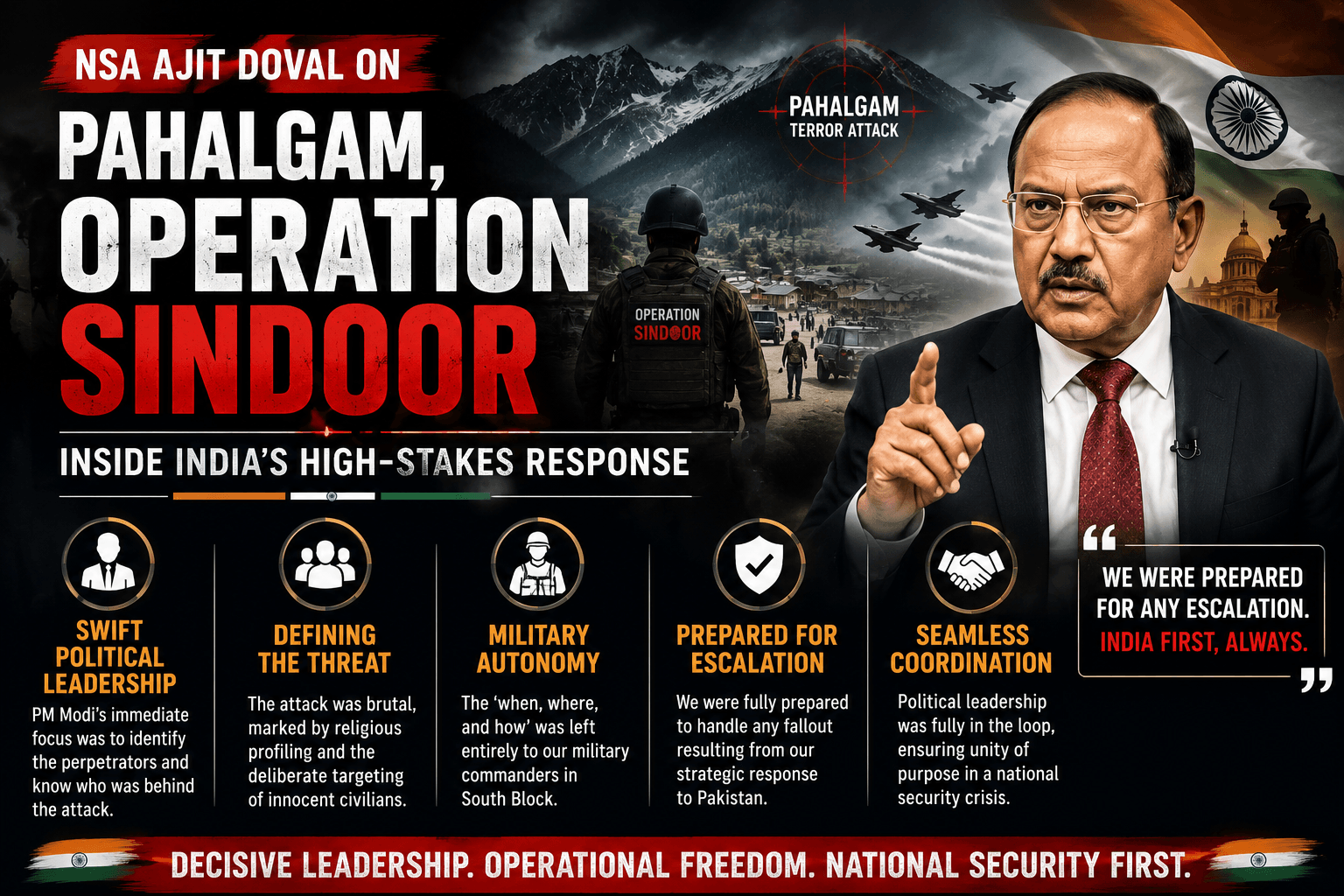
In a rare and candid interview, National Security Adviser Ajit Doval has shed light on the high-stakes decision-making process following the Pahalgam terror attack. This disclosure offers a unique look at how India navigated the volatile aftermath and the strategic planning behind Operation Sindoor.
Key Takeaways from the Interview:
Swift Political Leadership:
When the Pahalgam attack occurred, Prime Minister Narendra Modi was visiting Saudi Arabia. Upon his return, his immediate focus was identifying the perpetrators to ensure a clear understanding of who was responsible.
Defining the Threat:
NSA Doval emphasized that this attack was distinct due to its brutality, noting clear evidence of religious profiling and the deliberate targeting of innocent civilians.
Military Autonomy:
A significant highlight is the operational freedom granted to the military. While the political leadership remained fully briefed and in the loop, the specific tactical decisions—the "when," "where," and "how"—were left entirely to military commanders in South Block.
Preparedness for Escalation:
India acknowledged the high risk of a retaliatory escalation from Pakistan. Doval confirmed that the Indian establishment was fully prepared to handle any fallout resulting from their strategic response.
This interview reaffirms the seamless coordination between India’s political and military leadership, showcasing a policy of providing a 'free hand' to security forces during critical national security events.