
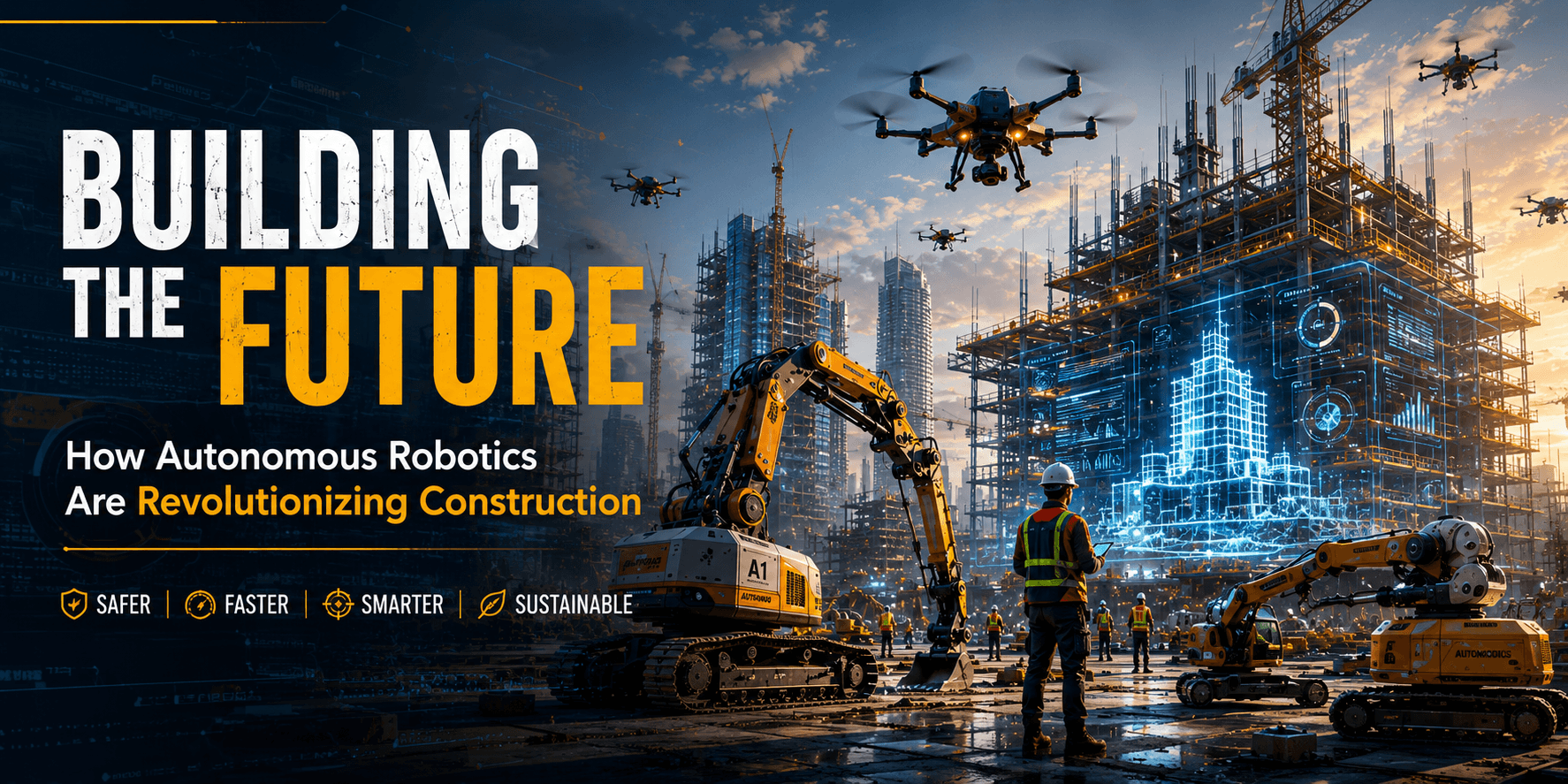
Building the Future: Inside the Autonomous Robot Revolution in Modern Construction

Building the Future: Inside the Autonomous Robot Revolution in Modern Construction

Jagadeesh 3 min 07/23/2026Tech

Imagine a construction site where thousands of intelligent decisions coordinate every single second. This is not science fiction; it is the reality of the autonomous robotics revolution currently transforming how we build our cities. Rather than replacing human workers entirely, intelligent machines are stepping in to partner with them, performing the most dangerous, complex, and physically demanding tasks.

This massive shift is ensuring incredible consistency, speed, and safety on a scale never attempted before.

The Power of the 'Digital Twin'
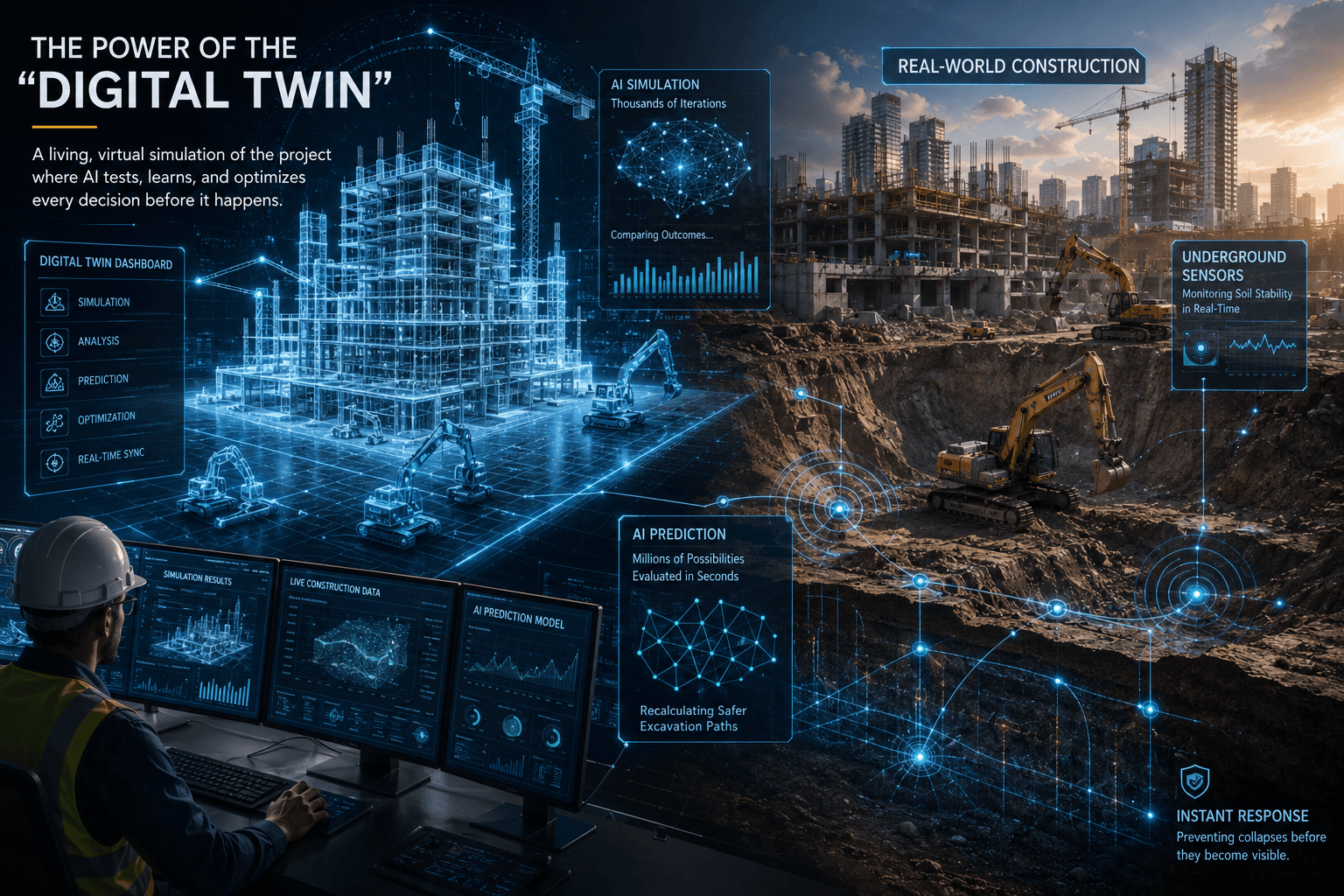
Long before a single piece of steel is touched, engineers now construct a digital twin—a living, virtual simulation of the project. Every autonomous robot practices its assigned task thousands of times inside these simulations, allowing the AI to compare simulated outcomes with live construction data and constantly improve.

When real-world excavation begins, underground sensors continuously monitor soil stability. If the ground shifts, the AI instantly predicts millions of possible behaviors and recalculates safer excavation paths. This allows the machines to prevent dangerous collapses long before instability is ever visible to the human eye.

Millimeter-Precision Execution

Once the foundations are secure, specialized machines execute every construction phase with astonishing accuracy:

  • Foundations: Robotic piling machines install massive foundation piles with millimeter precision.
  • Steel & Concrete: Robotic arms assemble enormous steel reinforcement cages faster than entire traditional crews, while autonomous concrete pumps and robotic finishers work in perfect synchronization. Hidden sensors inside the wet concrete monitor temperature and strength in real-time, allowing AI to optimize the curing process.
  • The Framework: Autonomous cranes synchronize their movements to lift steel columns weighing hundreds of tons into place, while robotic welding systems work around the clock to produce flawless structural connections, with AI instantly scanning for microscopic imperfections.

The On-Site Intelligent Network
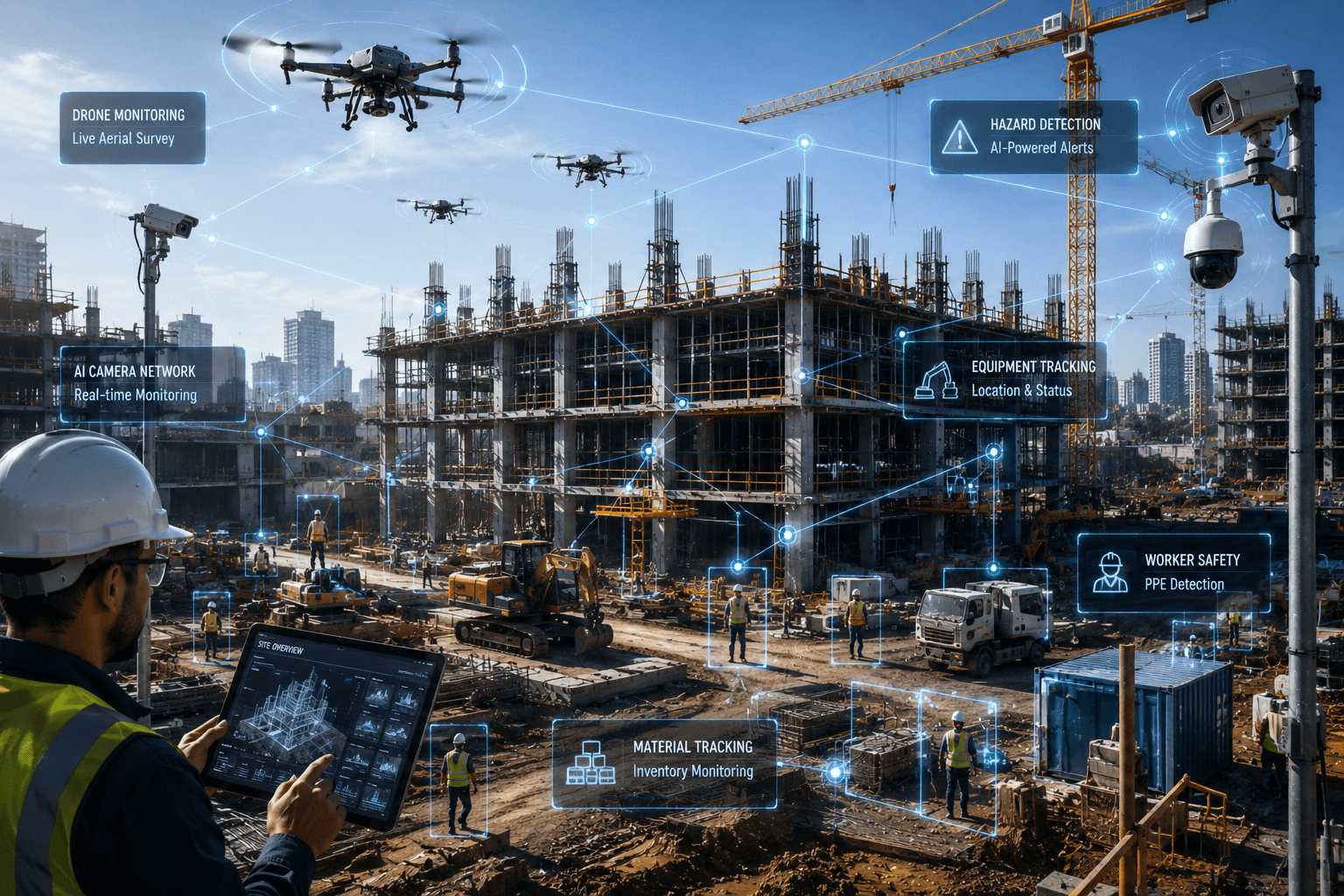
To keep the site running safely, drone swarms fly throughout the growing mega-structure, inspecting hard-to-reach areas and flagging safety hazards before human workers ever approach.

Additionally, thousands of cameras create a living visual network. This allows the robots to recognize tools, materials, hazards, and human workers instantly. Rather than relying solely on rigid programming, newly deployed robots are actually able to teach each other through shared experience.

A Skyscraper That Keeps Learning
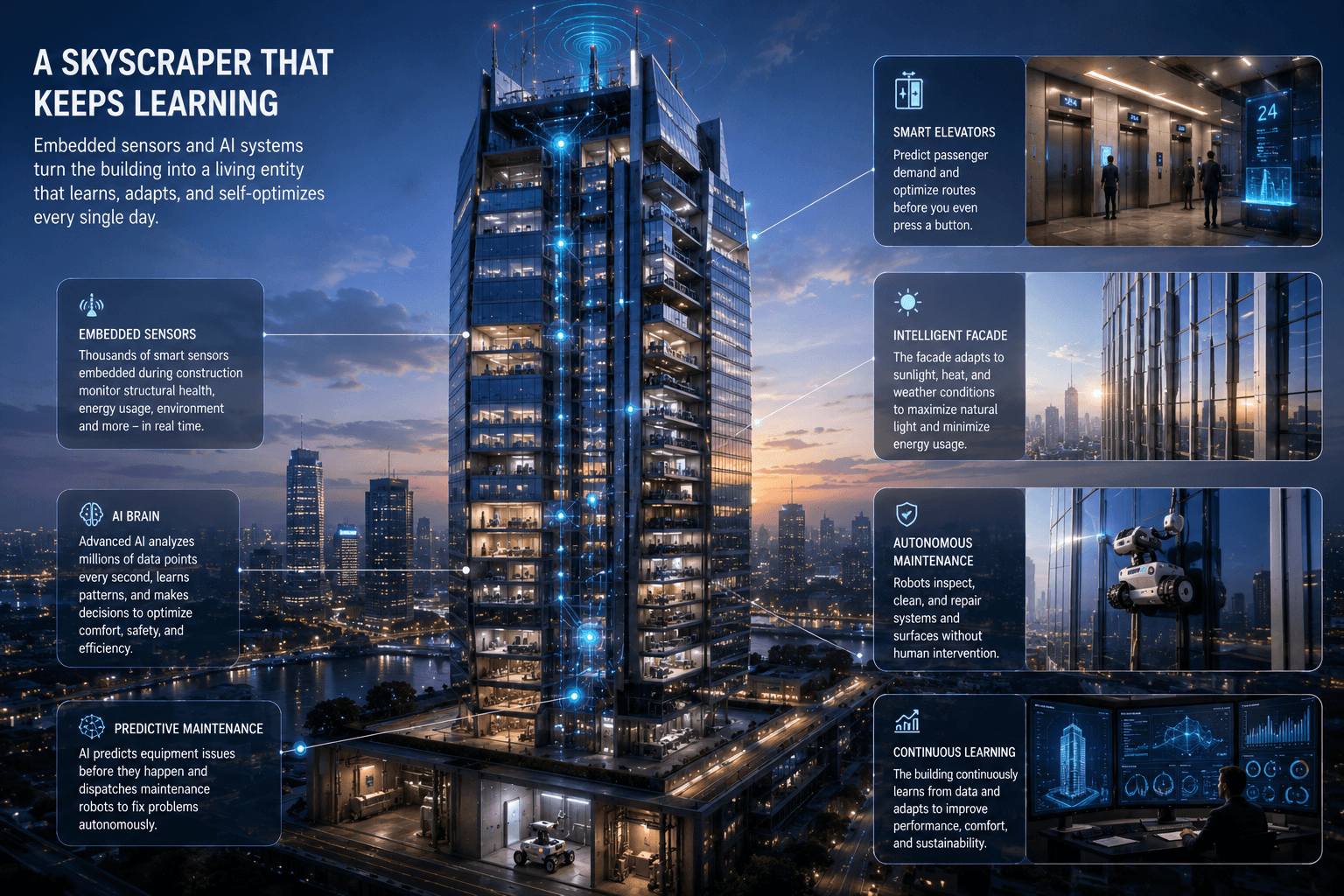
When construction ends, the AI's job is far from over. The millions of smart sensors embedded during the build become the building's permanent nervous system. Autonomous robots transition seamlessly from building the tower to self-maintenance and inspection.

In these completed, hyper-intelligent buildings:

  • Elevators predict passenger demand before anyone presses a button.
  • The intelligent facade automatically adjusts throughout the day to maximize natural light and block out excess heat.
  • Maintenance robots respond instantly to equipment failures before occupants even notice a problem.

The Road Ahead

The success of autonomous construction is already dropping environmental impact and construction waste dramatically. It also opens the door to rapid disaster recovery, enabling robotic fleets to automatically rebuild damaged infrastructure within hours of a catastrophe.

Looking even further, scientists believe these self-learning robotic systems will eventually be deployed to build permanent research bases on the Moon and Mars, taking human civilization farther than ever before imagined.

Table of Contents

Share Article

Related Blogs

Bhuvan – ISRO's Indian Geoportal
Tech

Bhuvan – ISRO's Indian Geoportal

Bhuvan is ISRO's comprehensive Indian Geoportal, offering high-resolution satellite imagery, thematic maps, and geospatial data for diverse applications. It serves as a vital platform for government agencies, researchers, and the public, supporting areas like disaster management, agriculture, and urban planning. Bhuvan's advanced features and tailored data make it a powerful indigenous tool for understanding and managing India's diverse landscapes.

5 min 10
India's Weather Forecasting Powerhouse Transforming Climate Intelligence
Tech

India's Weather Forecasting Powerhouse Transforming Climate Intelligence

Conclusion The India Meteorological Department (IMD) is much more than a weather forecasting agency—it is a cornerstone of India's disaster preparedness, agricultural planning, transportation safety, and climate resilience. By combining decades of scientific expertise with modern technologies such as satellites, Doppler weather radars, artificial intelligence, and numerical forecasting models, the IMD continues to strengthen its ability to provide timely and accurate weather information. As climate change drives more frequent and intense weather events, the role of the IMD will become even more critical. Continued investment in research, technology, and public awareness will help ensure that India is better prepared for the challenges of the future. What are your thoughts on the India Meteorological Department and the future of weather forecasting in India? Share your opinions, experiences, or questions in the comments below. If you found this article helpful, consider sharing it with friends and following our blog for more informative content on technology, science, climate, and innovation.

5 min 28
Quantum Computing in 2026: Moving From the Physics Lab to the Engineering Pipeline
Tech

Quantum Computing in 2026: Moving From the Physics Lab to the Engineering Pipeline

Quantum computing has officially reached a "transistor moment" in 2026, transitioning from theory to a scalable engineering discipline. This is largely due to breakthroughs in true error correction at scale and the rise of hybrid quantum-classical architectures, where quantum processing units work alongside traditional processors. These advancements are paving the way for real-world enterprise applications in areas like biotech and logistics.

4 min 31
Spotting the Machine: How to Recognize AI-Generated Content Online ?
Tech

Spotting the Machine: How to Recognize AI-Generated Content Online ?

As AI-generated content becomes more prevalent, recognizing it is crucial for digital literacy. Signs of AI-generated content include overly polished but generic language, repetitive patterns, a lack of concrete examples, and potentially inaccurate information. Users can identify AI content by fact-checking, looking for inconsistencies, using AI detectors, and examining the context and source of the information.

3 min 102
Agentic AI: From Experimental Technology to Enterprise Capability
Tech

Agentic AI: From Experimental Technology to Enterprise Capability

Agentic AI represents a significant advancement in enterprise AI, moving beyond simple automation to autonomous systems capable of intelligent action. These systems can manage complex tasks, adapt to changing conditions, and drive real business value across various departments. Successfully implementing Agentic AI requires a strategic approach that prioritizes clear governance, robust infrastructure, and a shared understanding across teams.

3 min 38