
Introduction
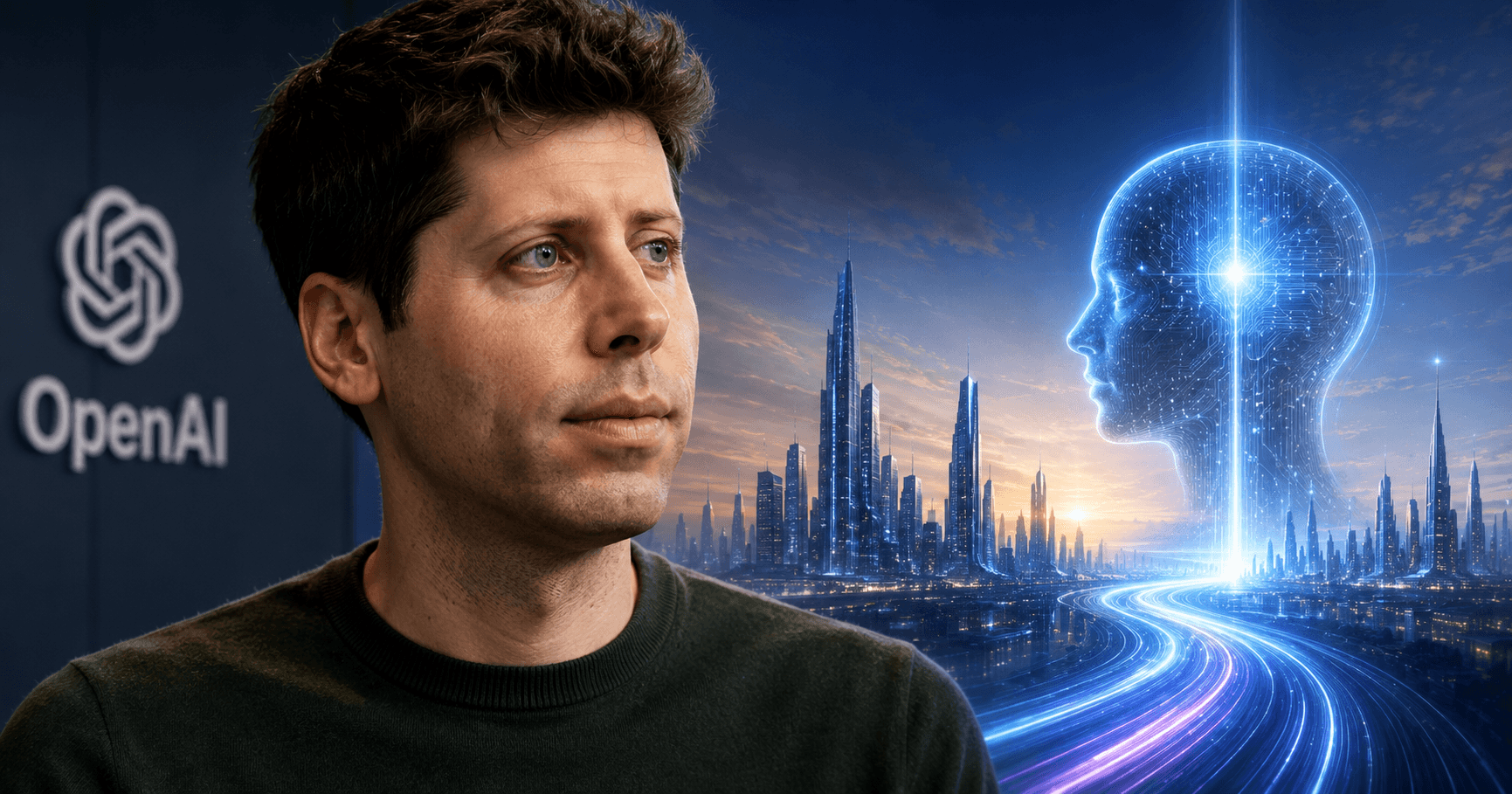
Artificial Intelligence (AI) is advancing at a pace that has transformed discussions once reserved for science fiction into serious conversations among researchers, business leaders, and policymakers. At the center of many of these discussions is Sam Altman, CEO of OpenAI, whose recent comments about the AI singularity have sparked global debate.
Altman argues that humanity is entering—or has already entered—a "gentle singularity," a period in which AI systems become increasingly capable and deeply integrated into everyday life without a single dramatic turning point. His perspective has generated excitement among technology enthusiasts while also prompting questions about safety, jobs, governance, and the future relationship between humans and intelligent machines.
In this article, we'll explore Sam Altman's views on the AI singularity, what the concept actually means, why his perspective matters, the opportunities and challenges ahead, and how experts differ on the future of AI.
Who Is Sam Altman?
Sam Altman is the CEO of OpenAI, one of the world's leading artificial intelligence research and deployment organizations.
Before joining OpenAI, Altman served as the president of Y Combinator, helping launch and support numerous successful technology startups. Today, he is widely regarded as one of the most influential voices shaping the future of AI.
What Is the AI Singularity?
The technological singularity is a hypothetical point at which AI becomes capable of improving itself rapidly, leading to intelligence that far exceeds human capabilities.
Although there is no universally accepted definition, the idea generally includes:
- AI systems exceeding human performance across most cognitive tasks.
- AI accelerating scientific and technological progress.
- Increasing automation of knowledge work.
- Rapid advances that become difficult for humans to predict.
The singularity remains a debated concept rather than an established scientific milestone.
Sam Altman's "Gentle Singularity" Vision
Unlike the classic science-fiction idea of a sudden intelligence explosion, Altman argues that the transition is likely to be gradual.
In his essay "The Gentle Singularity," he writes that humanity is "past the event horizon" and that AI progress is already accelerating scientific discovery and productivity. He suggests that the most difficult breakthroughs behind modern systems have already been achieved, while emphasizing that daily life has not yet changed as dramatically as many people imagine.
Altman describes this as a "gentle" rather than catastrophic transition.
"We Are Now in the Singularity"
In recent interviews, Altman has gone even further, saying that humanity is already living through the singularity as he defines it.
His reasoning includes:
- AI systems performing many intellectual tasks at expert levels.
- AI increasingly assisting software development and scientific research.
- AI helping improve future AI systems.
- Rapid improvements in capability occurring over short timeframes.
Importantly, this reflects Altman's interpretation of the singularity. Many AI researchers and experts use a stricter definition and do not believe that point has yet been reached.
Why Does Altman Believe AI Progress Is Accelerating?
According to Altman, several trends indicate rapid progress.
1. AI Assisting Scientific Discovery
He believes AI will increasingly help scientists generate hypotheses, analyze data, and accelerate research across medicine, biology, physics, and engineering.
2. AI Building Better AI
One of Altman's recurring themes is that AI will increasingly contribute to developing future AI systems, speeding up innovation.
3. Productivity Gains
Altman expects AI to dramatically increase productivity by assisting with coding, writing, research, customer service, education, and many other knowledge-intensive tasks.
What Could Change in the Coming Years?
Altman envisions AI influencing nearly every sector.
Healthcare
- Faster drug discovery
- Improved diagnostics
- Personalized treatment recommendations
Education
- AI tutors
- Personalized learning
- Expanded access to knowledge
Scientific Research
- Faster experimentation
- Automated analysis
- Accelerated innovation
Software Development
- AI-assisted coding
- Automated testing
- More efficient engineering workflows
Business
- Smarter decision-making
- Automation of repetitive tasks
- Improved customer support
These are projections rather than guaranteed outcomes.
Altman Also Warns About Risks
Despite his optimism, Altman has consistently acknowledged significant risks.
AI Safety
Advanced AI systems must be developed responsibly with robust testing and oversight.
Job Displacement
Automation may reshape many occupations, requiring workforce adaptation and new skills.
Concentration of Power
Altman has warned that AI controlled by only a handful of companies or governments could be harmful and has argued for broad societal participation in AI's future.
Governance
He supports developing frameworks for responsible deployment of increasingly capable AI systems.
How Other Experts View the Singularity
The AI community does not have a consensus.
Some researchers believe today's progress supports Altman's optimistic timeline, while others argue that:
- Current AI systems still rely heavily on human guidance.
- General intelligence remains an unsolved challenge.
- Robotics and real-world reasoning continue to lag behind software advances.
- The classical "intelligence explosion" has not been demonstrated.
This diversity of opinion is an important part of the ongoing debate.
Why Sam Altman's Views Matter
Because OpenAI develops some of the world's most advanced AI systems, Altman's perspectives influence:
- Technology investment
- Public discussion
- AI policy debates
- Enterprise AI adoption
- Research priorities
His comments often shape how governments, businesses, and the public think about AI's future.
Frequently Asked Questions (FAQs)
What does Sam Altman mean by the AI singularity?
Altman uses the term to describe a gradual transition in which AI becomes increasingly capable and integrated into society, rather than a single dramatic event.
Has the AI singularity been scientifically confirmed?
No. Whether humanity has entered the singularity is a matter of interpretation and remains debated among experts.
Is Sam Altman optimistic about AI?
Yes. While he frequently discusses AI safety and governance, he has consistently expressed optimism about AI's potential to improve scientific progress, productivity, and quality of life.
Does Altman believe AI will replace all jobs?
He has discussed significant changes to work and productivity but has not argued that every human job will disappear. Instead, he expects major transformations in how work is performed.
Sources (Verified & Authoritative)
- Sam Altman's Blog – "The Gentle Singularity" (official essay).
- Sam Altman's Blog – "The Merge" (official essay).
- Business Insider – Recent interview discussing Altman's singularity views.
- TechCrunch – Analysis of Altman's AI predictions.
- arXiv – Artificial Intelligence: Arguments for Catastrophic Risk.
- arXiv – The Singularity May Never Be Near by Toby Walsh.