

Semiconductor and Chip Making Basics
by UptoSkills Team
Missions
5
Quests
25
Games
10
XP
500
Coins
35
Certificate optional — ₹399, or ₹199 on Pro
Key Benefits
Earn XP & Level Up
Gain 500 XP to unlock badges and achievements
Collect Coins
Earn 35 coins to redeem rewards
Professional Certificate
QR-verified and recruiter-checkable — ₹399, or ₹199 on Pro
Unlock Achievements
Complete challenges and earn exclusive badges
Certificate Preview
Finish the league and this is what you walk away with.
We'll post you a printed copy — free.
Tick one box at checkout and it ships anywhere in India in 14–21 days. Almost nobody here does this free.
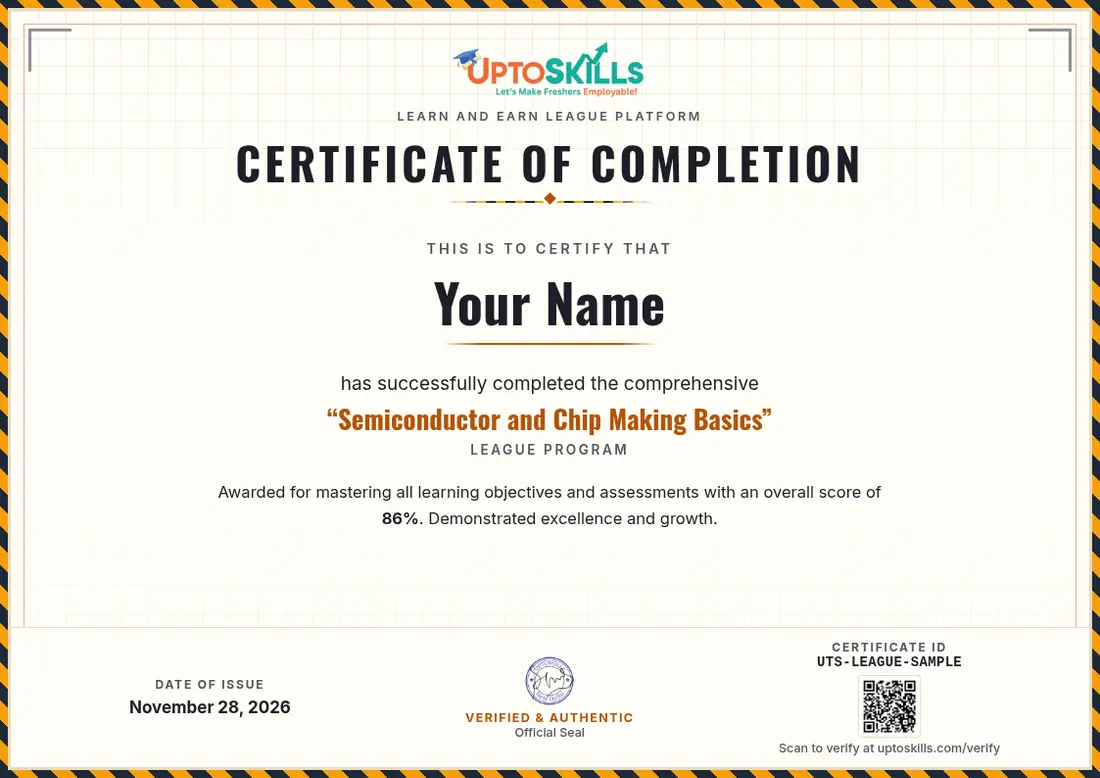
✨ QR-verified · high-quality PDF
Every lesson, quest and game here is free. Forever.
Standard
₹399
one-time
With Pro
₹199
per certificate
So why isn't the certificate free? One anybody can print is worth nothing to a recruiter. The fee covers evaluation, QR-backed verification and lifetime hosting — that's what makes it checkable.
Hall of Fame
About This League
Every electronic device depends on semiconductors. This League explains how silicon behaves, how diodes and transistors work, and how a chip travels from sand to a packaged product, with simple diagrams. No earlier electronics knowledge is needed.
What you will learn
- Explain why silicon is used for chips
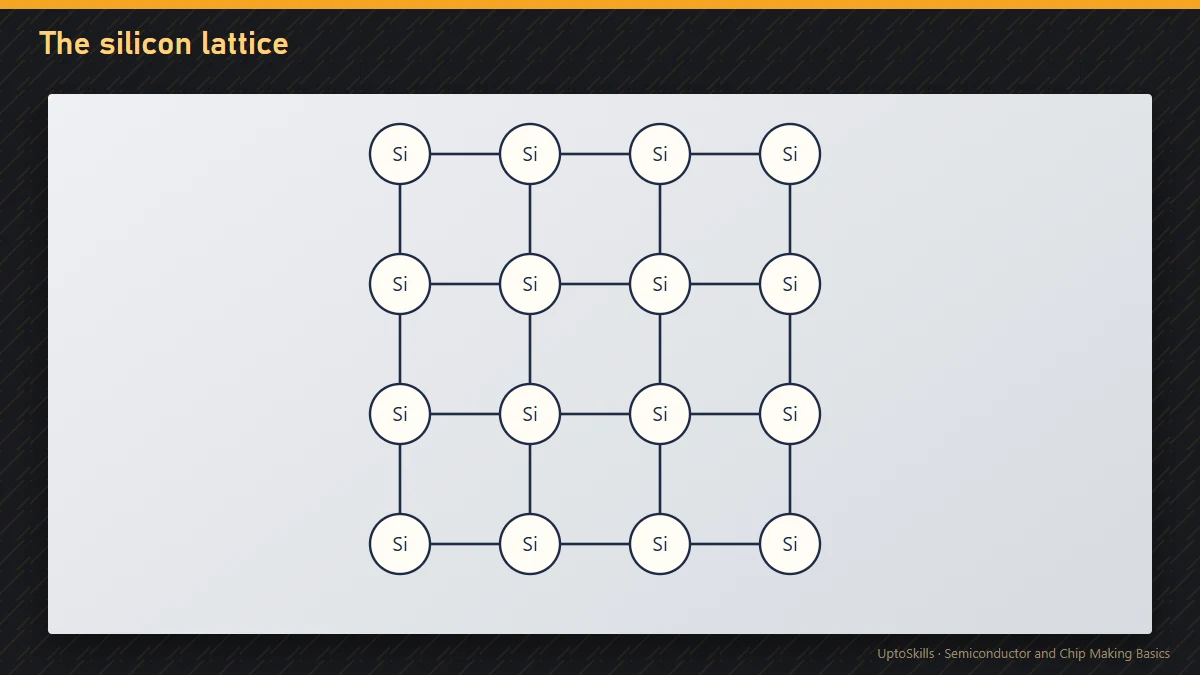
- Understand electrons, holes, doping and energy bands
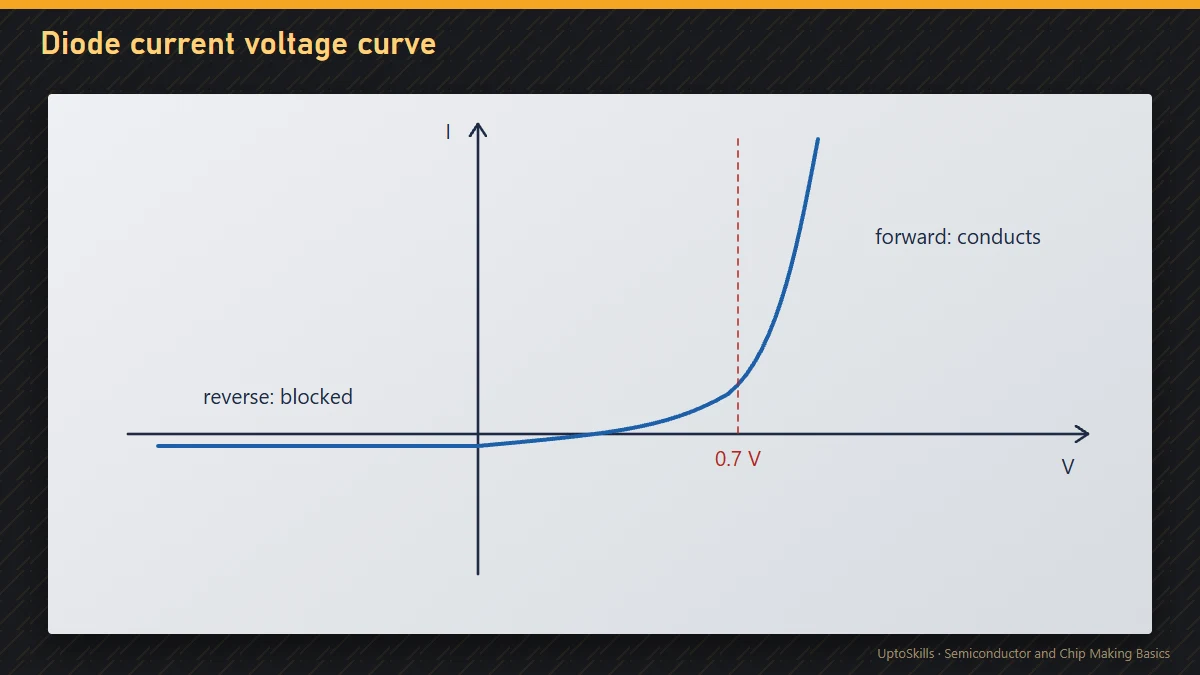
- Describe how a PN junction and diode work
- Know how transistors act as switches
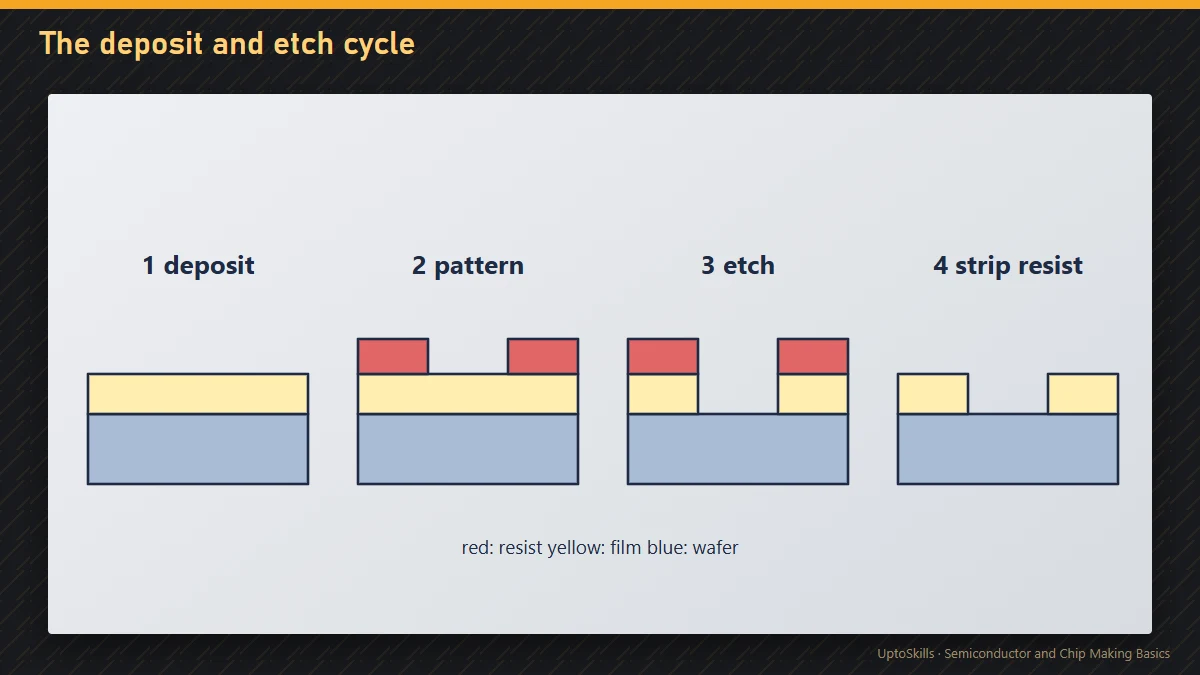
- Follow the steps of chip fabrication
- Understand testing, packaging, company types and careers
What this League covers
| Semiconductor Basics | Materials, silicon crystals, electrons, holes, doping and energy bands. |
| PN Junctions and Diodes | PN junctions, depletion region, bias, diode curve, Zener diodes and LEDs. |
| Transistors | BJTs, MOS capacitors, MOSFETs, switching and scaling. |
| Making a Chip | Wafers, cleanrooms, photolithography, etching, deposition and implantation. |
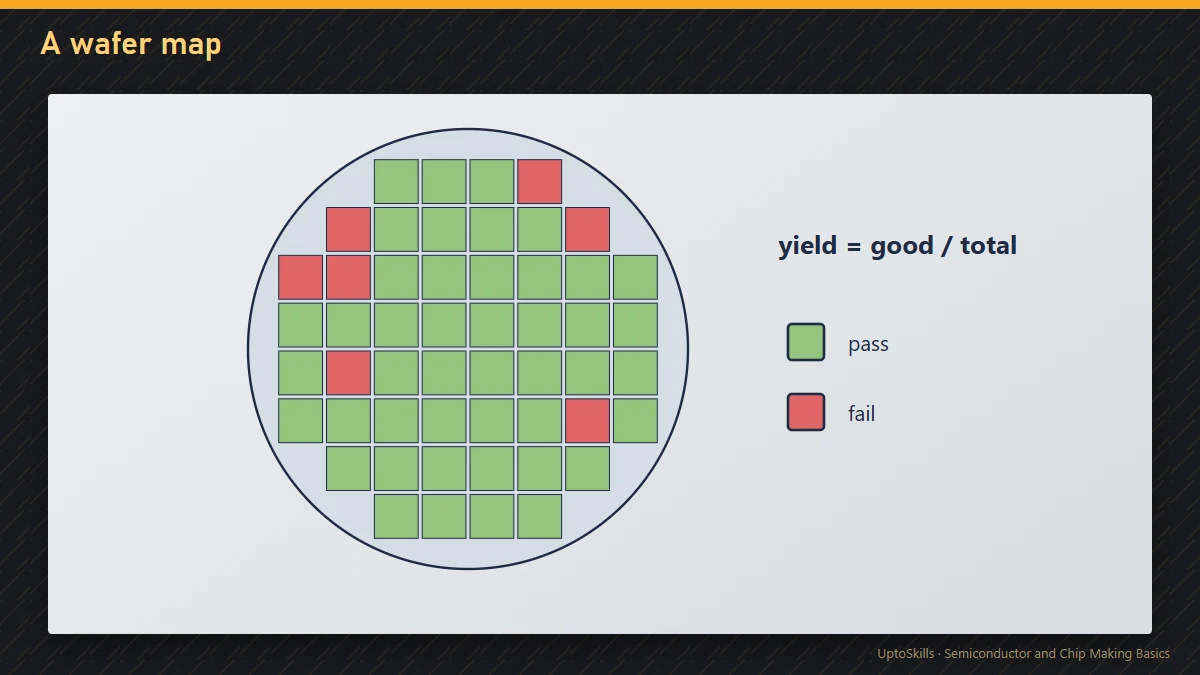
| Testing and the Industry | Wafer testing, packaging, chip types, company models and careers. |
Who this League is for
Complete beginners, first year engineering students and anyone curious about chips and the semiconductor industry.
A look inside
Prerequisites
- No earlier electronics knowledge needed
- School level physics and chemistry: atoms and electricity
- Curiosity about how chips are made
- A computer or phone to learn on
Learning Objectives
- Tell conductors, insulators and semiconductors apart.
- Explain doping and the roles of electrons and holes.
- Describe a PN junction under forward and reverse bias.
- Explain how a MOSFET switches.
- Outline the main steps of making and testing a chip.
- Identify career paths in the semiconductor industry.
Earn XP • Collect Coins • Unlock Achievements