

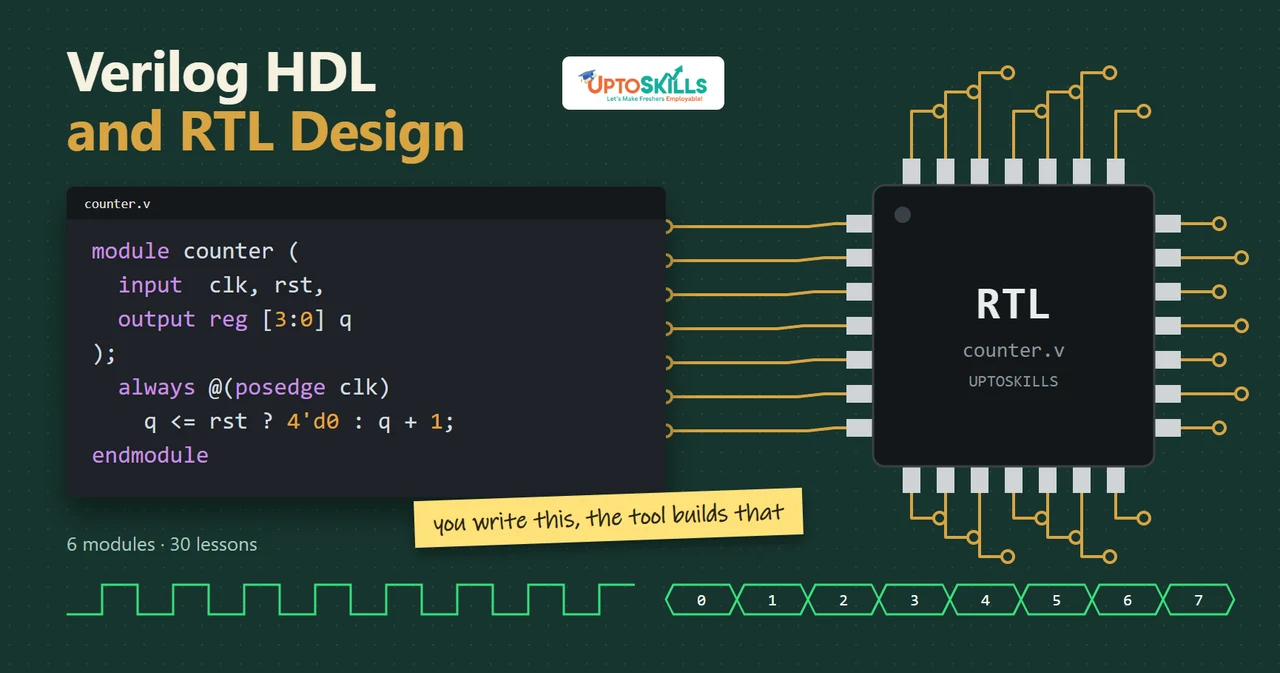
Verilog HDL and RTL Design
by UptoSkills Team
Missions
6
Quests
30
Games
12
XP
600
Coins
40
Certificate optional — ₹399, or ₹199 on Pro
Key Benefits
Earn XP & Level Up
Gain 600 XP to unlock badges and achievements
Collect Coins
Earn 40 coins to redeem rewards
Professional Certificate
QR-verified and recruiter-checkable — ₹399, or ₹199 on Pro
Unlock Achievements
Complete challenges and earn exclusive badges
Certificate Preview
Finish the league and this is what you walk away with.
We'll post you a printed copy — free.
Tick one box at checkout and it ships anywhere in India in 14–21 days. Almost nobody here does this free.
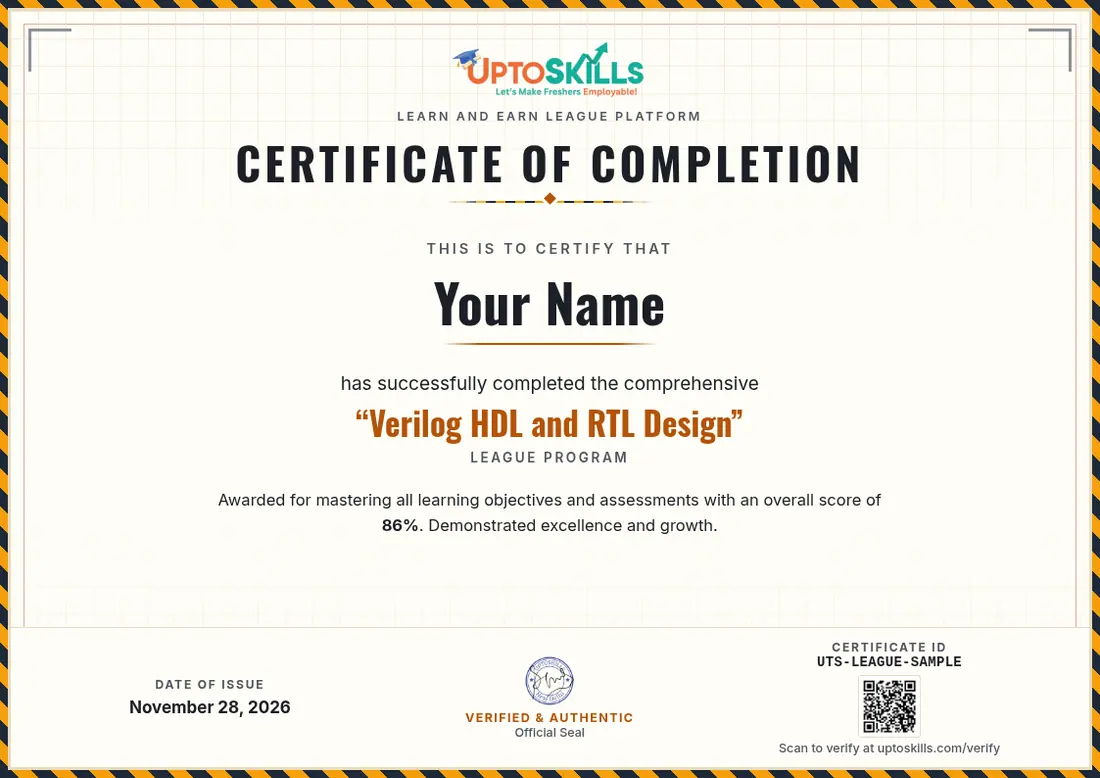
✨ QR-verified · high-quality PDF
Every lesson, quest and game here is free. Forever.
Standard
₹399
one-time
With Pro
₹199
per certificate
So why isn't the certificate free? One anybody can print is worth nothing to a recruiter. The fee covers evaluation, QR-backed verification and lifetime hosting — that's what makes it checkable.
Hall of Fame
About This League
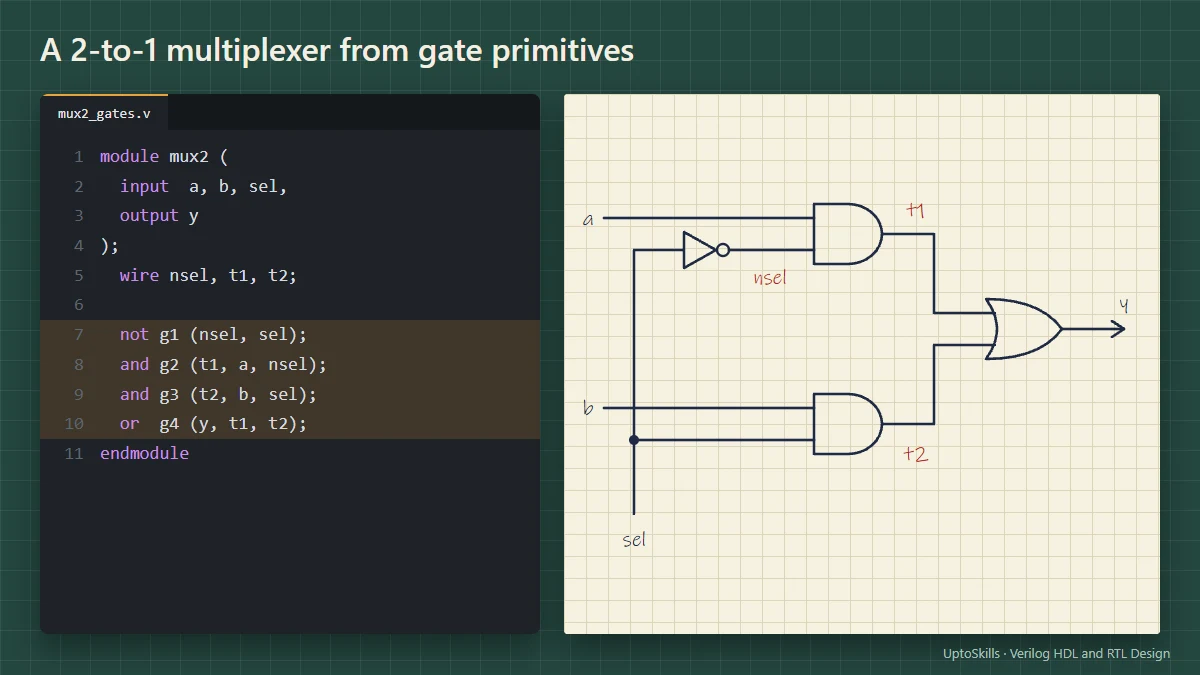
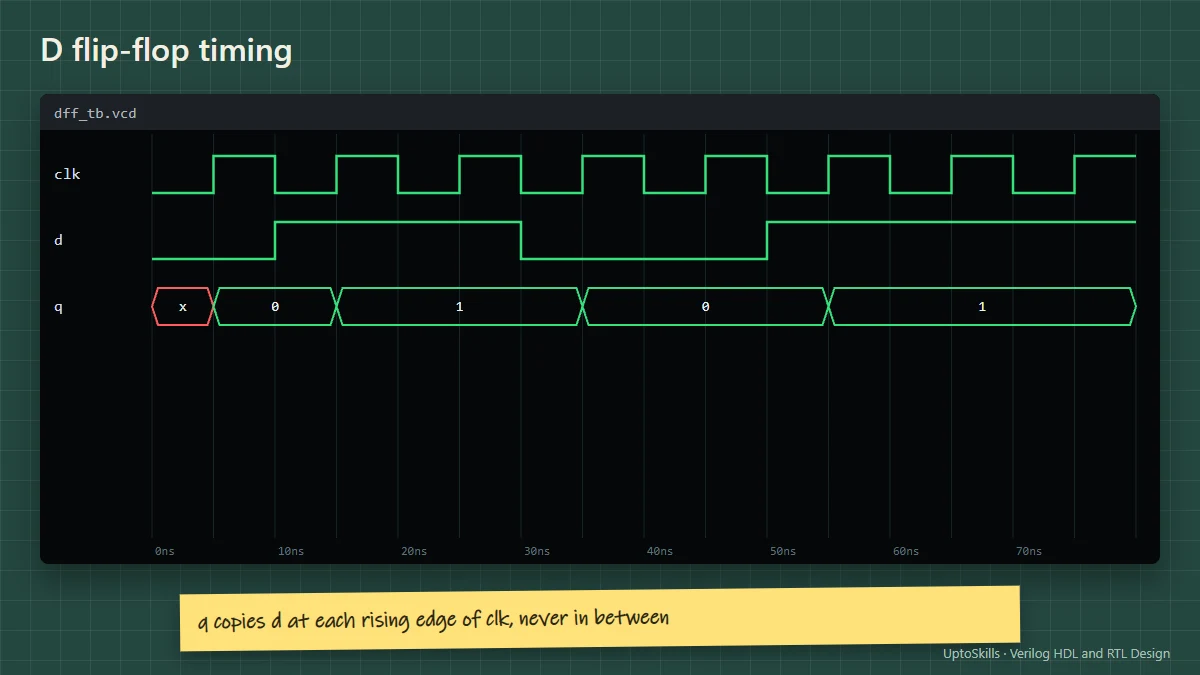
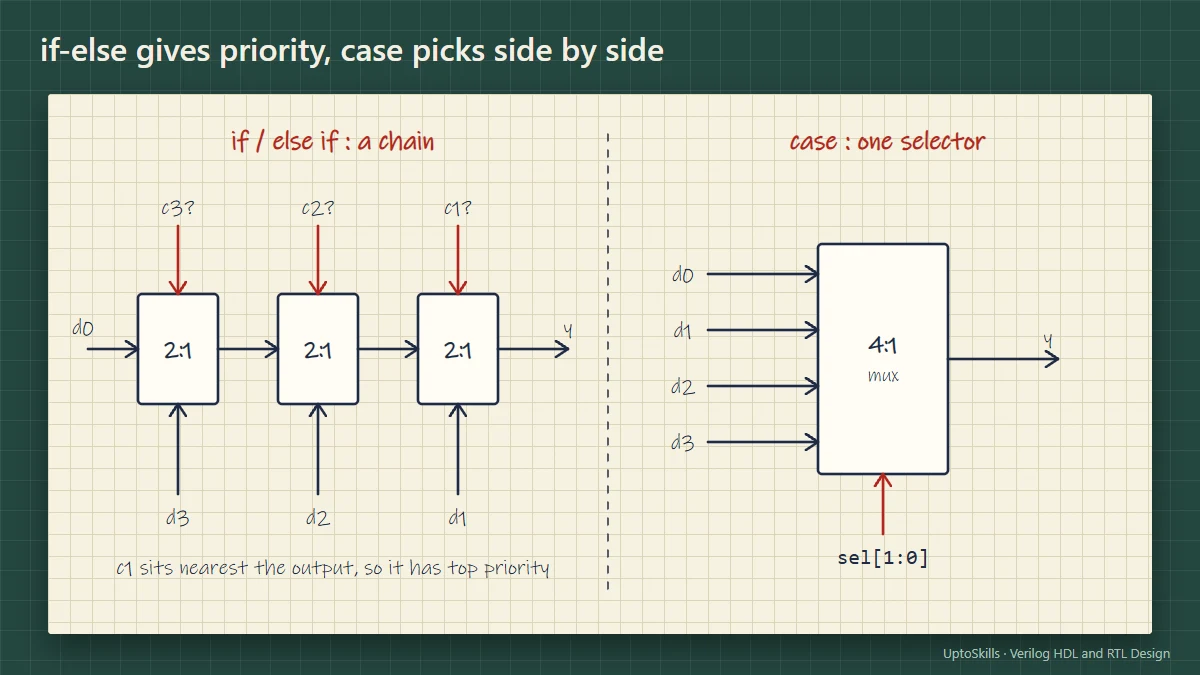
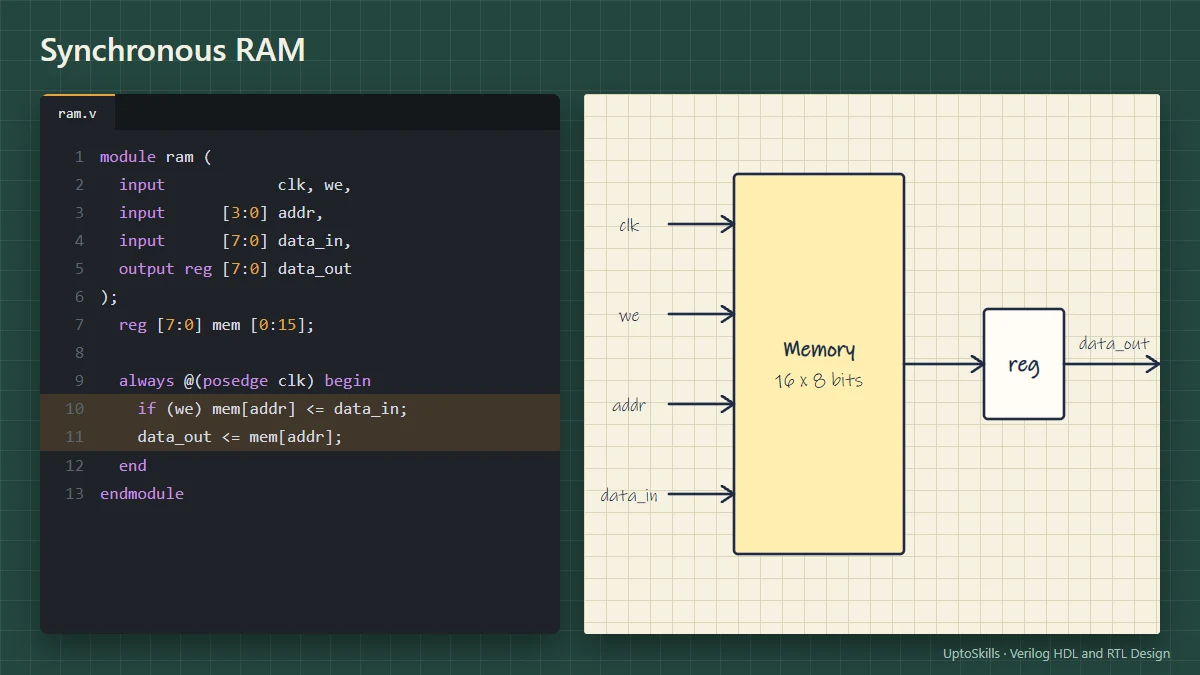
Verilog is the language engineers use to describe digital hardware. This League takes you from your first module to testbenches, state machines and synthesizable RTL, with code, waveforms and circuit sketches along the way.
What you will learn
- Write modules with ports, nets and variables
- Describe circuits at gate, dataflow and behavioural level
- Design combinational and sequential logic
- Use blocking and non-blocking assignments correctly
- Build finite state machines and memories
- Test a design with a testbench and read its waveforms
What this League covers
| Getting Started with Verilog | What an HDL is, the VLSI design flow, modules, ports, data types and number literals. |
| Modelling Styles and Operators | Gate level, dataflow and behavioural modelling, operators and module hierarchy. |
| Combinational Logic Design | Always blocks, if else and case, adders, multiplexers, decoders and unintended latches. |
| Sequential Logic Design | Flip-flops, blocking and non-blocking assignments, resets, counters and shift registers. |
| State Machines and Reusable Design | Finite state machines, sequence detectors, parameters, tasks, functions and memories. |
| Verification and Synthesis | Testbenches, delays, waveforms, synthesizable code and how RTL becomes gates. |
Who this League is for
ECE, EEE and computer science students who know digital electronics basics and want to move into VLSI or FPGA design. Verilog code in this League is shown for reading and is not run in the browser.
A look inside
Prerequisites
- Digital electronics basics: logic gates, flip-flops and binary numbers
- The Digital Electronics Fundamentals League is a good starting point
- No earlier Verilog knowledge needed
- A computer to read and try the code in your own simulator
Learning Objectives
- Write Verilog modules with correct ports, data types and number literals.
- Describe the same circuit using gate level, dataflow and behavioural modelling.
- Design combinational circuits without creating unintended latches.
- Design registers, counters and shift registers using non-blocking assignments.
- Build Moore and Mealy finite state machines, including a sequence detector.
- Verify a design with a testbench and tell synthesizable code from simulation-only code.
Earn XP • Collect Coins • Unlock Achievements