
Debugging & Code Optimization
BeginnerFree LearningSoftware Engineering

Debugging & Code Optimization

by uptoskills team , Divy Aakarsh

Missions

10

Quests

63

Games

29

XP

340

Coins

35

Free Learning

Certificate optional — ₹499, or ₹199 on Pro

Self-paced
Certificate

Key Benefits

Earn XP & Level Up

Gain 340 XP to unlock badges and achievements

Collect Coins

Earn 35 coins to redeem rewards

Professional Certificate

QR-verified and recruiter-checkable — ₹499, or ₹199 on Pro

Unlock Achievements

Complete challenges and earn exclusive badges

About This League

When a program doesn't behave as expected, or when it runs, but sluggishly, the immediate challenge is to pinpoint the exact cause and then implement a solution. This process, known as debugging, is an indispensable skill for any software developer, regardless of experience level. It's not just about fixing errors; it's about understanding the intricate flow of logic within code, identifying logical flaws, and rectifying unexpected behavior. Mastering debugging allows developers to build more robust, reliable, and user-friendly applications by systematically addressing issues that arise during development and after deployment.

Beyond simply fixing what's broken, there's a crucial parallel discipline: code optimization. This involves refining software to improve its performance, often by reducing its resource consumption (like CPU time or memory usage) or increasing its speed. In the fast-paced world of technology, efficiency is paramount. Applications that are slow to respond or consume excessive resources can lead to poor user experiences, increased operational costs, and even a competitive disadvantage. Understanding optimization techniques empowers developers to create software that is not only functional but also highly performant and cost-effective.

This League is designed to equip you with the foundational knowledge and practical strategies for both debugging and code optimization. You'll learn how to approach problems methodically, leverage powerful tools, and apply proven techniques to write cleaner, faster, and more reliable code. By the end, you'll be more confident in tackling unexpected issues and in enhancing the efficiency of your programs.


The Pillars of Debugging and Optimization

This League delves into the core principles and techniques that form the bedrock of effective debugging and code optimization. You will explore a range of strategies that are applicable across various programming languages and development environments.

Understanding and Identifying Bugs

  • Root Cause Analysis: Learn to move beyond surface-level symptoms and investigate the fundamental reasons why an error is occurring. This involves tracing execution paths, examining data states, and understanding the interplay of different code modules to pinpoint the originating defect.
  • Types of Errors: Differentiate between syntax errors (caught by the compiler/interpreter), runtime errors (occurring during execution, like division by zero), and logical errors (where the code runs but produces incorrect results). Understanding these distinctions helps in applying the right debugging approach.
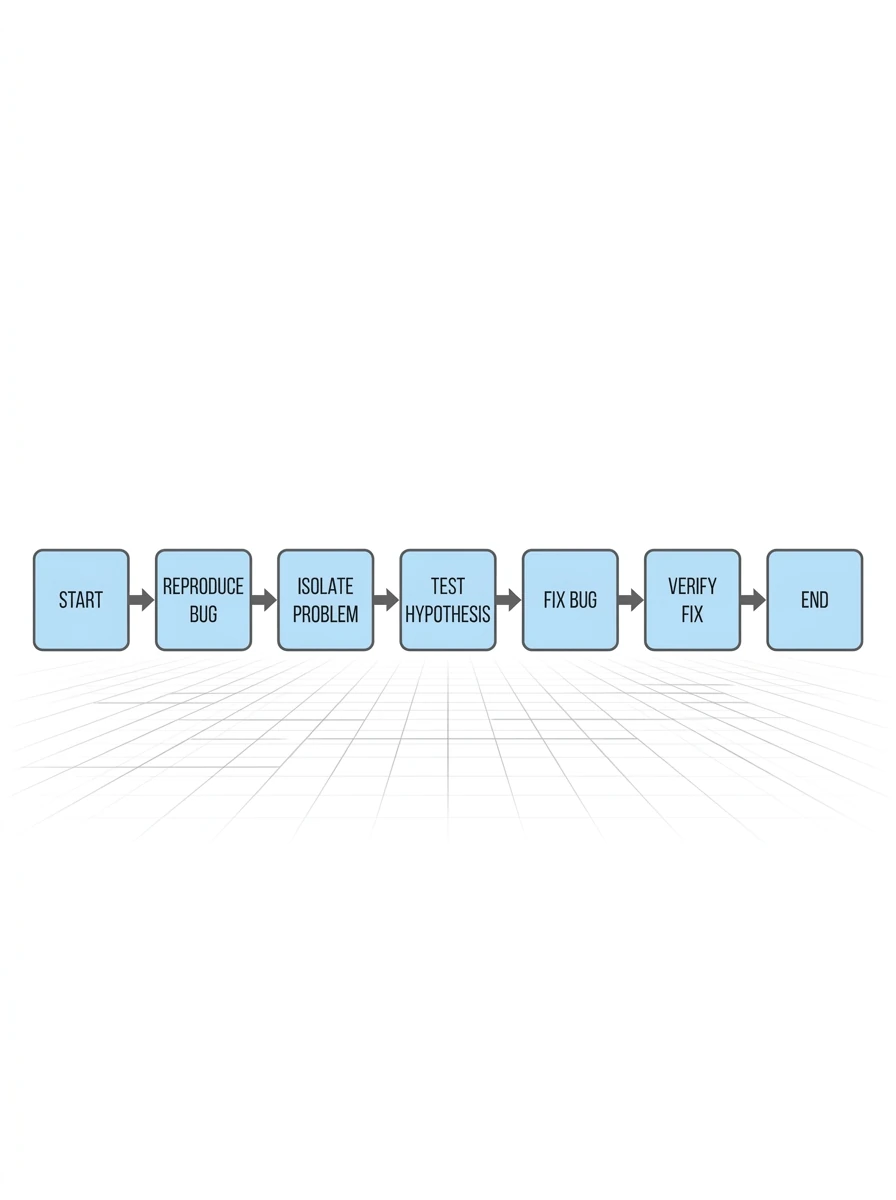
  • Reproducing Bugs: Develop a systematic approach to consistently trigger a bug, which is a critical first step in diagnosing it. This includes understanding input conditions, environmental factors, and specific user actions that lead to the problematic behavior.

Effective Debugging Techniques

  • Print Statement Debugging: Master the art of strategically inserting print (or log) statements to output variable values and track program flow. While seemingly simple, this technique can be incredibly powerful for understanding how data changes and where execution deviates from expectation.
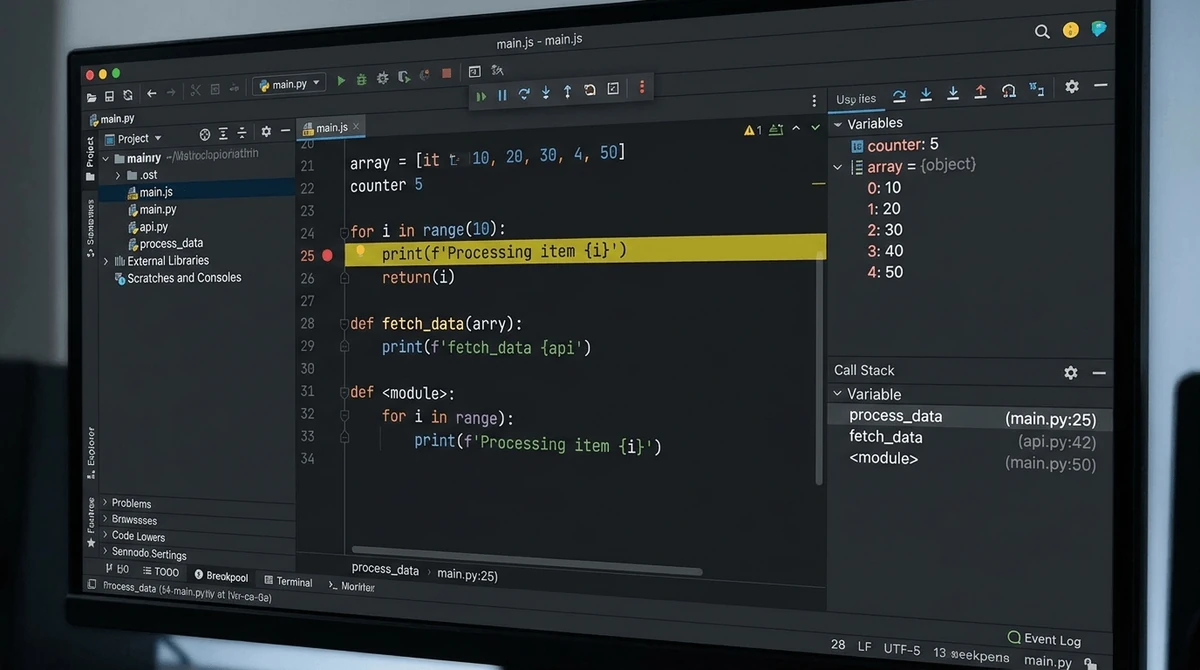
  • Using Debuggers: Become proficient with integrated development environment (IDE) debuggers. You'll learn how to set breakpoints to pause execution, step through code line by line, inspect variable values at any point, and examine the call stack to understand the sequence of function calls leading to the current state.
  • Assertion-Based Debugging: Understand how to use assertions to check for conditions that should always be true at specific points in your code. When an assertion fails, it immediately halts execution and signals an unexpected state, helping to catch logical errors early.
  • Error Handling and Logging: Implement robust error handling mechanisms to gracefully manage exceptions and unexpected situations. Learn to use logging frameworks to record diagnostic information, application events, and errors, providing invaluable data for post-mortem analysis.

Introduction to Code Optimization

  • Algorithmic Efficiency: Grasp the importance of choosing appropriate algorithms. Understanding concepts like Big O notation (O(n), O(n^2), O(log n)) will help you recognize how different algorithmic approaches scale with input size, drastically affecting performance for large datasets.
  • Data Structure Selection: Learn how the choice of data structure (e.g., arrays, linked lists, hash maps, trees) can significantly impact the speed of operations like searching, insertion, and deletion.
  • Premature Optimization Avoidance: Understand the principle of "premature optimization is the root of all evil." This means focusing on writing clear, correct code first, and then optimizing only those parts that have been identified as performance bottlenecks through profiling.

Practical Application and Tools

Theory is best solidified with practice. This League emphasizes hands-on experience with the tools and workflows that software engineers use daily to debug and optimize their code.

Essential Debugging Tools

  • IDE Debuggers: Gain practical experience with the built-in debuggers of popular Integrated Development Environments (IDEs) such as VS Code, PyCharm, Eclipse, or Visual Studio. You'll learn to navigate their interfaces, set conditional breakpoints, and evaluate expressions.
  • Command-Line Debuggers: For certain environments or specific needs, command-line debuggers like GDB (for C/C++) or PDB (for Python) offer powerful capabilities and a different perspective on debugging.
  • Logging Frameworks: Explore how to effectively use logging libraries (e.g., Python's `logging` module, Log4j for Java) to generate informative and structured logs that can be analyzed to understand application behavior in production environments.

Profiling for Performance Insights

  • CPU Profilers: Understand how CPU profilers work to identify which functions or lines of code are consuming the most processing time. This data is crucial for pinpointing performance bottlenecks.
  • Memory Profilers: Learn to use memory profilers to detect memory leaks, excessive memory consumption, and inefficient memory allocation patterns, which can significantly degrade application performance and stability.
  • Benchmarking: Discover techniques for benchmarking small code segments or entire functions to measure their performance under specific conditions and track improvements after optimization.

Workflow and Best Practices

  • Version Control Integration: Understand how to effectively use version control systems (like Git) in conjunction with debugging, allowing you to revert to known good states, compare code changes, and isolate when a bug was introduced.
  • Test-Driven Development (TDD) and Debugging: Explore how writing tests before or alongside code can proactively identify bugs and simplify the debugging process, as tests serve as an immediate feedback mechanism.
  • Rubber Duck Debugging: Learn about the psychological technique of explaining your code and the problem you're facing to an inanimate object (like a rubber duck) or a colleague. This often helps you articulate the problem more clearly and discover the solution yourself.

Who is This League For?

This League is specifically tailored for individuals who are new to software development or are looking to solidify their understanding of fundamental development practices. It assumes little to no prior experience with debugging tools or optimization theory, making it an ideal starting point.

Beginner Developers

If you've just started learning a programming language and are encountering errors in your code, or notice that your programs are slower than you expect, this League will provide you with the essential skills to tackle these challenges effectively. You'll gain confidence in your ability to find and fix issues.

Aspiring Software Engineers

For those aiming for a career in software engineering, a strong grasp of debugging and optimization is non-negotiable. This League lays the groundwork for building robust applications and understanding performance considerations, which are critical for any professional developer.

Students and Hobbyists

Anyone learning to code through academic programs, bootcamps, or self-study will find immense value in this League. It will demystify the process of troubleshooting and enhance the quality and efficiency of the projects you build.

Real-World Relevance and Career Impact

The skills acquired in this League are not confined to academic exercises; they are directly applicable to the professional software development landscape. Understanding how to debug efficiently and optimize code is a fundamental requirement for virtually every software engineering role.

Industry Demand

Companies across all sectors, from tech giants to startups, rely on developers who can write reliable and performant software. Employers actively seek candidates who demonstrate strong problem-solving skills and a methodical approach to identifying and resolving issues.

Roles and Responsibilities

Whether you're a Front-End Developer ensuring a responsive user interface, a Back-End Developer optimizing database queries and server logic, a Mobile Developer reducing battery drain and improving app responsiveness, or a Game Developer pushing the boundaries of graphical performance, debugging and optimization are daily tasks. Even roles in Quality Assurance (QA) benefit immensely from an understanding of how to find and reproduce bugs.

Problem Solving and Efficiency

At its core, software engineering is about solving problems efficiently. This League equips you with the mental models and technical proficiency to tackle complex issues, reduce development time spent on fixing bugs, and deliver applications that are not only functional but also performant, leading to better user satisfaction and reduced operational costs.


League Structure and Learning Outcomes

This League is structured to provide a balanced mix of theoretical understanding and practical application. Through guided lessons, hands-on exercises, and practical examples, you will build a strong foundation in debugging and optimization principles.

Learning Journey

You will begin by understanding the nature of software defects and learn systematic methods for identifying their root causes. This will be followed by an in-depth exploration of various debugging tools and techniques, including interactive debugging, logging, and assertions. Subsequently, the focus will shift to code optimization, where you'll learn to analyze performance, understand algorithmic complexity, and apply basic optimization strategies to make your code run faster and use fewer resources.

What You Will Be Able to Do

Upon successful completion of this League, you will be able to:

  • Effectively use IDE debuggers to step through code, inspect variables, and identify the source of bugs.
  • Employ print statement debugging and logging to trace program execution and understand data flow.
  • Reproduce and diagnose various types of software errors, including runtime and logical bugs.
  • Understand the concept of algorithmic complexity and its impact on program performance.
  • Identify potential performance bottlenecks in your code through basic profiling.
  • Apply simple optimization techniques to improve the efficiency of your programs.
  • Write cleaner, more maintainable, and more reliable code with a proactive approach to error prevention.
  • Develop a systematic and confident approach to troubleshooting software issues.
Mastering debugging and optimization is not just about fixing code; it's about developing a mindset of clarity, precision, and efficiency that will serve you throughout your software engineering journey.

Prerequisites

  • Basic understanding of at least one programming language (e.g., Python, Java, JavaScript)
  • Familiarity with fundamental programming concepts like variables, data types, control flow (if/else, loops), and functions/methods.
  • Basic understanding of how programs execute and the concept of errors.
  • Comfort with using a code editor or Integrated Development Environment (IDE).

Learning Objectives

  • Understand the fundamental principles of debugging, including common error types and systematic approaches to identifying and fixing them.
  • Implement basic debugging techniques using a debugger tool to step through code, inspect variables, and set breakpoints.
  • Analyze simple code snippets to identify potential performance bottlenecks and understand the impact of algorithm choice on efficiency.
  • Apply common code optimization strategies, such as reducing redundant computations and improving loop efficiency, to improve program performance.
  • Explain the trade-offs between code readability, maintainability, and performance optimization in the context of beginner-level software development.
  • Develop a systematic approach to testing code to proactively identify bugs and verify the effectiveness of optimizations.