
Advanced Python Software Architecture
AdvancedFree LearningSoftware Engineering

Advanced Python Software Architecture

by uptoskills Team, Swayam Patel

Missions

10

Quests

66

Games

30

XP

700

Coins

45

Free Learning

Certificate optional — ₹499, or ₹199 on Pro

Self-paced
Certificate

Key Benefits

Earn XP & Level Up

Gain 700 XP to unlock badges and achievements

Collect Coins

Earn 45 coins to redeem rewards

Professional Certificate

QR-verified and recruiter-checkable — ₹499, or ₹199 on Pro

Unlock Achievements

Complete challenges and earn exclusive badges

About This League

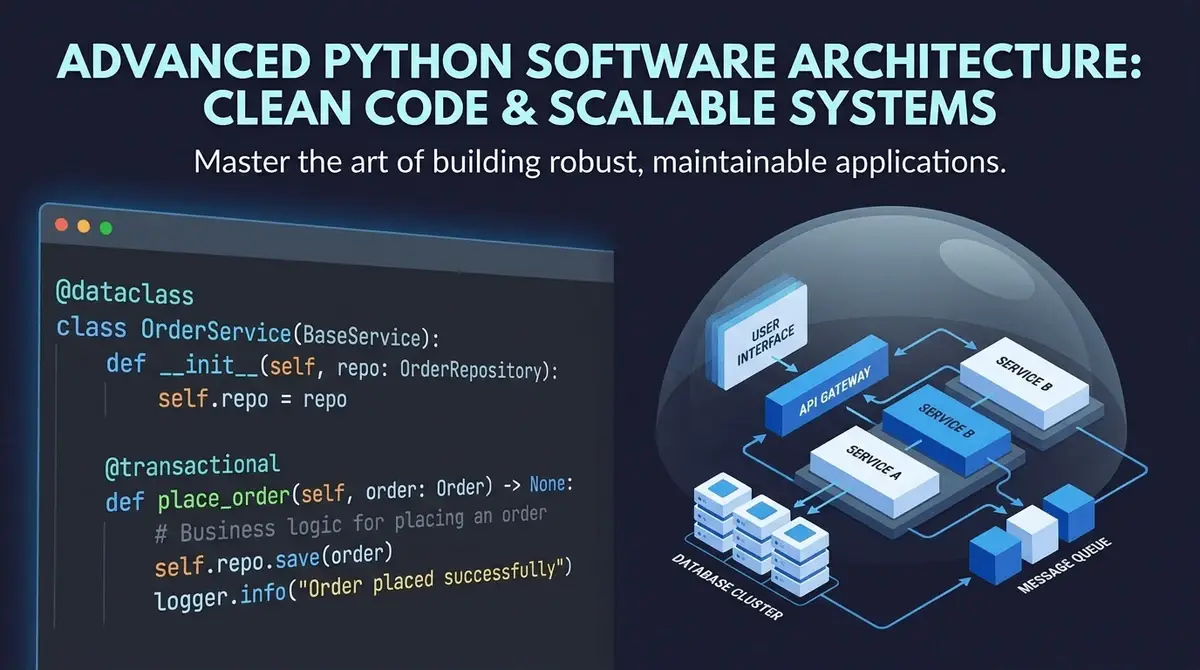
Mastering the art of building robust, maintainable, and high-performing Python applications is paramount in modern software engineering. This advanced League delves into the foundational principles and practical techniques that separate amateur scripts from truly professional, scalable systems. We move beyond basic syntax to explore how to architect software that can adapt to evolving requirements, withstand increasing loads, and be readily understood and extended by development teams.

In today's fast-paced technological landscape, the ability to write clean, well-structured, and efficient Python code is not just a desirable skill; it's a critical differentiator for building software that not only functions correctly but also thrives. This League is meticulously designed for seasoned developers aiming to elevate their expertise in designing sophisticated Python architectures. We will tackle the complexities of enterprise-grade software development, focusing on strategies that ensure long-term project viability and developer productivity.

The core objective is to equip you with the mindset and toolkit necessary to construct Python systems that are inherently resilient, easily testable, and optimized for performance. By the conclusion of this educational journey, you will be capable of making informed architectural decisions, applying best practices rigorously, and ultimately, delivering Python software solutions that stand the test of time and scale.


Core Architectural Principles & Clean Code Practices

This section forms the bedrock of our League, focusing on the fundamental philosophies that underpin well-engineered software. We dissect the "why" and "how" of creating systems that are not only functional but also a pleasure to work with.

The Pillars of Clean Architecture

Understand the core tenets of architectural design patterns that promote separation of concerns, modularity, and testability. This includes exploring:

  • Dependency Inversion Principle (DIP): Learn how to design systems where high-level modules do not depend on low-level modules; both should depend on abstractions, allowing for greater flexibility and easier testing. We’ll examine concrete Python implementations of this principle.
  • Single Responsibility Principle (SRP): Grasp the importance of each module, class, or function having one, and only one, reason to change. This leads to more manageable and less error-prone code.
  • Open/Closed Principle (OCP): Discover how to design software entities (classes, modules, functions, etc.) that are open for extension but closed for modification, enabling new functionality without altering existing code.
  • Liskov Substitution Principle (LSP): Understand how to ensure that objects of a superclass can be replaced with objects of a subclass without altering the correctness of the program, crucial for polymorphism and inheritance.
  • Interface Segregation Principle (ISP): Learn why it's better to have many small, client-specific interfaces rather than one large, general-purpose interface, leading to more cohesive and less coupled code.

Writing Maintainable Python Code

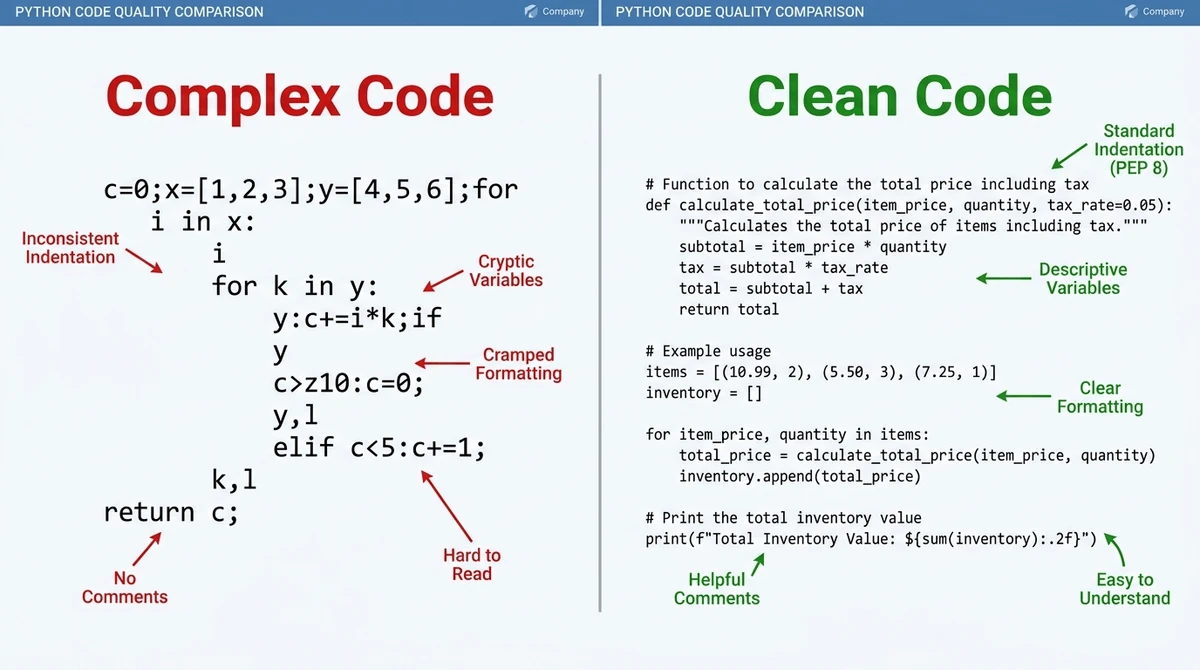
Beyond architectural patterns, the day-to-day quality of code is critical. We will immerse ourselves in techniques that make Python code readable, understandable, and easy to modify:

  • Meaningful Naming Conventions: Explore best practices for naming variables, functions, classes, and modules to convey their purpose and intent clearly, significantly reducing cognitive load for developers.
  • Effective Function and Method Design: Understand how to craft small, focused, and well-defined functions and methods that perform a single task, are easy to test, and promote reusability.
  • Reducing Complexity (Cyclomatic Complexity): Learn techniques to identify and refactor overly complex code structures, such as deep nesting and long conditional chains, to improve readability and reduce the likelihood of bugs.
  • Idiomatic Python: Embrace Pythonic ways of writing code, leveraging the language’s built-in features and design philosophies for conciseness and clarity, adhering to PEP 8 guidelines and beyond.
  • Error Handling and Exception Management: Develop robust strategies for anticipating, catching, and handling errors gracefully, ensuring applications remain stable even in unexpected situations.

Key Takeaway: The synergy between sound architectural principles and meticulous clean code practices is the foundation for building software that is both technically excellent and a joy for development teams to collaborate on.

Designing for Scalability and Performance

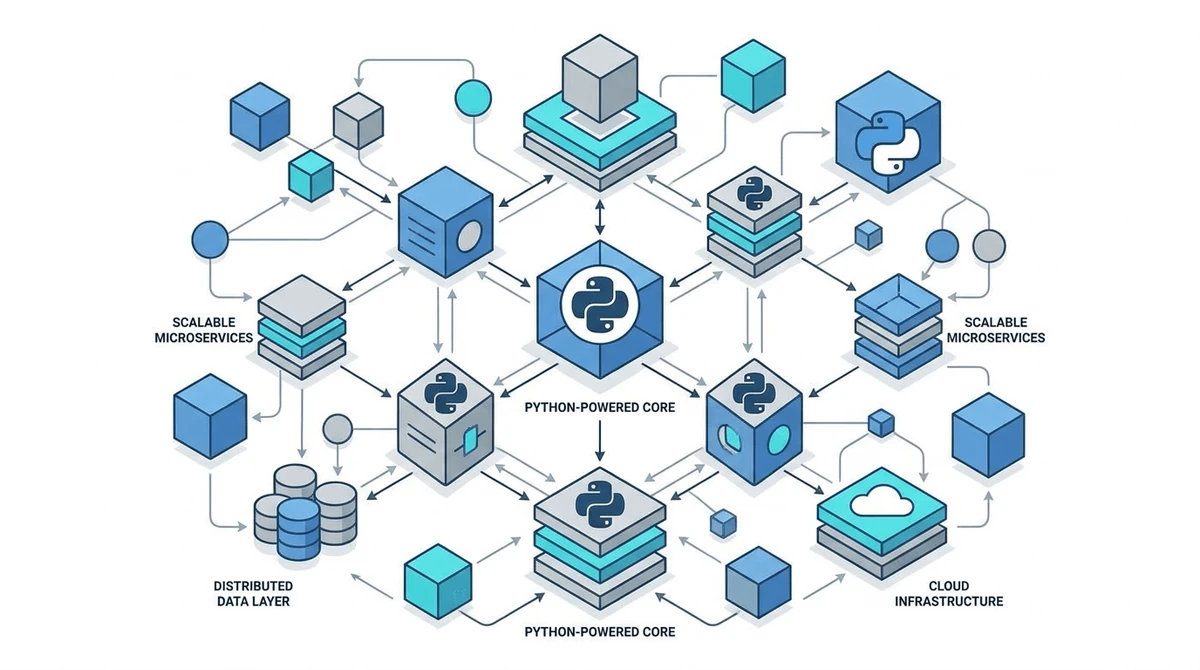
Building applications that can handle growth in users, data, and traffic is a core challenge in software engineering. This section focuses on the architectural decisions and techniques that enable Python systems to scale effectively and perform optimally.

Scalability Patterns and Strategies

Explore proven patterns and strategies for designing systems that can gracefully handle increased demand:

  • Horizontal vs. Vertical Scaling: Differentiate between scaling by adding more machines (horizontal) and scaling by increasing the resources of existing machines (vertical), and understand when each is appropriate for Python applications.
  • Microservices Architecture: Delve into the principles of decomposing a large application into smaller, independent services, facilitating independent deployment, scaling, and technology choices.
  • Event-Driven Architectures (EDA): Understand how to build systems that react to events, decoupling components and enabling asynchronous processing for improved responsiveness and scalability. This includes exploring message queues like RabbitMQ or Kafka.
  • Caching Strategies: Learn about effective use of caching mechanisms (e.g., Redis, Memcached) at various levels of the application stack to reduce database load and speed up response times.
  • Database Scaling Techniques: Investigate strategies such as sharding, replication, and read replicas to ensure your data layer can keep pace with application demands.

Performance Optimization in Python

Achieving high performance in Python involves a combination of algorithmic choices, efficient data structures, and leveraging appropriate tools:

  • Profiling and Benchmarking: Master techniques for identifying performance bottlenecks using tools like cProfile and line_profiler, and quantitatively measure improvements.
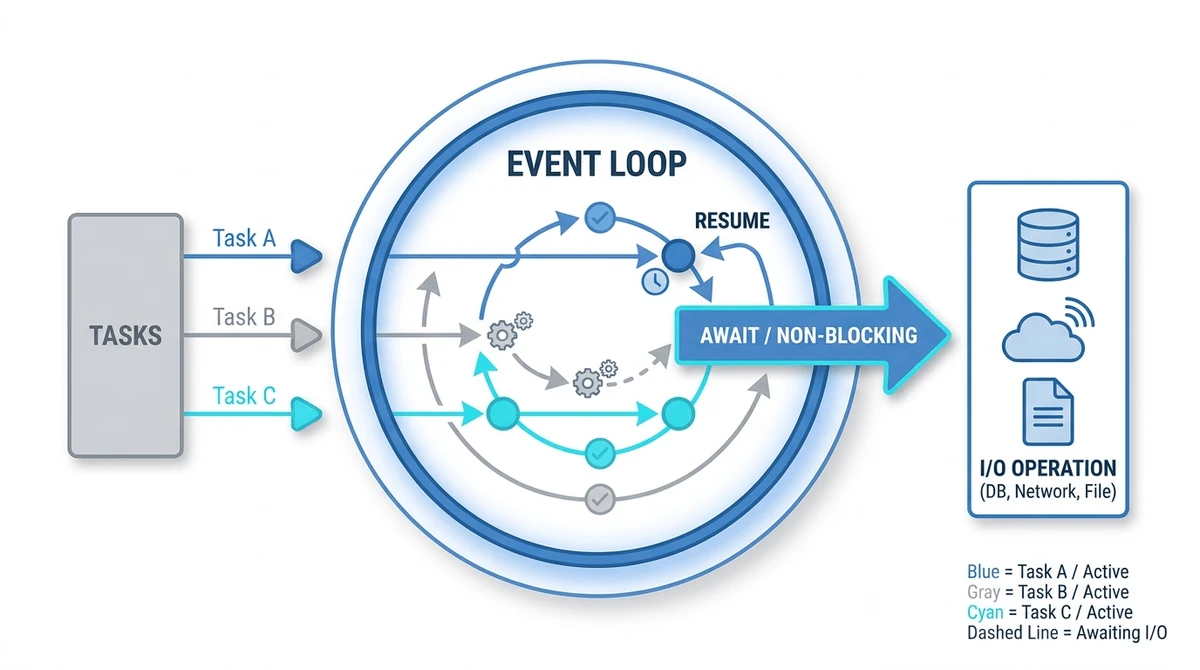
  • Asynchronous Programming (asyncio): Explore the power of Python's asyncio library for building highly concurrent I/O-bound applications, significantly improving throughput without requiring multiple threads.
  • Leveraging Compiled Extensions: Understand when and how to integrate C/C++ extensions or use libraries like NumPy, SciPy, and Cython to accelerate computationally intensive tasks.
  • Efficient Data Structures and Algorithms: Revisit and apply fundamental computer science knowledge to choose the most appropriate data structures (e.g., dictionaries, sets, heaps) and algorithms for optimal performance.
  • Optimizing Database Interactions: Learn to write efficient SQL queries, utilize ORM features judiciously, and understand indexing to minimize database response times.
"The goal of a scalable system is not just to handle more load, but to do so without a disproportionate increase in cost or complexity."

Tools, Workflows, and Practical Application

This League emphasizes hands-on application, integrating theoretical knowledge with practical tools and workflows commonly used in professional software engineering environments.

Development Tooling and Ecosystem

Familiarize yourself with essential tools that enhance productivity and code quality:

  • Advanced Testing Strategies: Go beyond basic unit tests to explore integration testing, end-to-end testing, contract testing, and property-based testing using frameworks like pytest. Learn about mocking and patching for isolated testing.
  • Static Analysis and Linting: Implement rigorous code quality checks using tools such as Flake8, Pylint, and MyPy to catch errors early, enforce style guides, and improve code maintainability.
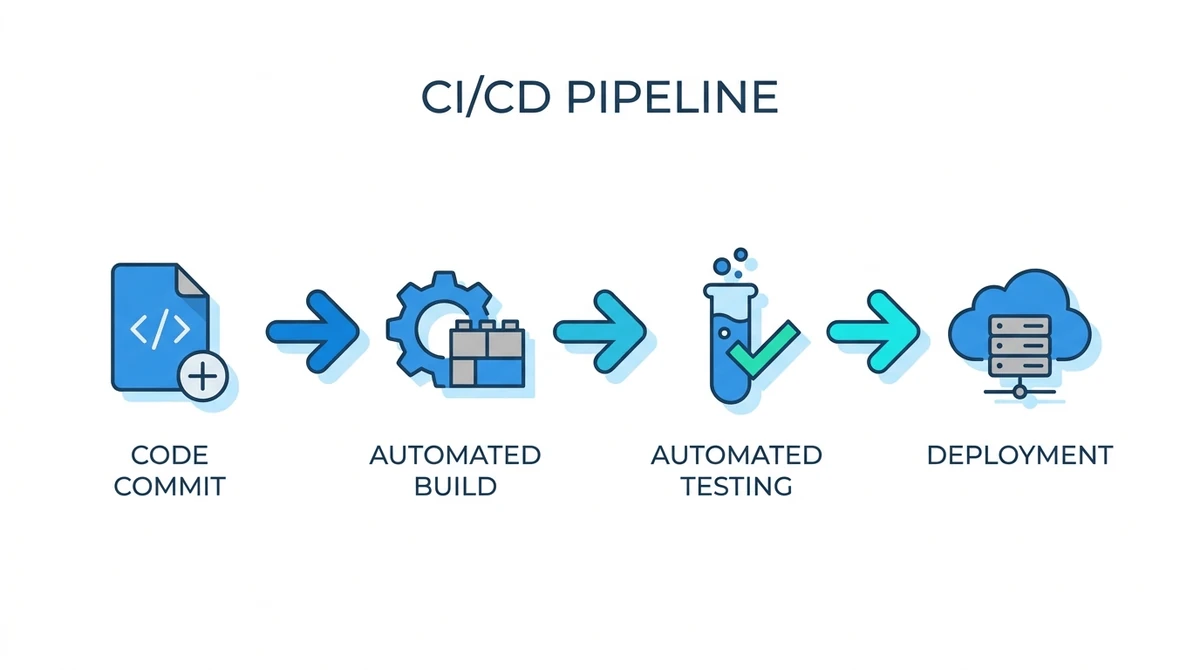
  • Continuous Integration and Continuous Deployment (CI/CD): Understand the principles and practical implementation of automated build, test, and deployment pipelines using platforms like GitLab CI, GitHub Actions, or Jenkins.
  • Containerization (Docker): Learn to package applications and their dependencies into portable containers for consistent deployment across different environments, simplifying scaling and management.
  • Observability and Monitoring: Explore tools and techniques for logging (e.g., Loguru), tracing, and monitoring application performance and health in production environments (e.g., Prometheus, Grafana).

Architectural Design Patterns in Practice

We will apply learned architectural principles to real-world scenarios:

  • Designing APIs: Focus on building RESTful and GraphQL APIs that are well-documented, versioned, and adhere to best practices for maintainability and evolution.
  • Working with Databases: Gain practical experience with various database technologies (SQL and NoSQL) and learn architectural approaches for efficient data persistence and retrieval.
  • Building Background Workers: Implement robust systems for handling asynchronous tasks and background processing using task queues like Celery.
  • Refactoring Legacy Systems: Learn strategies and techniques for safely and effectively refactoring existing, potentially complex, Python codebases to improve their architecture and maintainability.

Hands-on Project Work: Throughout this League, you will engage in practical exercises and a capstone project that requires you to design, implement, and test a scalable Python application adhering to the principles discussed.

Who is This League For?

This League is designed for experienced software engineers, senior developers, and technical leads who are looking to deepen their understanding and practical application of advanced Python software architecture. A solid foundation in Python programming, including familiarity with common libraries and frameworks, is expected. Participants should also have practical experience with software development lifecycles, version control systems (like Git), and basic understanding of data structures and algorithms.

Ideal candidates will have spent several years building and maintaining Python applications and are now seeking to transition from writing functional code to architecting systems that are inherently reliable, performant, and adaptable. If you are responsible for the technical direction of projects, the maintainability of a codebase, or the scalability of a service, this League will provide you with the advanced insights and skills needed to excel.

Real-World Relevance and Career Advancement

The skills acquired in this League are directly applicable to a wide range of roles and industries. Companies of all sizes, from startups to large enterprises, rely on well-architected Python systems for:

  • Web Development: Building scalable backend services for dynamic websites and applications using frameworks like Django and Flask.
  • Data Science and Machine Learning: Creating robust data pipelines, deploying ML models, and building infrastructure for AI-driven products.
  • Cloud Computing: Developing cloud-native applications and services, often leveraging microservices and containerization.
  • Automation and DevOps: Scripting complex workflows, managing infrastructure, and ensuring reliable deployments.
  • Fintech and E-commerce: Handling high transaction volumes and ensuring data integrity and security in critical systems.

By mastering advanced Python software architecture, you position yourself for roles such as Senior Python Developer, Software Architect, Technical Lead, and Principal Engineer. This League equips you with the expertise to tackle complex challenges, lead technical initiatives, and contribute significantly to the success of software projects.

League Structure and Expected Outcomes

This comprehensive League combines theoretical instruction with practical, hands-on application. Through a series of modules, interactive examples, and guided projects, you will progressively build your expertise. The structure is designed to foster a deep understanding of the underlying principles, allowing you to adapt them to various contexts.

By the end of this League, you will be able to:

  • Design and implement Python applications following clean architecture principles and design patterns.
  • Write highly readable, maintainable, and testable Python code that adheres to best practices.
  • Architect Python systems for high availability, scalability, and performance using modern techniques.
  • Effectively utilize advanced Python development tools, including linters, profilers, and CI/CD pipelines.
  • Make informed decisions about technology choices and architectural trade-offs for complex Python projects.
  • Troubleshoot and optimize existing Python systems for better performance and reliability.
  • Confidently lead and contribute to the architectural design of large-scale Python software projects.

Prerequisites

  • Proficiency in core Python programming concepts including data structures, control flow, object-oriented programming, and error handling.
  • Significant practical experience in designing, developing, and deploying Python applications, demonstrating an understanding of common software development lifecycles.
  • Familiarity with testing methodologies and frameworks in Python, such as unit testing, integration testing, and common libraries like `unittest` or `pytest`.
  • Understanding of fundamental software design principles and patterns, with experience in applying concepts like SOLID, DRY, and common architectural styles.
  • Exposure to at least one major web framework (e.g., Django, Flask) or a significant application development context, indicating experience with building non-trivial software systems.

Learning Objectives

  • Analyze and critique complex Python codebases to identify architectural flaws hindering scalability and maintainability, proposing specific refactoring strategies based on established design patterns.
  • Design and implement robust asynchronous and concurrent Python systems leveraging advanced concurrency models (e.g., asyncio, multiprocessing) and message queues for high-throughput, low-latency applications.
  • Evaluate and select appropriate data persistence and caching strategies (e.g., NoSQL databases, Redis, distributed caches) for microservices-based Python architectures, optimizing for performance and resilience.
  • Develop and deploy scalable Python applications using containerization (Docker) and orchestration (Kubernetes) technologies, incorporating best practices for CI/CD and infrastructure as code.
  • Implement advanced testing methodologies, including property-based testing and performance profiling, to ensure the reliability, correctness, and scalability of complex Python software systems.
  • Architect and develop fault-tolerant Python systems capable of graceful degradation and self-healing, employing circuit breakers, retries, and sophisticated error handling techniques.