
Introduction
In a work culture shaped by deadlines, meetings, commuting, screen time, and unpredictable schedules, eating well can easily become an afterthought. When there is little time to cook, takeout, packaged snacks, or skipped meals can become the default.
That is where quick meal prep can make a major difference.
Meal preparation does not have to mean spending an entire Sunday cooking dozens of complicated dishes. A practical system can be as simple as preparing a few versatile ingredients, storing them safely, and combining them into different meals throughout the week.
For busy professionals, the goal is not perfection—it is reducing daily decisions while keeping convenient, balanced food ready to eat.
India's ICMR-National Institute of Nutrition recommends variety across food groups as part of a balanced diet, including vegetables, whole grains and pulses, fruits, nuts or seeds, and dairy or other suitable foods.
This guide explains how to build a realistic quick meal prep routine, with simple ideas for breakfast, lunch, dinner, snacks, storage, and even adapting meals to changing weather.
What Is Quick Meal Prep?
Quick meal prep is the practice of preparing some or all of your meals or ingredients ahead of time so that eating during a busy day requires less cooking and decision-making.
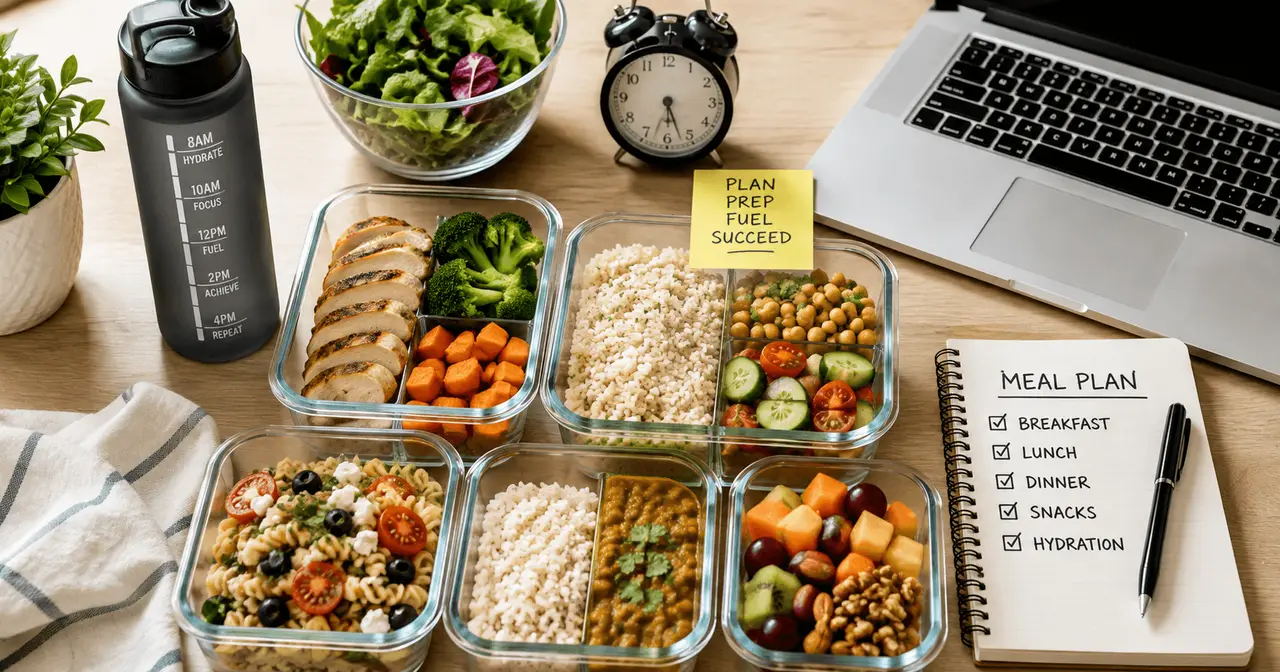
Instead of starting from zero every evening, you can prepare components such as:
- Cooked rice or other grains
- Dal or beans
- Roasted vegetables
- Boiled eggs
- Grilled or cooked protein
- Chopped vegetables
- Salad ingredients
- Homemade sauces or chutneys
- Overnight oats
- Fruit portions
- Snack boxes
The key is modularity.
One prepared ingredient should ideally work in several meals.
For example, cooked vegetables can become part of:
Lunch bowl → wrap → sandwich → dinner with dal and rice
That approach gives you variety without requiring four separate cooking sessions.
Why Meal Prep Works for Busy Professionals
1. It Saves Time
Cooking one larger batch can be more efficient than preparing the same ingredients repeatedly.
Instead of:
Cook → clean → cook → clean → cook → clean
you can consolidate much of the preparation into one short session.
2. It Reduces Daily Decision Fatigue
After a long workday, deciding what to eat can feel surprisingly difficult.
A prepared refrigerator gives you a simpler question:
"Which combination should I make?"
rather than:
"What should I cook from scratch?"
3. It Can Reduce Unplanned Food Spending
Having convenient meals available can reduce dependence on last-minute restaurant orders or delivery.
4. It Makes Portion Planning Easier
Pre-portioning meals can make it easier to understand how much food you have prepared for the week.
5. It Supports Consistency
The biggest advantage isn't one perfect meal.
It is creating a system that you can repeat week after week.
The 60-Minute Weekly Meal Prep Strategy
You don't need to spend half your weekend in the kitchen.
Try a simple 60-minute preparation system.
First 10 Minutes: Plan
Choose:
- 1–2 breakfast options
- 2 lunch combinations
- 2 dinner combinations
- 2 snack options
Avoid planning seven completely different meals.
Next 15 Minutes: Prepare Vegetables
Wash, chop, and portion vegetables.
Examples:
- Carrots
- Cucumber
- Capsicum
- Beans
- Broccoli
- Tomatoes
- Spinach
- Seasonal vegetables
Next 20 Minutes: Cook a Base
Prepare one or two staples.
Examples:
- Rice
- Roti/paratha dough
- Quinoa
- Dal
- Chickpeas
- Rajma
- Pasta
Next 10 Minutes: Prepare Protein
Depending on your preferences:
- Eggs
- Paneer
- Tofu
- Chicken
- Fish
- Beans
- Chickpeas
- Lentils
Final 5 Minutes: Pack
Divide ingredients into containers and label them.
That's it.
The objective is preparation, not culinary perfection.
The Simple Meal Prep Formula
A useful way to design a meal is:
Base + Protein + Vegetables + Flavor
For example:
Rice + Dal + Mixed Vegetables + Chutney
or
Roti + Paneer + Salad + Curd
or
Quinoa + Chickpeas + Vegetables + Yogurt Dressing
This formula makes meal preparation flexible.
You can change the ingredients without changing the overall system.
Quick Breakfast Ideas for Busy Professionals
Breakfast is often where busy schedules create the biggest problems.
Instead of cooking from scratch every morning, prepare simple options in advance.
Overnight Oats
Combine:
- Oats
- Milk or yogurt
- Fruit
- Nuts or seeds
Prepare individual portions the night before.
Vegetable Egg Muffins
Prepare eggs with chopped vegetables and cook them in portions that can be refrigerated for quick breakfasts.
Yogurt and Fruit Bowl
Keep plain yogurt, fruit, nuts, and seeds available for a breakfast that requires almost no cooking.
Indian-Style Breakfast Prep
You can also prepare ingredients for:
- Poha
- Upma
- Besan chilla
- Idli
- Dosa batter
- Vegetable sandwiches
The idea is to prepare components ahead rather than preparing the entire meal every morning.
Quick Lunch Meal Prep Ideas
Lunch needs to survive transportation, storage, and a busy workday.
1. Dal-Rice Bowl
Prepare dal and rice in batches.
Add:
- Seasonal vegetables
- Salad
- Curd
- Pickle or chutney in moderation
2. Roti and Paneer Box
Prepare paneer and vegetables ahead of time.
Pack with:
- Roti
- Salad
- Curd
3. Chickpea Salad Bowl
Combine:
- Boiled chickpeas
- Cucumber
- Tomato
- Carrot
- Onion
- Lemon
- Herbs or spices
Add another protein or grain if desired.
4. Chicken or Tofu Rice Bowl
Prepare the protein and rice separately.
Then change the flavor each day using different sauces, spices, herbs, or vegetables.
Quick Dinner Ideas
Dinner doesn't have to involve another large cooking session.
One-Pot Dal and Rice
A pressure cooker or multicooker can simplify preparation.
Vegetable Stir-Fry
Keep chopped vegetables ready and quickly cook them with tofu, paneer, eggs, or another preferred protein.
Roti Wrap
Use prepared roti with:
- Paneer
- Chicken
- Tofu
- Chickpeas
- Vegetables
- Yogurt-based dressing
Soup + Toast
Prepare a vegetable, lentil, or bean-based soup in a larger batch and portion it for later meals.
Smart Meal Prep for Different Weather Conditions
For a blog aimed at technology and weather enthusiasts, this is an interesting area where meal planning meets everyday weather.
Your food preferences may naturally change with temperature and season.
Hot Weather
Prioritize foods that are:
- Light
- Hydrating
- Easy to prepare
- Suitable for quick serving
Examples include:
- Fruit
- Yogurt or curd
- Salads
- Light grain bowls
- Chilled preparations that are safely stored
However, hot weather also requires extra attention to food safety. Perishable foods should not be left at room temperature for extended periods.
Rainy Weather
During rainy periods, warm meals can be appealing.
Good prep options include:
- Dal
- Khichdi
- Vegetable soup
- Steamed vegetables
- Rice bowls
Prepare ingredients ahead so that a warm meal can be assembled quickly.
Cold Weather
Batch cooking becomes particularly useful during colder months.
Consider preparing:
- Soups
- Dal
- Bean curries
- Vegetable stews
- Oatmeal
- Roasted vegetables
A single pot can provide several convenient meals when stored safely.
The 5-Ingredient Meal Prep Challenge
If you're new to meal prep, start small.
Choose just five core ingredients:
- One grain
- One protein
- Two vegetables
- One flavor component
For example:
Rice + chickpeas + carrots + spinach + chutney
From these ingredients, you can create several combinations.
The next week, change the ingredients.
This prevents meal prep from becoming boring.
How to Prevent Meal Prep Burnout
One of the biggest mistakes beginners make is preparing the same meal for five consecutive days.
That may be efficient, but it can become boring quickly.
Instead, prepare ingredients rather than finished meals.
For example:
Prepare
- Rice
- Paneer
- Roasted vegetables
- Salad
- Yogurt
Then create:
Monday: Rice bowl
Tuesday: Paneer wrap
Wednesday: Vegetable bowl
Thursday: Paneer rice
Friday: Roti with vegetables and curd
The ingredients are similar, but the meals feel different.
Smart Food Storage for Meal Prep
Meal prep only works if food is stored safely.
The U.S. FDA recommends keeping refrigerators at 40°F (4°C) or below, while FSSAI guidance also emphasizes prompt refrigeration and appropriate cold storage.
Important Rules
- Refrigerate perishable foods promptly.
- Don't leave perishable food at room temperature for more than two hours.
- Use shallow containers to help food cool faster.
- Keep cooked food covered.
- Keep raw and cooked foods separated.
- Label containers with preparation dates.
- Freeze food when appropriate for longer storage.
USDA guidance says properly stored refrigerated leftovers are generally best used within 3–4 days.
When you're unsure whether food has been stored safely, don't rely solely on smell or appearance. FDA notes that harmful microorganisms may be present even when food doesn't look or smell spoiled.
Reheating Meal-Prepped Food Safely
Reheating is another important part of meal preparation.
USDA and FDA guidance recommends reheating leftovers to 165°F (74°C).
For microwave meals:
- Use a microwave-safe container.
- Cover the food where appropriate.
- Stir or rotate food for more even heating.
- Make sure the center is thoroughly heated.
- Eat promptly after reheating.
Meal Prep for Office Lunches
Your office lunch should be convenient to transport and easy to eat.
A practical lunchbox can contain:
Main
Rice, roti, quinoa, pasta, or another grain.
Protein
Dal, beans, paneer, tofu, eggs, chicken, or fish.
Vegetables
Fresh or cooked seasonal vegetables.
Side
Fruit, curd, nuts, or another suitable option.
Flavor
Chutney, herbs, lemon, spices, or a homemade dressing.
This gives you flexibility without carrying multiple complicated dishes.
Essential Meal Prep Equipment
You don't need an expensive kitchen.
A basic setup can include:
- Good-quality food containers
- Sharp knife
- Cutting board
- Pressure cooker or multicooker
- Frying pan
- Mixing bowls
- Measuring cups
- Food thermometer
- Refrigerator/freezer
- Insulated lunch bag if needed
A food thermometer is particularly useful for checking cooking temperatures and safe reheating. USDA and FDA both recommend temperature-based food-safety practices rather than relying solely on appearance.