

AI Prompt Engineering
by UptoSkills Team, Mayuri Thakre
Missions
10
Quests
60
Games
20
XP
500
Coins
35
Certificate optional — ₹499, or ₹199 on Pro
Key Benefits
Earn XP & Level Up
Gain 500 XP to unlock badges and achievements
Collect Coins
Earn 35 coins to redeem rewards
Professional Certificate
QR-verified and recruiter-checkable — ₹499, or ₹199 on Pro
Unlock Achievements
Complete challenges and earn exclusive badges
Certificate Preview
Finish the league and this is what you walk away with.
We'll post you a printed copy — free.
Tick one box at checkout and it ships anywhere in India in 14–21 days. Almost nobody here does this free.

Learn and Earn Platform
Certificate of Completion
This is to certify that
Your Name
has successfully completed the comprehensive
"AI Prompt Engineering"
League Program
This certificate acknowledges the successful completion of all required coursework and assessments. The recipient has demonstrated proficiency in the subject matter.
September 4, 2026

VERIFIED & AUTHENTIC
Official Seal
UTS-LEAGUE-PREVIEW
Scan to verify
✨ QR-verified · high-quality PDF
Every lesson, quest and game here is free. Forever.
Standard
₹499
one-time
With Pro
₹199
per certificate
So why isn't the certificate free? One anybody can print is worth nothing to a recruiter. The fee covers evaluation, QR-backed verification and lifetime hosting — that's what makes it checkable.
Hall of Fame
About This League
AI Prompt Engineering teaches how to effectively communicate with AI language models. This league provides foundational skills for interacting with AI to generate text, code, and ideas. It is designed for students aged 18 to 24 preparing for placements and internships.
What you will learn
Upon completion, you will be able to:
- Craft precise AI prompts for clear and accurate responses, crucial for internships.
- Guide AI's tone and style to match specific communication needs, enhancing your professional output.
- Structure AI-generated content effectively, controlling format and length for reports and projects.
- Leverage AI for brainstorming creative ideas and generating initial drafts for various tasks.
- Utilize AI for basic code generation and understanding, supporting technical roles.
- Apply AI to enhance your learning, generate practice questions, and explain complex topics.
What this league covers
| Module | What it covers |
|---|---|
| AI Prompt Engineering: Your First Conversations | Understand AI language models, formulate simple AI prompts, and recognize basic AI responses. |
| Crafting Clear and Concise AI Instructions | Develop specific and unambiguous AI prompts by using action verbs and providing context. |
| AI Prompt Engineering: Guiding AI's Tone and Style | Direct AI's voice by specifying tone, mimicking writing styles, and prompting for different audiences. |
| Structuring AI Output: Format and Length Control | Request specific output formats like lists and tables, control response length, and structure complex information. |
| AI Prompt Engineering: Brainstorming and Idea Generation | Use AI for topic discovery, generating creative story ideas, and brainstorming marketing slogans. |
| AI Prompt Engineering: Basic Code Generation and Understanding | Generate basic Python snippets, understand HTML structure, and interpret simple AI-generated code. |
| AI Prompt Engineering: Data Analysis and Interpretation Basics | Prompt AI for data summarization, generating basic data visualizations, and identifying trends. |
| AI Prompt Engineering: Enhancing Your Learning Process | Use AI to explain concepts, generate tutorials and practice questions, and overcome learning roadblocks. |
| AI Prompt Engineering: Working with AI for Creative Writing | Prompt AI for character backstories, plot twists, writing dialogue, and overcoming writer's block. |
| AI Prompt Engineering: Your Next Steps and Best Practices | Learn ethical considerations, recognize AI hallucinations, and build a personal prompt engineering toolkit. |
Students will be equipped to apply AI tools ethically and effectively in professional contexts.
A look inside

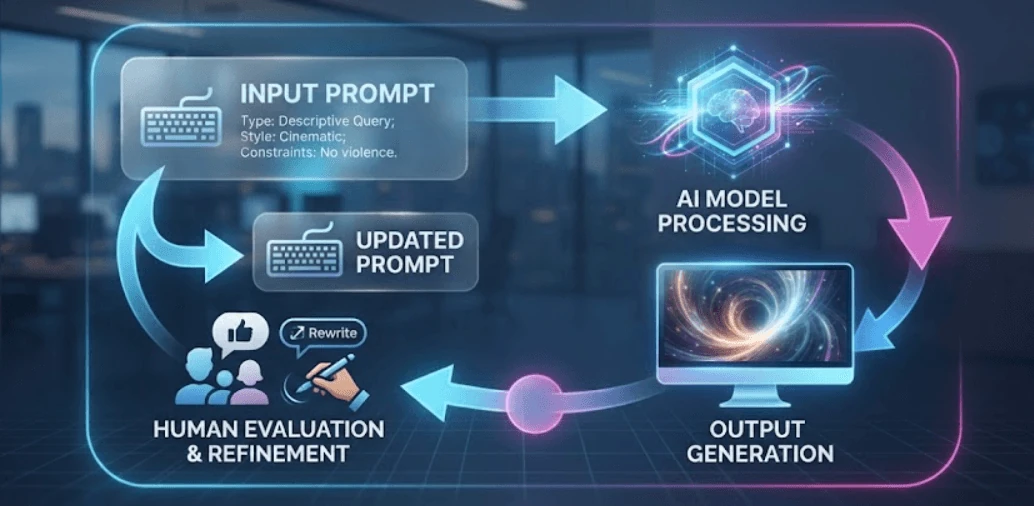

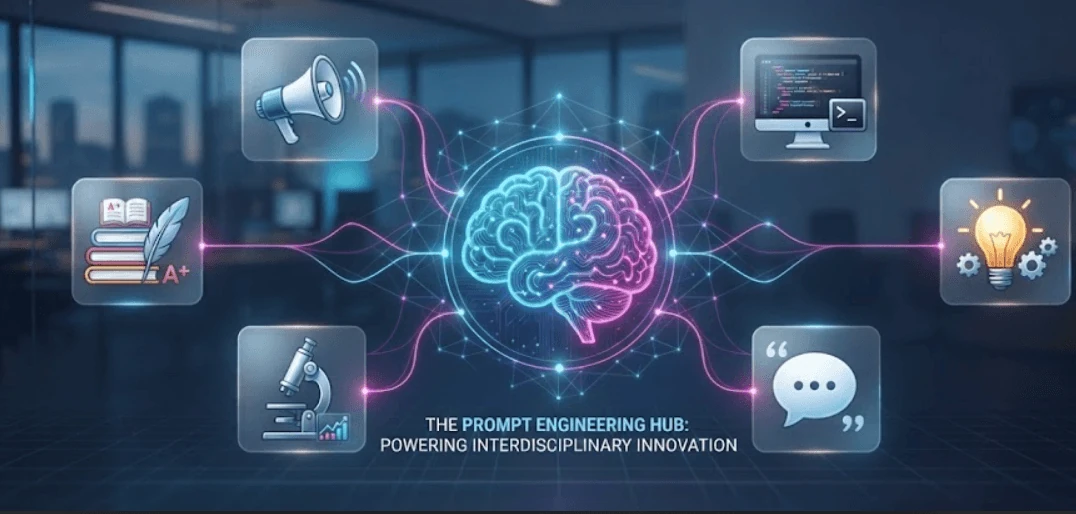
Prerequisites
- Have used an AI chat assistant before.
- Comfortable writing clear, structured English.
Learning Objectives
- Understand the fundamental concepts of prompt engineering, including what prompts are and why they are important for interacting with AI models.
- Identify and describe at least three common types of AI models that benefit from prompt engineering, such as text generation and image generation models.
- Create clear and concise basic prompts for common AI tasks, such as asking a question, requesting a summary, or generating a short piece of creative text.
- Analyze the output of an AI model based on a given prompt and identify potential areas for improvement in the prompt's clarity or specificity.
- Implement simple prompt modification techniques, such as adding keywords or specifying desired output format, to influence AI responses.
- Recognize ethical considerations and potential biases when crafting prompts and interpreting AI-generated content.
Earn XP • Collect Coins • Unlock Achievements