

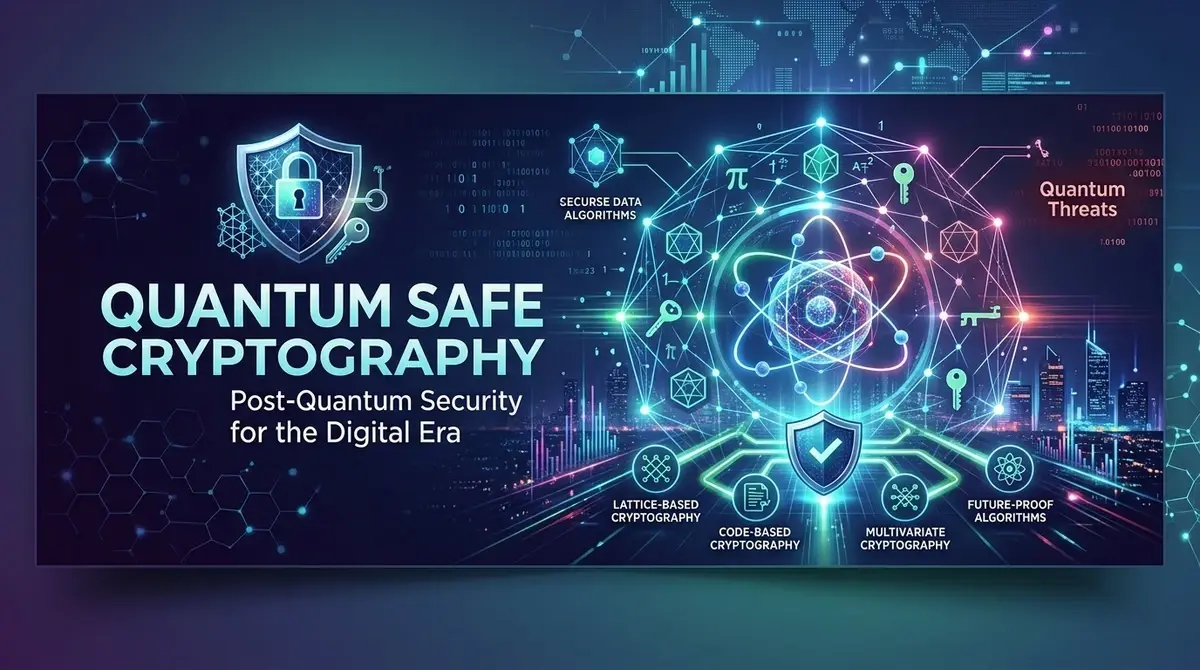
Quantum-Safe Cryptography
by UptoSkills Team, Swayam Patel
Missions
8
Quests
36
Games
16
XP
450
Coins
50
Certificate optional — ₹499, or ₹199 on Pro
Key Benefits
Earn XP & Level Up
Gain 450 XP to unlock badges and achievements
Collect Coins
Earn 50 coins to redeem rewards
Professional Certificate
QR-verified and recruiter-checkable — ₹499, or ₹199 on Pro
Unlock Achievements
Complete challenges and earn exclusive badges
Certificate Preview
Finish the league and this is what you walk away with.
We'll post you a printed copy — free.
Tick one box at checkout and it ships anywhere in India in 14–21 days. Almost nobody here does this free.

Learn and Earn Platform
Certificate of Completion
This is to certify that
Your Name
has successfully completed the comprehensive
"Quantum-Safe Cryptography"
League Program
This certificate acknowledges the successful completion of all required coursework and assessments. The recipient has demonstrated proficiency in the subject matter.
September 4, 2026

VERIFIED & AUTHENTIC
Official Seal
UTS-LEAGUE-PREVIEW
Scan to verify
✨ QR-verified · high-quality PDF
Every lesson, quest and game here is free. Forever.
Standard
₹499
one-time
With Pro
₹199
per certificate
So why isn't the certificate free? One anybody can print is worth nothing to a recruiter. The fee covers evaluation, QR-backed verification and lifetime hosting — that's what makes it checkable.
Hall of Fame
About This League
The advent of quantum computing poses a significant threat to current cryptographic systems. This league delves into the foundational principles and emerging solutions of quantum-safe cryptography. It provides students with essential knowledge to navigate the evolving landscape of secure communication.
What you will learn
Upon completing this league, you will be able to:
- Explain the quantum threat posed by Shor's and Grover's algorithms to classical cryptography.
- Describe the core concepts of lattice-based, code-based, and multivariate cryptography.
- Analyze the principles behind hash-based signatures like XMSS and LMS.
- Understand the basics of isogeny-based cryptography and its practical implications.
- Outline strategies for transitioning existing systems to quantum-safe solutions.
- Discuss the ongoing NIST PQC standardization and future research directions.
What this league covers
| Module | What it covers |
|---|---|
| Introduction to Quantum-Safe Cryptography | Understanding cryptography basics, the quantum threat from Shor's and Grover's algorithms, and the emergence of post-quantum cryptography. |
| Lattice-Based Cryptography: Introduction | Exploring lattices, SVP, CVP, LWE problems, and practical examples like NTRU and CRYSTALS-Kyber. |
| Code-Based Cryptography: Introduction | Reviewing error-correcting codes, the McEliece cryptosystem, its resistance, and NIST PQC candidates. |
| Multivariate Cryptography: Introduction | Understanding multivariate polynomial systems, the MQ problem, and the Rainbow signature scheme. |
| Hash-Based Signatures | Learning about hash functions, Merkle Signature Schemes, XMSS, LMS, and their use cases. |
| Isogeny-Based Cryptography: Introduction | Reviewing elliptic curves, isogenies, Supersingular Isogeny Diffie-Hellman (SIDH), and SIKE. |
| Transitioning to Quantum-Safe Systems | Identifying vulnerable systems, hybrid cryptography, key management, testing, and deployment strategies. |
| The Future of Quantum-Safe Cryptography | Examining NIST PQC standardization, ongoing research, hardware optimization, and Quantum Key Distribution. |
This league equips you to understand the next generation of cybersecurity defenses. Cybersecurity Fundamentals.
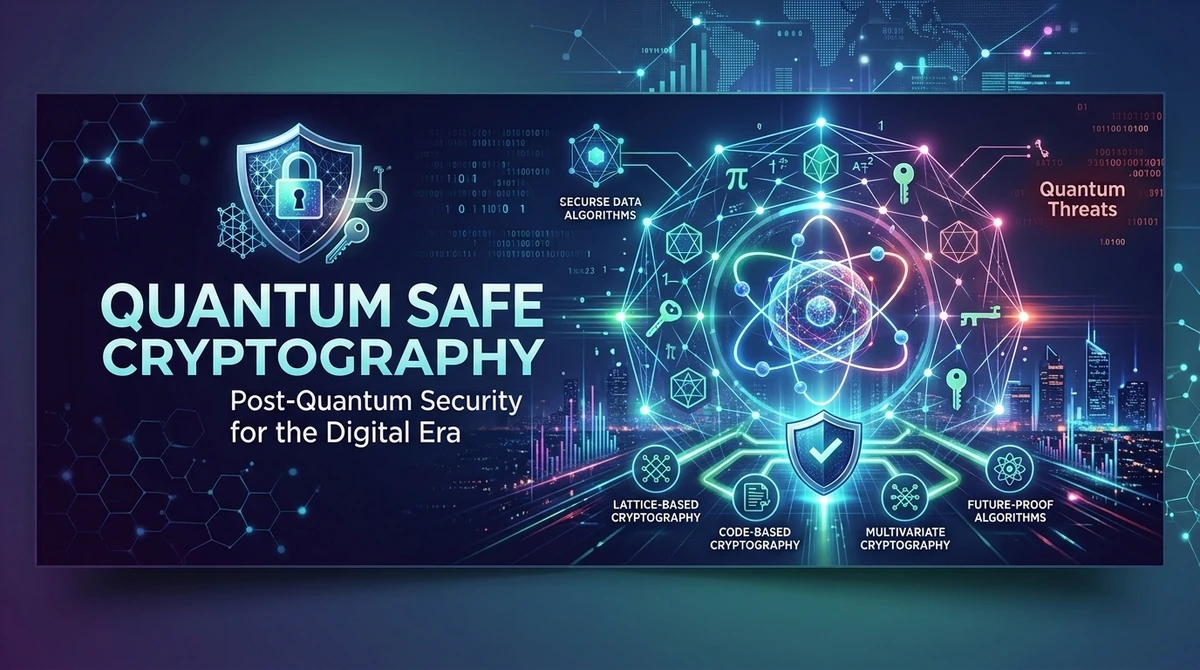
A look inside
Prerequisites
- Understand public-key encryption in outline.
- Comfortable with algebra, percentages and reading a graph.
- Comfortable reading technical specifications.
Learning Objectives
- Understand the fundamental concepts of quantum computing and how they threaten current cryptographic algorithms.
- Identify the differences between symmetric and asymmetric cryptography and their vulnerabilities to quantum attacks.
- Recognize the main categories of post-quantum cryptography (PQC) algorithms, including lattice-based, code-based, and multivariate polynomial cryptography.
- Implement basic key exchange using a selected post-quantum cryptography algorithm from a provided library.
- Analyze the performance trade-offs (key size, computational cost) between classical and post-quantum cryptographic algorithms.
- Describe the importance of transitioning to quantum-safe cryptography in cybersecurity infrastructure.
Earn XP • Collect Coins • Unlock Achievements