

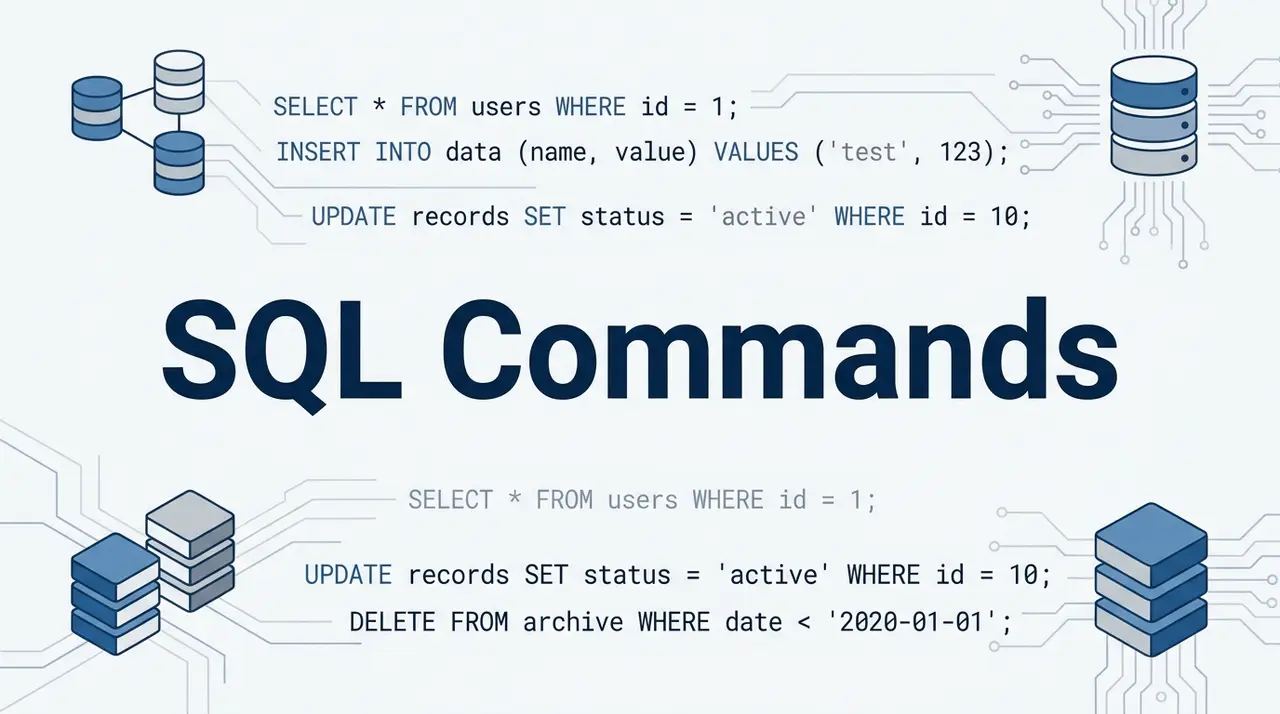
SQL Commands
by UptoSkills Team, Divy Aakarsh
Missions
10
Quests
65
Games
28
XP
340
Coins
35
Certificate optional — ₹499, or ₹199 on Pro
Key Benefits
Earn XP & Level Up
Gain 340 XP to unlock badges and achievements
Collect Coins
Earn 35 coins to redeem rewards
Professional Certificate
QR-verified and recruiter-checkable — ₹499, or ₹199 on Pro
Unlock Achievements
Complete challenges and earn exclusive badges
Certificate Preview
Finish the league and this is what you walk away with.
We'll post you a printed copy — free.
Tick one box at checkout and it ships anywhere in India in 14–21 days. Almost nobody here does this free.

Learn and Earn Platform
Certificate of Completion
This is to certify that
Your Name
has successfully completed the comprehensive
"SQL Commands"
League Program
This certificate acknowledges the successful completion of all required coursework and assessments. The recipient has demonstrated proficiency in the subject matter.
September 4, 2026

VERIFIED & AUTHENTIC
Official Seal
UTS-LEAGUE-PREVIEW
Scan to verify
✨ QR-verified · high-quality PDF
Every lesson, quest and game here is free. Forever.
Standard
₹499
one-time
With Pro
₹199
per certificate
So why isn't the certificate free? One anybody can print is worth nothing to a recruiter. The fee covers evaluation, QR-backed verification and lifetime hosting — that's what makes it checkable.
Hall of Fame
About This League
Mastering SQL (Structured Query Language) commands is the foundational skill for anyone venturing into the world of database administration. This powerful language is the universal standard for interacting with relational databases, allowing you to retrieve, manipulate, and manage data with precision and efficiency. From simple data extraction to complex data restructuring and security management, SQL commands form the bedrock of database operations, making this League essential for aspiring and developing DBAs.
Understanding SQL commands goes beyond just knowing syntax; it's about comprehending how data is organized, how to query it effectively to answer business questions, and how to maintain the integrity and performance of the database itself. In the realm of Database Administration, proficiency in SQL is not an option, but a necessity. It's the primary tool for tasks ranging from creating and modifying database structures to ensuring data security, performance tuning, and troubleshooting. This League will equip you with the practical knowledge and hands-on experience needed to confidently execute these vital responsibilities.
The ability to write accurate and efficient SQL queries directly impacts the speed at which information can be accessed and decisions can be made within an organization. Poorly written queries can cripple database performance, leading to slow applications and frustrated users, while well-crafted SQL can unlock valuable insights and streamline operations. This League focuses on building that essential expertise from the ground up, ensuring you develop robust and scalable database management capabilities.
[add image for a beginner-friendly SQL learning environment, showing a simplified database schema diagram with tables like "Customers" and "Orders", and a code editor window with a basic SELECT statement being typed in, illustrating retrieving customer names and their order counts]
Core SQL Command Concepts
This League delves into the fundamental building blocks of SQL that are critical for any database administrator. You will gain a deep understanding of how to structure your interactions with databases, ensuring that your commands are both effective and secure. Each concept is explored with practical relevance to common DBA tasks.
Data Retrieval with SELECT Statements
Learn the ubiquitous SELECT statement, the cornerstone for extracting information. This includes understanding how to specify columns (SELECT column1, column2), select all columns (SELECT *), filter rows using the WHERE clause with various operators (=, !=, >, <, >=, <=, LIKE, IN, BETWEEN), and sort results with ORDER BY. You'll also explore the practical application of DISTINCT to remove duplicate rows, a crucial step in data analysis and reporting.
Data Manipulation Language (DML) Operations
Beyond just reading data, you'll master the commands for changing it. This involves:
INSERTStatements: Learn how to add new records to tables, understanding how to specify values for columns or insert multiple rows efficiently. This is fundamental for populating databases with new information.UPDATEStatements: Discover how to modify existing data within tables. You'll practice using theWHEREclause to target specific records for modification, preventing accidental data corruption.DELETEStatements: Understand how to remove records from tables. Crucially, you will learn to use theWHEREclause to ensure that only the intended data is purged, a vital safety measure in data management.
Data Definition Language (DDL) for Structure Management
This section covers the commands used to define and modify the database structure itself. As a DBA, these are your primary tools for creating and maintaining the data repository:
CREATE TABLE: Master the syntax for defining new tables, including specifying column names, data types (e.g.,INT,VARCHAR,DATE,BOOLEAN), and constraints likeNOT NULLandUNIQUE. This is how databases are built.ALTER TABLE: Learn how to modify existing table structures, such as adding new columns, deleting columns, or changing column data types. This is essential for adapting databases to evolving application needs.DROP TABLE: Understand how to remove tables from the database. This command requires careful handling and is often used during development or when decommissioning old systems.
Data Control Language (DCL) for Security
Security is paramount in database administration. You'll be introduced to DCL commands that control user access and permissions:
GRANT: Learn how to give specific privileges (e.g.,SELECT,INSERT,UPDATE) to database users or roles. This ensures that users only have access to the data and operations they are authorized for.REVOKE: Discover how to remove privileges that were previously granted. This is crucial for maintaining security as user roles or responsibilities change.
[add image for a visual representation of SQL JOIN operations, showing two tables, "Employees" and "Departments", and how records from both are combined based on a matching "DepartmentID" column, illustrating INNER JOIN and LEFT JOIN]
Practical Application and Tools
This League emphasizes hands-on experience. You won't just learn commands; you'll learn how to use them in real-world scenarios with common database systems and administrative tools.
Working with Relational Databases
Understand the relational model and how tables are structured, including primary keys, foreign keys, and the importance of relationships between tables. You'll learn how your SQL commands leverage these structures for efficient data management and retrieval.
SQL Dialects and Database Systems
While the core SQL syntax is standardized, different database management systems (DBMS) like MySQL, PostgreSQL, SQL Server, and Oracle have their own variations and extensions (dialects). This League will introduce you to these differences and provide practice using a popular, accessible DBMS, often via a cloud-based sandbox environment.
Database Query Tools
Familiarize yourself with common graphical user interfaces (GUIs) and command-line interfaces (CLIs) used for executing SQL commands and managing databases. This may include tools like pgAdmin for PostgreSQL, MySQL Workbench, or the command-line client. You will learn to navigate these tools to write, execute, and save queries, as well as view database objects and data.
Hands-On Projects and Exercises
Each module will feature practical exercises designed to reinforce your learning. These could include tasks such as creating a small database for a fictional business, populating it with sample data, writing queries to answer specific business questions, and performing basic data maintenance. By the end of the League, you will have built a portfolio of practical SQL interactions.
[add image for a visual comparison of SQL data types: a column of integers, a column of text strings (VARCHAR), a column of dates, and a column of boolean values, highlighting their distinct representations and typical use cases in database tables]
Who is this League For?
This League is specifically designed for individuals who are new to database administration or who need to solidify their understanding of SQL fundamentals. It assumes no prior in-depth database experience, making it ideal for:
- Aspiring Database Administrators: Those looking to enter the field and build a strong foundational skill set.
- Aspiring Data Analysts and Scientists: Individuals who need to extract and manipulate data from databases for analysis.
- Software Developers: Programmers who want to better understand how to interact with and manage the databases their applications depend on.
- IT Support Staff: Professionals who may need to perform basic data retrieval or troubleshooting tasks.
- Anyone interested in understanding how data is stored and managed digitally.
A basic understanding of computer operations and file systems will be helpful, but is not strictly required. The League's structure ensures that concepts are introduced progressively, building from simple commands to more complex operations.
Real-World Relevance and Career Opportunities
SQL is one of the most in-demand skills across various industries. Proficiency in SQL commands opens doors to numerous career paths and is crucial for the effective functioning of almost any organization that relies on data.
Ubiquitous in the Data Landscape
From small startups to multinational corporations, virtually every business uses databases to store customer information, sales records, inventory, financial data, and much more. SQL is the universal language to interact with these databases, making it an indispensable tool for data management.
Key Roles Utilizing SQL
A strong command of SQL is essential for a wide range of IT and data-focused roles, including:
- Database Administrators (DBAs): Responsible for the performance, integrity, and security of databases.
- Data Analysts: Extract, clean, and analyze data to provide business insights.
- Business Intelligence (BI) Developers: Create reports and dashboards to help organizations make data-driven decisions.
- Data Engineers: Design, build, and maintain data pipelines and infrastructure.
- Software Developers: Interact with databases to store and retrieve application data.
- System Administrators: May use SQL for system monitoring and troubleshooting.
Problem-Solving with SQL
SQL commands allow you to solve critical business problems by enabling you to:
- Identify trends and patterns in sales, customer behavior, or operational efficiency.
- Ensure data accuracy and consistency across systems.
- Automate reporting processes, saving significant time and resources.
- Troubleshoot application issues by examining underlying data.
- Implement and enforce data security policies to protect sensitive information.
[add image for a flowchart illustrating the database administration workflow, starting with "User Request/System Requirement", moving through "SQL Command Execution (DDL/DML)", "Database Engine Processing", "Data Retrieval/Modification", and "Result/Feedback to User", highlighting the central role of SQL]
League Structure and Learning Outcomes
This League is structured to provide a progressive learning experience, moving from basic concepts to practical application. Each section builds upon the last, ensuring a comprehensive grasp of SQL commands relevant to database administration.
What You Will Be Able to Do:
- Write fundamental
SELECTstatements to query data from single tables, including filtering and sorting results. - Perform data modification operations using
INSERT,UPDATE, andDELETEstatements safely and efficiently. - Understand and utilize basic Data Definition Language (DDL) commands like
CREATE TABLEfor defining database structures. - Apply basic Data Control Language (DCL) concepts for user permissions.
- Navigate and utilize a common SQL client or GUI tool to interact with a database.
- Explain the purpose and function of various SQL command categories (DML, DDL, DCL).
- Troubleshoot common query errors and understand how to optimize simple queries for better performance.
By the end of this League, you will possess the essential SQL command skills required to confidently begin your journey in database administration, able to perform fundamental data management and retrieval tasks that are critical for any data-centric role.
Prerequisites
- Basic computer literacy, including ability to navigate files and folders.
- Understanding of basic data concepts, such as what data is and how it's organized.
- Familiarity with the concept of a database as a place to store information.
- Ability to follow written instructions and perform simple tasks on a computer.
Learning Objectives
- Understand the fundamental differences between SELECT, INSERT, UPDATE, and DELETE statements and their purpose in data manipulation.
- Create basic SELECT queries to retrieve specific columns and filter rows using WHERE clauses with common comparison operators (e.g., =, <, >, <=, >=, !=, LIKE).
- Implement INSERT statements to add new records into a table with specified values for all columns.
- Modify existing records in a table using UPDATE statements and a WHERE clause to target specific rows.
- Delete records from a table using DELETE statements and a WHERE clause to ensure only intended rows are removed.
- Analyze simple query results to verify the accuracy of data retrieval and manipulation operations.
Earn XP • Collect Coins • Unlock Achievements