

Business Analytics
BeginnerFree LearningBusiness

Business Analytics

by uptoskills team , Divy Aakarsh

Missions

8

Quests

55

Games

24

XP

340

Coins

35

Free Learning

Certificate optional — ₹499, or ₹199 on Pro

Self-paced
Certificate

Key Benefits

Earn XP & Level Up

Gain 340 XP to unlock badges and achievements

Collect Coins

Earn 35 coins to redeem rewards

Professional Certificate

QR-verified and recruiter-checkable — ₹499, or ₹199 on Pro

Unlock Achievements

Complete challenges and earn exclusive badges

About This League

Unlocking the power of data is no longer a niche skill; it's a fundamental requirement for success in today's competitive business landscape. This League dives deep into the principles and practices of Business Analytics, equipping you with the foundational knowledge to transform raw information into actionable insights that drive strategic decision-making. You'll learn how to ask the right questions of your data, understand what it's telling you, and communicate those findings effectively to guide your organization toward better outcomes.

In essence, Business Analytics bridges the gap between complex data sets and practical business needs. It's about moving beyond gut feelings and intuition to embrace evidence-based strategies. Whether you're looking to optimize marketing campaigns, understand customer behavior, improve operational efficiency, or identify emerging market trends, the techniques you'll master in this League provide the blueprint for making informed choices that yield tangible results.

This introductory League focuses on establishing a strong conceptual understanding and familiarizing you with the common methodologies and thought processes used by analysts. We'll explore how data storytelling is built from the ground up, starting with how to identify the core business problems that analytics can help solve. You will begin to develop a critical eye for interpreting data patterns and recognizing potential biases, setting you on a path to becoming a valuable asset in any data-driven organization.


Foundational Concepts in Business Analytics

This League lays the groundwork by introducing you to the essential building blocks of Business Analytics. Understanding these core concepts is crucial before you can effectively apply analytical tools and techniques.

Understanding the Data Landscape

  • Data Types: You will learn to distinguish between various data types, such as quantitative (numerical) and qualitative (categorical) data, and understand how their characteristics influence analytical approaches. This knowledge is fundamental for selecting appropriate statistical methods.
  • Data Sources and Integration: This section covers the common places where businesses find data – from internal databases and CRM systems to external market research and social media feeds – and the initial challenges involved in bringing disparate data together into a usable format.
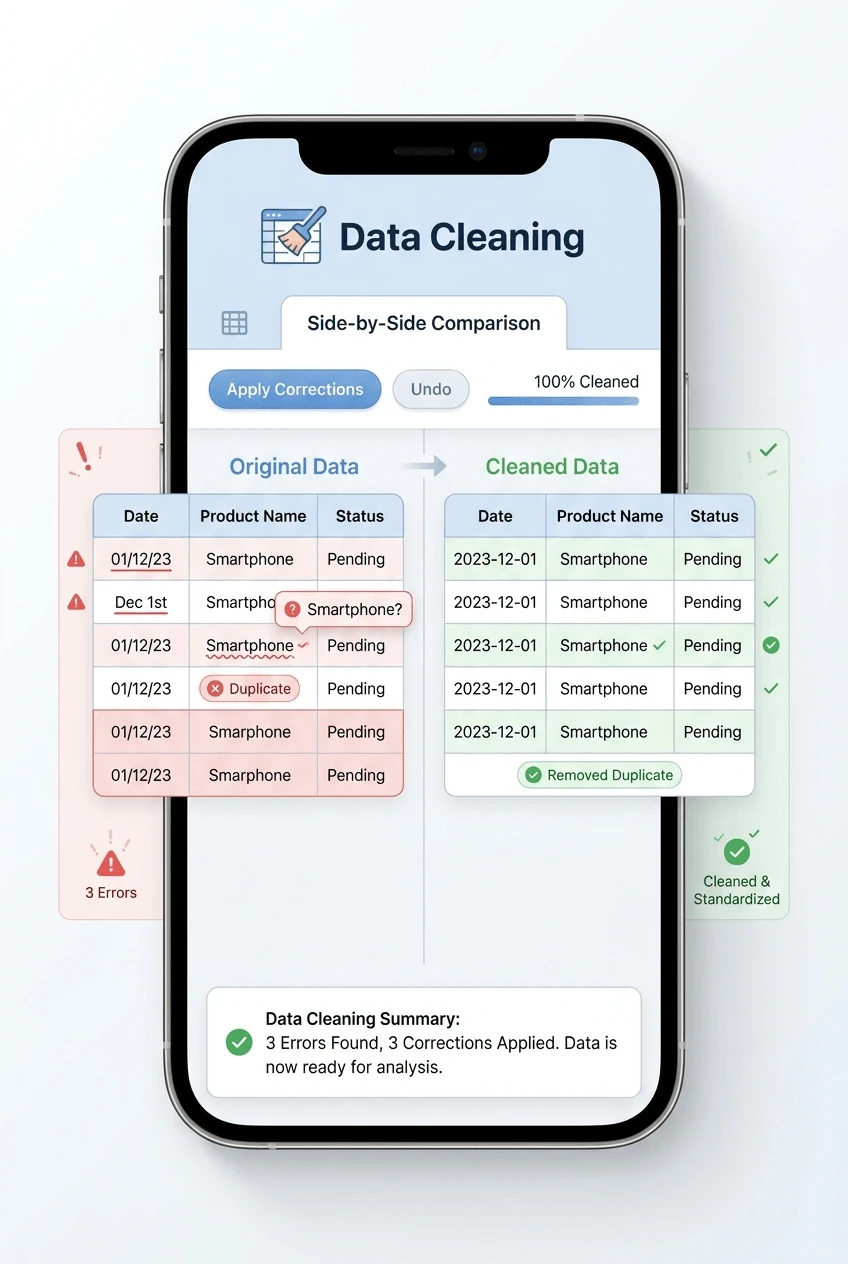
  • Data Quality and Cleaning: Understanding the importance of accurate and reliable data is paramount. You will explore common data quality issues like missing values, duplicates, and inconsistencies, and learn about the basic processes involved in cleaning data to ensure analytical integrity.

Key Analytical Methodologies

  • Descriptive Analytics: This is the most foundational level of analytics, focusing on understanding what has happened in the past. You will learn how to use metrics like averages, percentages, and counts to summarize and describe data effectively, providing a clear picture of business performance.
  • Diagnostic Analytics: Moving beyond 'what,' diagnostic analytics seeks to understand 'why.' This League introduces techniques to investigate the root causes of observed trends or anomalies, helping to uncover the underlying factors driving business outcomes.
  • Introduction to Predictive Analytics: While this League focuses on beginners, it will provide an introductory overview of predictive analytics, explaining how historical data can be used to forecast future events or behaviors, such as sales trends or customer churn.
  • Introduction to Prescriptive Analytics: You will also get a conceptual introduction to prescriptive analytics, which goes a step further by recommending actions to achieve desired outcomes, forming the ultimate goal of many data-driven initiatives.

Practical Application and Tools

While this League is primarily conceptual, understanding the tools and workflows used in practice is essential for a beginner. We will touch upon the types of software and techniques analysts commonly employ.

Data Visualization Fundamentals

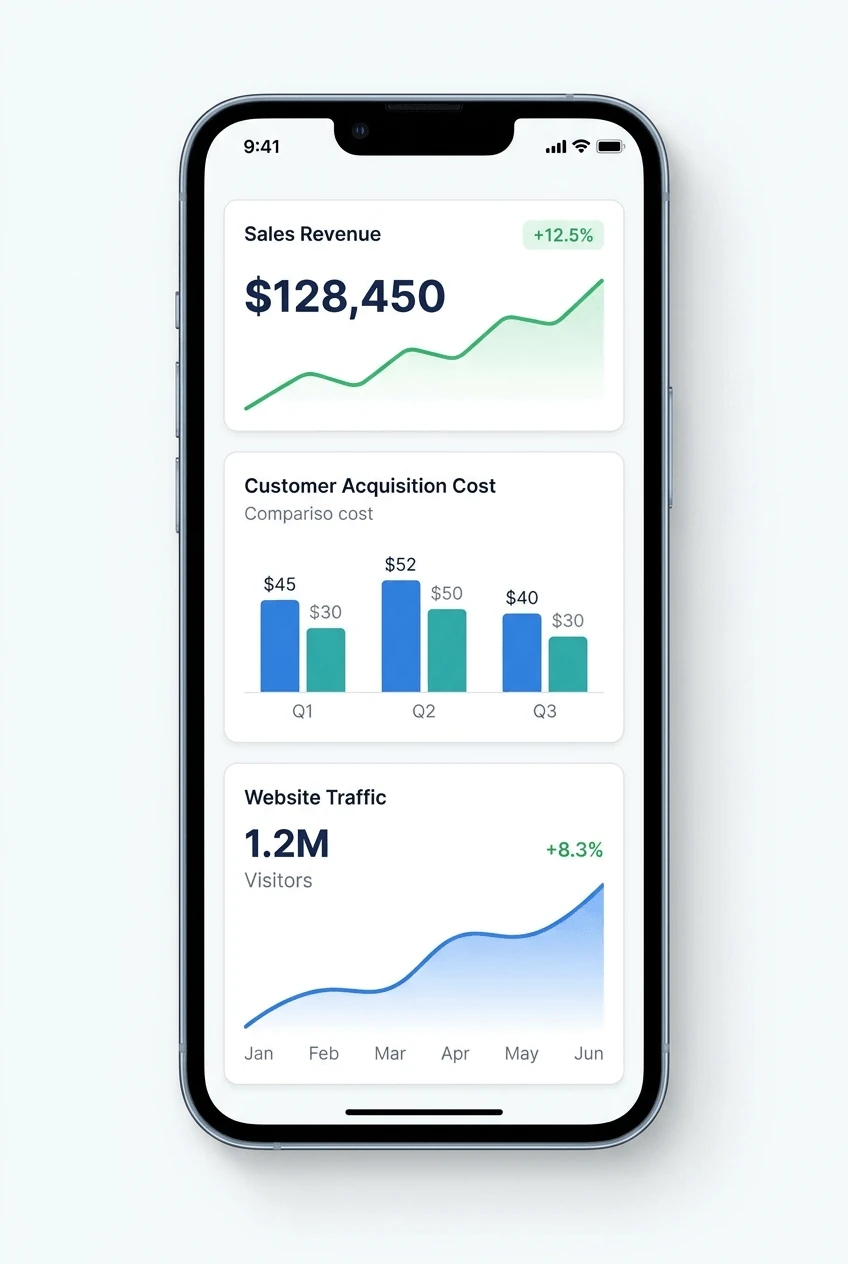
  • Purpose of Visualization: Learn why visualizing data is so powerful for communication and understanding complex patterns. Effective charts and graphs can reveal insights that tables of numbers simply cannot.
  • Common Chart Types: This section will introduce you to basic but powerful visualization types such as bar charts, line graphs, pie charts, and scatter plots, explaining when each is most appropriate for conveying specific types of information.
  • Principles of Effective Visual Design: You'll gain an understanding of how to create visualizations that are clear, concise, and impactful, avoiding common pitfalls that can lead to misinterpretation.

Introduction to Analytical Software and Platforms

  • Spreadsheet Software (e.g., Excel, Google Sheets): These are often the first tools aspiring analysts encounter. You will learn about their capabilities for data organization, basic calculations, and simple charting, which form the bedrock of many analytical tasks.
  • Business Intelligence (BI) Tools: An introduction to the role of BI platforms like Tableau or Power BI in creating interactive dashboards and reports, enabling users to explore data and discover insights independently.
  • Conceptual Overview of Programming Languages (e.g., Python, R): While direct coding isn't the focus here, you'll learn why languages like Python and R are dominant in data analytics for their statistical capabilities, data manipulation features, and advanced modeling potential.

Who is This League For?

This League is specifically designed for individuals who are new to the field of Business Analytics and are seeking a solid foundational understanding. It caters to a broad audience, including:

  • Aspiring Business Analysts: If you're considering a career path in data analysis and want to understand the core principles before diving into technical skills.
  • Business Professionals: Managers, marketers, operations specialists, and anyone in a business role who wants to leverage data more effectively in their daily work and strategic planning.
  • Students and Recent Graduates: Individuals looking to gain a foundational understanding of data-driven decision-making to enhance their academic knowledge or prepare for entry-level positions.
  • Entrepreneurs and Small Business Owners: Those who need to make informed decisions about their business operations, marketing efforts, and growth strategies without necessarily having a dedicated analytics team.

No prior programming knowledge or advanced statistical background is required. The emphasis is on grasping the concepts, understanding the 'why' behind analytical processes, and developing an analytical mindset. A basic proficiency with computers and a willingness to learn are the primary prerequisites.

Real-World Relevance and Career Pathways

The skills acquired in this Business Analytics League are highly sought after across nearly every industry and business function. Understanding how to interpret and utilize data empowers individuals and organizations to:

  • Enhance Customer Understanding: Analyze customer demographics, purchase history, and online behavior to personalize marketing efforts, improve customer service, and increase loyalty. For example, an e-commerce company might use purchase data to recommend products, increasing sales and customer satisfaction.
  • Optimize Operations: Identify bottlenecks in supply chains, forecast demand more accurately, and streamline internal processes to reduce costs and improve efficiency. A manufacturing firm could analyze production data to identify factors leading to defects, thereby improving product quality.
  • Drive Marketing Effectiveness: Measure the return on investment (ROI) of marketing campaigns, segment target audiences for more precise outreach, and understand which channels are most effective in reaching potential customers. A digital marketing team can use website analytics to understand user journeys and optimize ad spend.
  • Inform Strategic Planning: Use market trend analysis, competitive intelligence, and financial data to make better-informed strategic decisions about product development, market entry, and resource allocation. A tech startup might analyze market data to identify unmet needs for a new software solution.
  • Improve Financial Performance: Analyze sales trends, cost structures, and profitability by segment to identify areas for financial improvement and growth. A retail business could analyze sales data by store location to optimize inventory and staffing.

Mastering the fundamentals of Business Analytics opens doors to various roles, including Business Analyst, Data Analyst, Marketing Analyst, Operations Analyst, and Junior Data Scientist, among others. It equips you with a versatile skill set applicable to problem-solving in any organizational context.


What You Will Achieve by the End of This League

Upon completing this foundational League, you will possess a robust understanding of the core principles that underpin effective Business Analytics. You will be able to:


Articulate the role and importance of Business Analytics in modern organizations. You will confidently explain why data analysis is crucial for informed decision-making and competitive advantage.
Identify and differentiate between various types of data and their relevance to business questions. You will be equipped to recognize the characteristics of data needed to address specific business challenges.
Understand the fundamental concepts of descriptive and diagnostic analytics. You will know how to summarize past performance and begin to investigate the causes of business trends.
Recognize the basic workflows and common tools used in data analysis and visualization. While not a hands-on technical League, you will be familiar with the landscape of analytical software and methodologies.
Appreciate the critical importance of data quality and integrity. You will understand the foundational steps in ensuring reliable data for analysis.
Communicate the value of data insights effectively. You will begin to understand how to frame analytical findings in a way that resonates with business stakeholders.

This League serves as your essential stepping stone into the world of data-driven business strategy, providing the conceptual framework necessary for further exploration and skill development in this vital field.

Prerequisites

  • Basic computer literacy
  • Familiarity with basic business concepts
  • Proficiency in fundamental mathematical concepts

Learning Objectives

  • Understand the fundamental concepts of business analytics, including its definition, scope, and importance in decision-making.
  • Identify and differentiate between the three main types of business analytics: descriptive, diagnostic, and predictive.
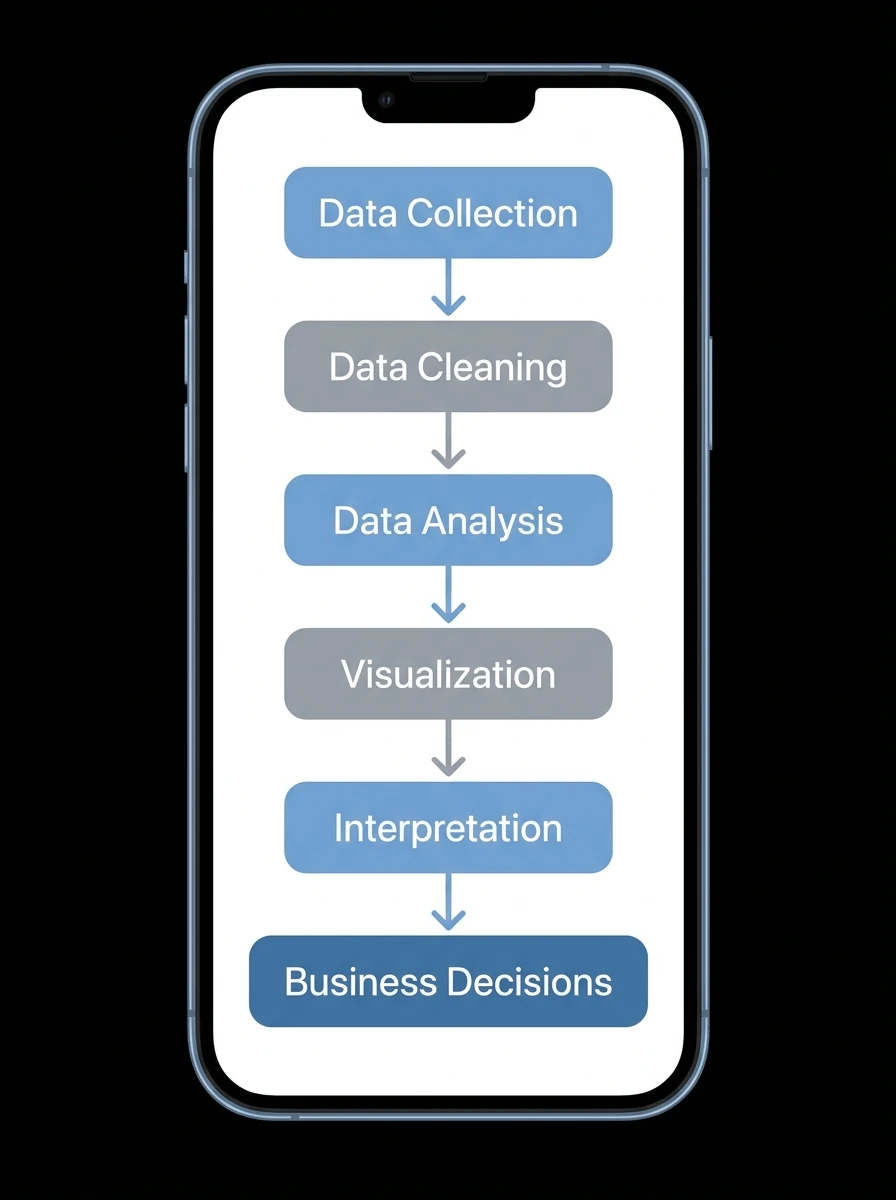
  • Describe the typical business analytics process, from problem definition to communication of insights.
  • Recognize common data sources and basic data types used in business analytics.
  • Explain the role of data visualization in communicating business analytics findings to stakeholders.
  • Apply basic spreadsheet functions to organize and perform simple calculations on business data.