
MLOps for Beginners
BeginnerFree LearningMachine Learning

MLOps for Beginners

by uptoskills Team, Swayam Patel

Missions

10

Quests

60

Games

29

XP

340

Coins

35

Free Learning

Certificate optional — ₹499, or ₹199 on Pro

Self-paced
Certificate

Key Benefits

Earn XP & Level Up

Gain 340 XP to unlock badges and achievements

Collect Coins

Earn 35 coins to redeem rewards

Professional Certificate

QR-verified and recruiter-checkable — ₹499, or ₹199 on Pro

Unlock Achievements

Complete challenges and earn exclusive badges

About This League

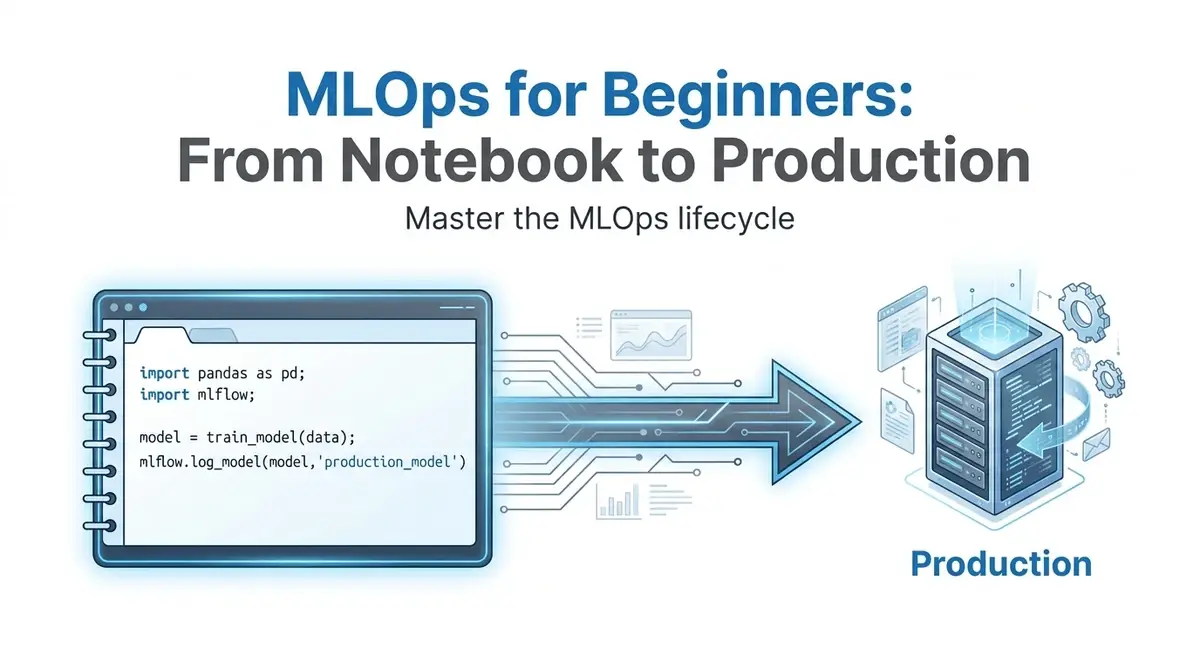
Embarking on a machine learning journey often begins with exciting model development in an interactive environment, like Jupyter notebooks, where experimentation and rapid prototyping are key. However, the leap from a functional model in a controlled setting to a robust, reliable system deployed for real-world users presents a significant hurdle. This is where the discipline of Machine Learning Operations, or MLOps, becomes indispensable. It bridges the gap between data science and software engineering, ensuring that models are not just built, but are also deployed, monitored, and maintained effectively and efficiently.

This specialized League, "MLOps for Beginners: From Notebook to Production," is designed precisely for those who have started their machine learning endeavors and are now ready to understand how to make their creations operational. We move beyond the immediate satisfaction of a trained model to address the practicalities of integrating these models into existing systems, handling data drift, managing model versions, and ensuring continuous improvement. Mastering these aspects transforms a promising model into a valuable, impactful product.

By the end of this League, you will possess a foundational understanding of the end-to-end lifecycle of a machine learning model, from the initial coding on your local machine to its stable operation in a production environment. You’ll gain the confidence to navigate the challenges of deployment, scaling, and ongoing management, setting you on a path to becoming a proficient MLOps practitioner.

Core MLOps Concepts Demystified

This section of the League delves into the fundamental principles that underpin successful machine learning operations. We aim to clarify the often-complex terminology and introduce the essential building blocks required for a production-ready ML system.

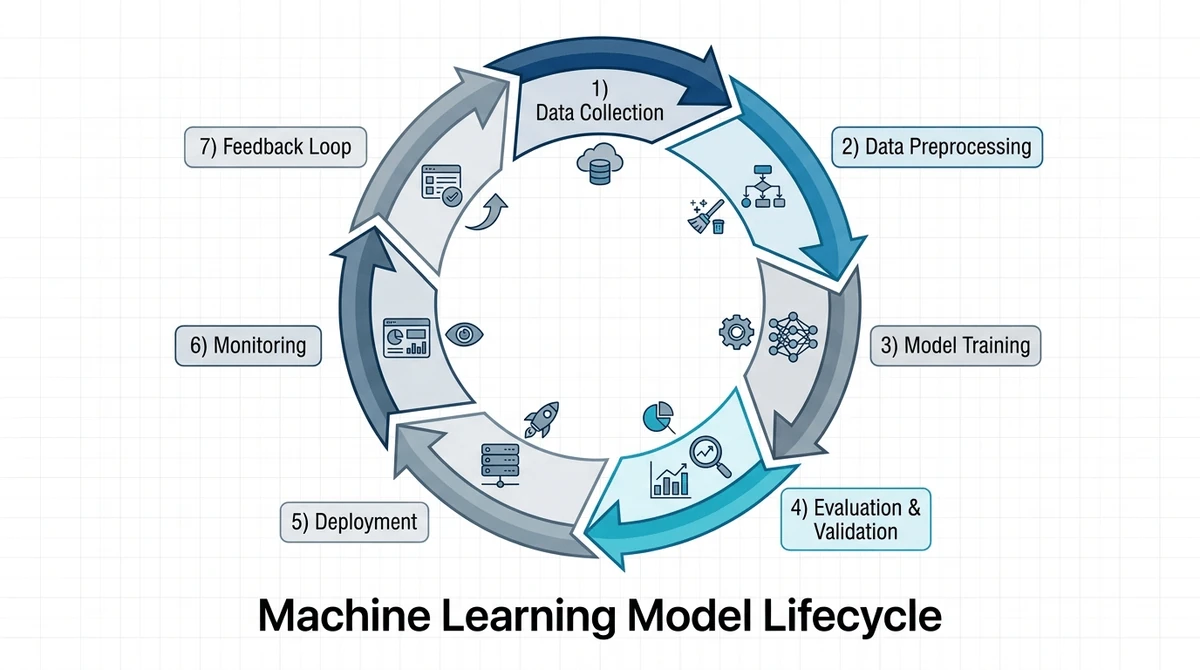
  • Model Lifecycle Management: Understand the entire journey of a machine learning model, from initial data exploration and feature engineering, through training and validation, to deployment, monitoring, and eventual retirement or retraining. This involves recognizing that a model is not a static artifact but a living entity that requires continuous attention.
  • Experiment Tracking: Learn the importance of meticulously recording every aspect of your model training runs. This includes parameters, hyperparameters, dataset versions, code snapshots, and evaluation metrics. Tools like MLflow or Weights & Biases are introduced to help manage and compare these experiments effectively, preventing the loss of valuable insights and enabling reproducibility.
  • Data Versioning: Discover why treating your data with the same rigor as your code is crucial. Data versioning ensures that you can revert to specific datasets used for training or testing, which is vital for debugging issues and for complying with reproducibility standards. Concepts like DVC (Data Version Control) will be explored.
  • Model Versioning and Registry: Understand how to systematically manage different versions of your trained models. A model registry acts as a central hub to store, discover, and manage these versions, allowing teams to track which model is deployed, which is staging, and to roll back to previous versions if necessary.
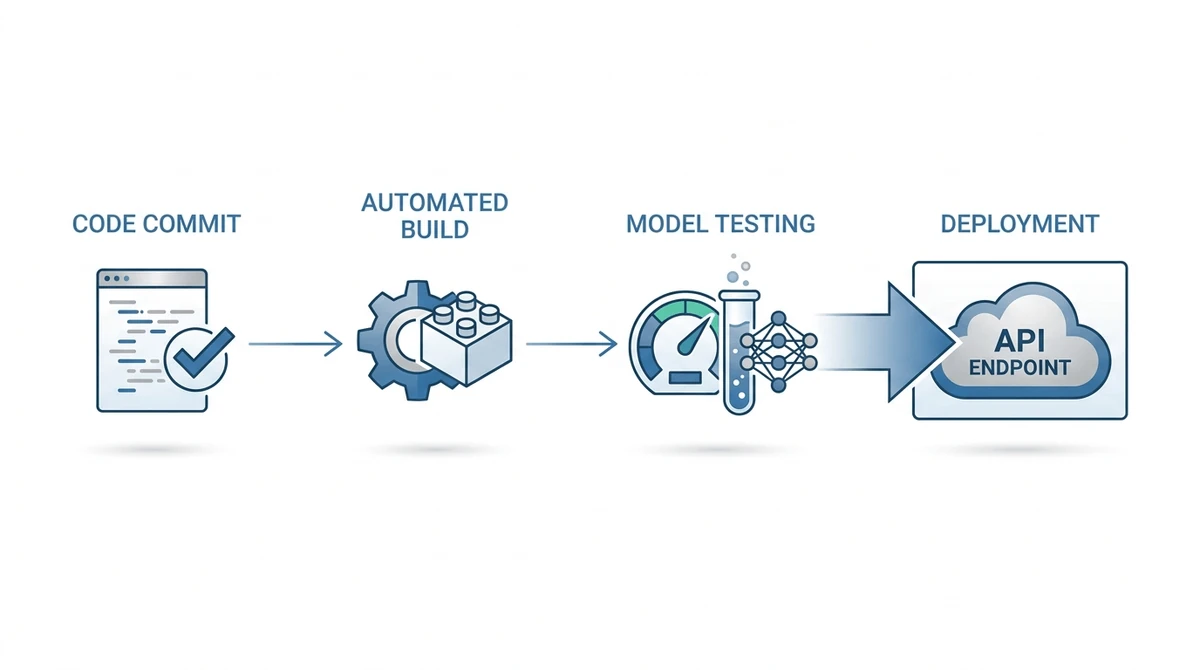
  • CI/CD for Machine Learning: Explore the principles of Continuous Integration and Continuous Deployment as applied to ML workflows. This involves automating the process of testing code, building models, and deploying them to production environments, significantly reducing manual effort and increasing deployment speed and reliability.
  • Model Monitoring: Grasp the necessity of actively watching deployed models for performance degradation. This includes detecting issues like data drift (when the distribution of incoming data changes from what the model was trained on), concept drift (when the relationship between input features and the target variable changes), and model decay.

Hands-On Tools and Workflow Implementation

Moving from theory to practice, this section provides a tangible look at the tools and workflows you will engage with to implement MLOps principles. The focus is on building practical skills that can be immediately applied.

Essential Tools for MLOps Beginners

We will introduce a curated set of industry-standard and beginner-friendly tools that facilitate various stages of the MLOps pipeline. The aim is not just to list tools, but to demonstrate their integrated use:

  • Version Control Systems (Git): Reinforce the foundational importance of Git for managing code, tracking changes, and collaborating with others. Understanding branching strategies and pull requests is key for any collaborative development effort in ML.
  • Containerization (Docker): Learn how Docker enables packaging your ML models and their dependencies into portable containers. This ensures that your model runs consistently across different environments, from your local machine to cloud deployments, solving the "it works on my machine" problem.
  • Experiment Tracking Platforms (e.g., MLflow): Gain practical experience using MLflow to log parameters, metrics, and artifacts (like trained models). You'll learn to compare different runs and select the best performing models based on objective criteria.
  • Data Versioning Tools (e.g., DVC): Understand how DVC integrates with Git to manage large datasets and models, allowing for efficient storage and retrieval without cluttering your Git repository.
  • Orchestration Tools (Introduction to Airflow/Kubeflow Pipelines): Get a conceptual understanding of how tools like Apache Airflow or Kubeflow Pipelines are used to automate and schedule complex ML workflows, from data ingestion to model deployment.

Building an End-to-End Workflow

Throughout this League, we will guide you through constructing a simplified, yet functional, MLOps pipeline. This hands-on approach will solidify your understanding of how the various components work together:

  • Local Development and Experimentation: Start by developing a model in a Jupyter Notebook, focusing on clear code structure and documenting your experiments.
  • Containerizing Your Model: Package your trained model and its inference code into a Docker container, preparing it for deployment.
  • Setting Up a Basic CI/CD Pipeline: Learn to automate model testing and building using simple CI/CD configurations, such as GitHub Actions or GitLab CI. This involves triggering builds and tests automatically when code changes are pushed.
  • Deploying a Model (e.g., to a simple API endpoint): Practice deploying your containerized model to a basic API endpoint using frameworks like Flask or FastAPI, making it accessible for predictions.
  • Introducing Monitoring Concepts: Understand how to log prediction requests and responses to lay the groundwork for future monitoring of model performance and data drift.

Who This League Is For

This League is meticulously crafted for individuals who are relatively new to the operational aspects of machine learning. It assumes a foundational understanding of Python programming and a basic familiarity with machine learning concepts, such as model training and evaluation, typically gained from introductory ML learning experiences.

  • Aspiring Data Scientists: If you've been building models in notebooks and are keen to understand how these models make their way into real applications, this League is your essential next step.
  • Junior Software Engineers interested in ML: Developers looking to transition into or support ML teams will gain the critical knowledge needed to understand and contribute to ML deployment and operations.
  • Data Analysts looking to upskill: Analysts who are starting to explore machine learning and want to understand the deployment lifecycle will find this League highly beneficial.
  • Anyone who has trained a model but doesn't know what to do next: If your ML projects tend to stay confined to your local machine or a single notebook, this League will provide the roadmap to productionize your work.

No prior experience with cloud platforms or advanced DevOps practices is required. We focus on foundational concepts and tools that are transferable and provide a strong stepping stone for further learning.

Real-World Impact and Career Relevance

The skills learned in this League are directly applicable to a wide array of industries and roles. As organizations increasingly rely on data-driven decision-making and AI-powered products, the demand for individuals who can effectively manage the entire ML lifecycle is skyrocketing. Understanding MLOps transforms theoretical ML knowledge into tangible, valuable contributions.


The ability to reliably deploy and maintain machine learning models is no longer a niche skill; it's a core competency for any organization aiming to leverage AI for competitive advantage. This League equips you with the foundational knowledge to be a critical player in that process.

You will gain insights into how MLOps practices enable:

  • Faster Iteration Cycles: Automating deployment and testing allows for quicker updates and improvements to ML models, leading to faster delivery of new features and bug fixes.
  • Improved Model Reliability and Performance: Continuous monitoring and management help ensure that models perform optimally in production, minimizing downtime and errors.
  • Scalability and Efficiency: Understanding how to package and deploy models in a reproducible manner facilitates scaling to handle increased demand and optimizing resource utilization.
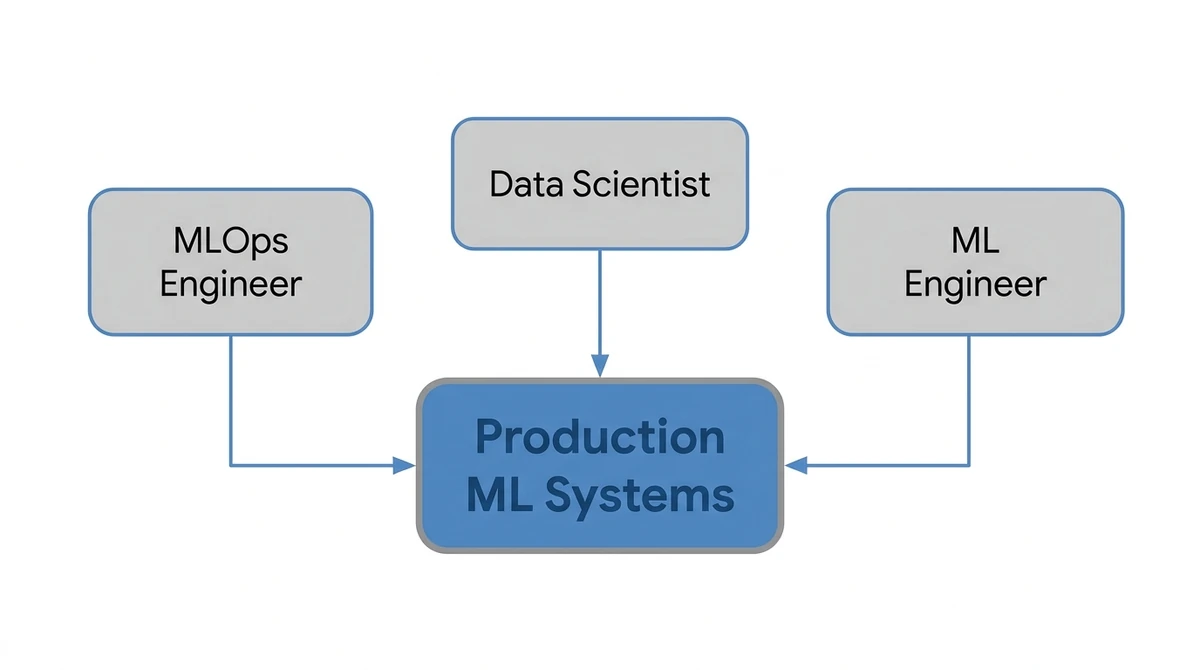
  • Enhanced Collaboration: Standardized MLOps workflows foster better communication and collaboration between data scientists, engineers, and operations teams.

Career paths that directly benefit from this knowledge include MLOps Engineer, Machine Learning Engineer, Data Scientist (with an operational focus), and Software Engineer working on ML platforms. The principles learned are foundational for building robust, scalable, and production-ready AI systems that drive business value.


League Structure and Learning Outcomes

This League is structured to provide a progressive learning experience, starting with conceptual understanding and moving towards practical application. Each module is designed to build upon the previous one, ensuring a solid grasp of MLOps principles and their implementation.

You will engage with a blend of instructional content, practical demonstrations, and hands-on exercises. The League is designed to be accessible to beginners, breaking down complex topics into manageable steps. Emphasis is placed on understanding the 'why' behind each MLOps practice, not just the 'how'.

By successfully completing this League, you will be able to:

  • Articulate the core concepts of the machine learning model lifecycle. You will understand the distinct phases from data preparation to ongoing model maintenance.
  • Identify and explain key MLOps principles such as experiment tracking, data versioning, model versioning, and CI/CD for ML.
  • Utilize foundational MLOps tools like Git, Docker, and an experiment tracking platform (e.g., MLflow) to manage ML projects more effectively.
  • Containerize a trained machine learning model and understand its role in deployment.
  • Comprehend the fundamental steps involved in deploying a machine learning model to a basic accessible endpoint.
  • Recognize the importance of model monitoring and the common issues like data and concept drift.
  • Build a simple, end-to-end ML workflow from notebook experimentation to a basic deployment structure.

This League serves as a vital starting point for anyone looking to operationalize their machine learning skills and contribute to the development of robust, production-ready AI solutions.


Prerequisites

  • Basic understanding of Python programming.
  • Familiarity with fundamental machine learning concepts (e.g., supervised vs. unsupervised learning, training, testing).
  • Comfort with using a command-line interface (CLI).
  • Basic knowledge of data manipulation in Python, preferably with libraries like Pandas.

Learning Objectives

  • Understand the core principles and benefits of MLOps in streamlining machine learning workflows.
  • Identify and describe the key stages of a typical machine learning lifecycle, from data preparation to model deployment and monitoring.
  • Implement basic version control for machine learning code and models using tools like Git.
  • Describe the purpose and functionality of containerization technologies like Docker for packaging machine learning models and their dependencies.
  • Explain the fundamental concepts of automated model training and evaluation pipelines.
  • Recognize the importance of model monitoring and describe common metrics for assessing model performance in production.