
Introduction
Guru Purnima is one of India's most revered spiritual and cultural festivals, dedicated to expressing gratitude to teachers, mentors, and spiritual guides who illuminate the path of knowledge and wisdom. Celebrated on the full moon (Purnima) of the Hindu month of Ashadha, this sacred occasion honours the invaluable role of gurus in shaping individuals and society.
The festival is observed by Hindus, Buddhists, and Jains, each with its own traditions and significance. In Hinduism, Guru Purnima commemorates Maharishi Ved Vyasa, the legendary sage credited with compiling the Vedas and authoring the Mahabharata. In Buddhism, it marks the day when Gautama Buddha delivered his first sermon at Sarnath, while in Jainism it is associated with Lord Mahavira's first disciple.
In today's fast-paced, technology-driven world, Guru Purnima reminds us that true progress is not only measured by innovation but also by the wisdom, ethics, and values passed down through teachers and mentors.
What is Guru Purnima?
Guru Purnima is a traditional festival dedicated to honouring:
- Teachers
- Spiritual gurus
- Mentors
- Parents
- Guides who inspire knowledge and personal growth
The word Guru comes from Sanskrit:
- Gu – Darkness
- Ru – One who removes
Thus, a guru is traditionally understood as someone who dispels the darkness of ignorance through knowledge.
Why is Guru Purnima Celebrated?
Guru Purnima is celebrated to express gratitude toward those who guide us intellectually, morally, and spiritually.
The day reminds us that education extends beyond classrooms and includes life lessons, values, discipline, and wisdom shared by mentors throughout our lives.
Historical Significance of Guru Purnima
Maharishi Ved Vyasa
According to Hindu tradition, Guru Purnima marks the birth anniversary of Maharishi Ved Vyasa, one of India's greatest sages.
He is traditionally credited with:
- Compiling the four Vedas
- Writing the Mahabharata
- Authoring the Brahma Sutras
- Contributing to several Puranas
Because of his immense contribution to Indian philosophy and literature, the day is also known as Vyasa Purnima.
Significance in Buddhism
For Buddhists, Guru Purnima commemorates the day when Gautama Buddha delivered his first sermon at Sarnath, near Varanasi.
This event, known as the Dhammacakkappavattana Sutta ("Setting the Wheel of Dharma in Motion"), marks the beginning of the Buddhist teaching tradition.
Significance in Jainism
In Jain tradition, Guru Purnima is associated with Lord Mahavira, who accepted Gautam Swami as his first disciple.
The festival is observed as a day of reverence for spiritual teachers and the pursuit of self-discipline.
Spiritual Importance of Guru Purnima
Guru Purnima is much more than a cultural celebration.
It symbolises:
- Respect for knowledge
- Humility
- Lifelong learning
- Spiritual awakening
- Gratitude
- Ethical living
Many devotees use the day for meditation, prayer, scriptural study, and self-reflection.
How is Guru Purnima Celebrated?
Celebrations vary across regions and traditions.
Guru Worship
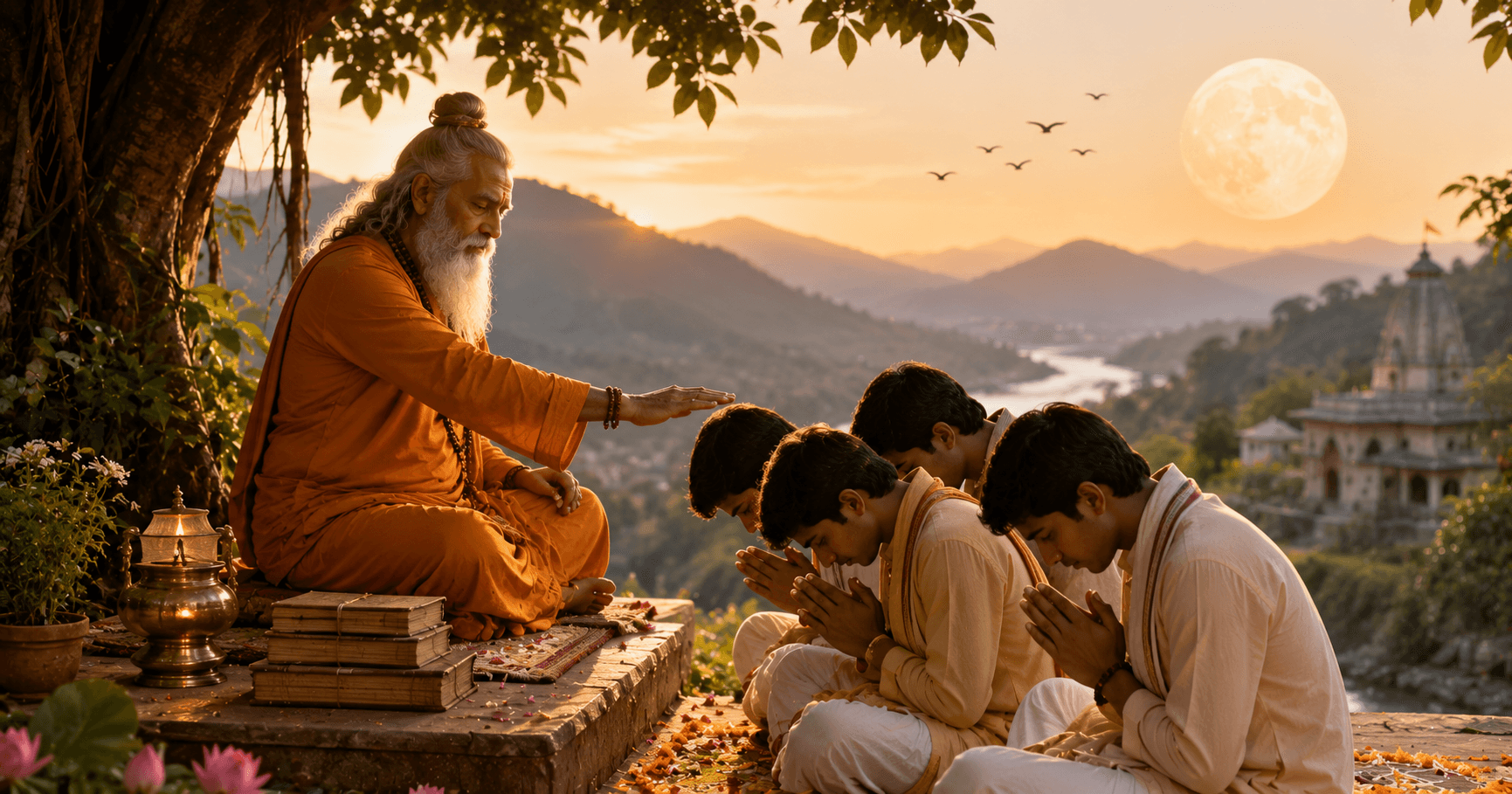
Students and devotees offer flowers, fruits, and prayers to their teachers and spiritual guides.
Religious Discourses
Temples, monasteries, and spiritual organisations organise lectures on philosophy, ethics, and self-improvement.
Meditation and Yoga
Many people dedicate the day to meditation, yoga, and mindfulness practices.
Community Service
Some organisations conduct charity events, food distribution, blood donation camps, and educational programmes to honour the spirit of selfless service.
Gratitude to Teachers
Schools, colleges, and educational institutions often organise cultural programmes where students express appreciation to their teachers.
Guru Purnima in the Digital Age
Technology has transformed how Guru Purnima is celebrated.
Today, people:
- Attend online spiritual discourses.
- Join virtual meditation sessions.
- Send digital greetings to teachers.
- Participate in live-streamed religious events.
- Learn from online educators and mentors.
The festival now embraces both traditional and modern forms of learning.
The Importance of Mentorship Today
In today's world, gurus are found in many forms.
They may include:
- School teachers
- Professors
- Parents
- Career mentors
- Coaches
- Spiritual leaders
- Researchers
- Online educators
Their guidance helps individuals develop skills, confidence, and character.
Lessons We Can Learn from Guru Purnima
Guru Purnima teaches timeless values.
Respect Knowledge
Learning is a lifelong journey.
Stay Humble
True wisdom begins with humility.
Express Gratitude
Recognising the contributions of mentors strengthens relationships and personal growth.
Continue Learning
Education extends far beyond formal schooling.
Guru Purnima Around the World
The festival is celebrated in:
- India
- Nepal
- Bhutan
- Sri Lanka
- Buddhist communities worldwide
- Hindu temples across Europe, North America, Southeast Asia, and Australia
Global celebrations reflect the universal importance of teachers and lifelong learning.
Frequently Asked Questions (FAQs)
What is Guru Purnima?
Guru Purnima is a festival dedicated to honouring teachers, mentors, and spiritual guides for their contributions to knowledge and personal development.
Why is Guru Purnima called Vyasa Purnima?
It commemorates Maharishi Ved Vyasa, who is traditionally credited with compiling the Vedas and authoring the Mahabharata.
Who celebrates Guru Purnima?
The festival is observed by Hindus, Buddhists, Jains, and many spiritual organisations around the world.
What is the spiritual meaning of Guru Purnima?
It symbolises gratitude, humility, wisdom, lifelong learning, and respect for those who guide us.
How is Guru Purnima celebrated?
People celebrate through prayers, meditation, teacher appreciation, religious gatherings, charitable activities, and educational programmes.
Why Guru Purnima Matters in the Future
As artificial intelligence, digital education, and online learning continue to evolve, the role of human mentors remains irreplaceable. Technology can provide information, but wisdom, empathy, ethical guidance, and inspiration are qualities that teachers and mentors uniquely offer.
Guru Purnima reminds us that the future of education lies in combining technological innovation with timeless human values. Whether learning takes place in classrooms, research laboratories, workplaces, or digital platforms, the influence of dedicated teachers will continue to shape future generations.
Sources (Verified & Authoritative)
- Ministry of Culture, Government of India – Information on Indian festivals and cultural heritage.
- Indira Gandhi National Centre for the Arts (IGNCA) – Traditional and historical significance of Guru Purnima.
- Press Information Bureau (PIB), Government of India – Official releases related to Guru Purnima observances.
- BuddhaNet – Authentic resources on Buddha's First Sermon and Buddhist traditions.
- Encyclopaedia Britannica – Articles on Guru Purnima, Ved Vyasa, Buddhism, and Jainism.
- The Mahabharata (traditional attribution to Ved Vyasa) – Historical and literary context.
- Rigveda, Upanishads, and traditional Hindu scriptures – Background on the guru–disciple tradition.