

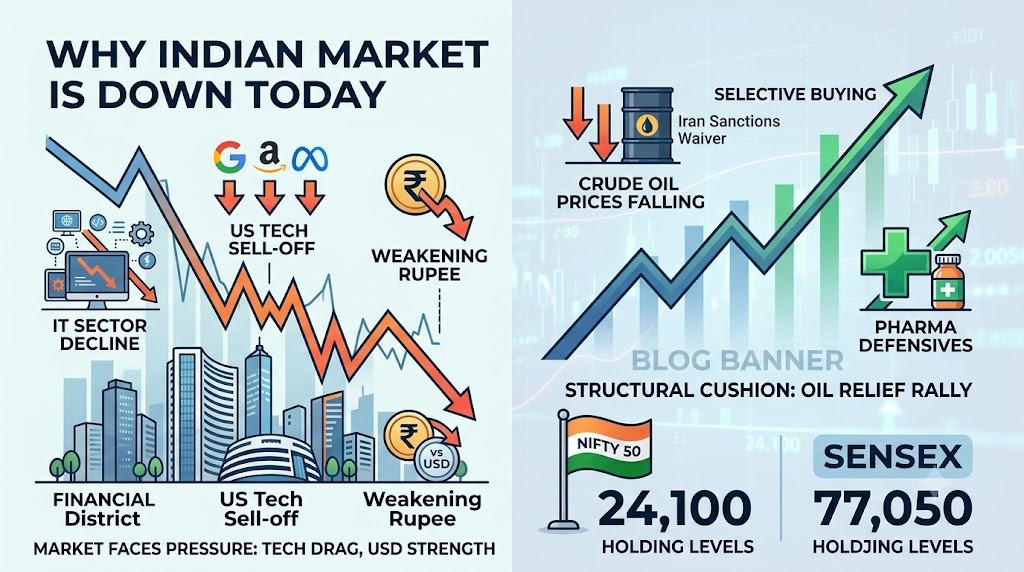
The Indian equity benchmarks, Nifty 50 and Sensex, started today’s trading session on a flat-to-negative note. While the market isn't witnessing an outright crash—with the Nifty hovering stubbornly around the 24,100 zone and the Sensex holding near 77,050—there is a palpable sense of caution on Dalal Street.
If you are wondering what is keeping the domestic market under pressure today, here is a breakdown of the primary global and domestic triggers driving today's market action.
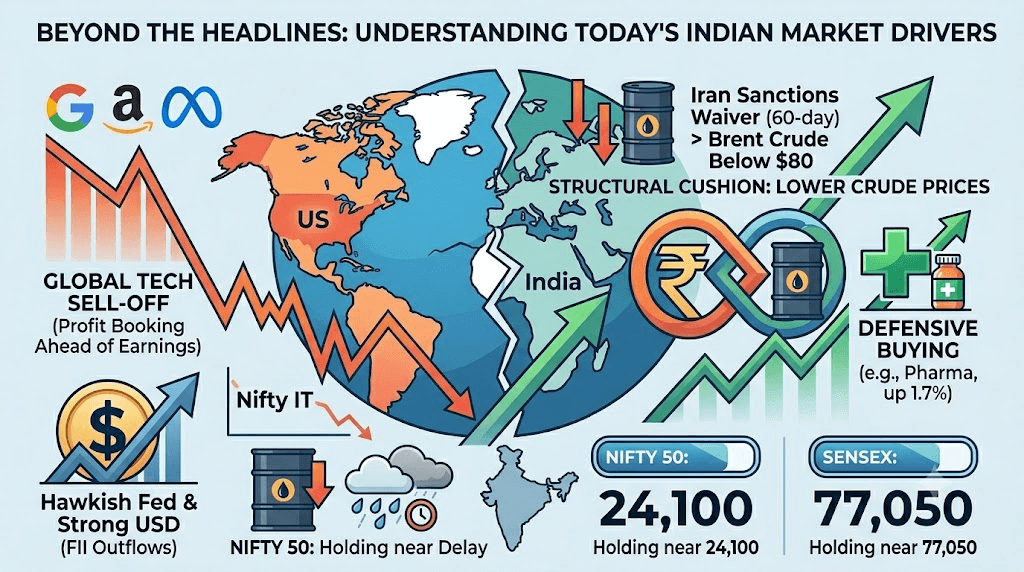
1. The Global Tech Meltdown Hits Indian IT
The single largest drag on the frontline indices today is the technology sector. The Nifty IT index dropped nearly 2% in early trade, heavily weighed down by sector bellwethers like Infosys and TCS, which shed between 2% and 2.8%.
This localized bleeding tracks a severe overnight sell-off on Wall Street. Major US tech giants—including Alphabet, which plummeted 5%, alongside notable slides in Meta, Amazon, and Microsoft—faced intense profit-booking. With crucial corporate earnings on the horizon, global institutional investors are reassessing high valuations in artificial intelligence and tech spending, sparking a domino effect across Indian tech equities.
2. A Persistent Strong Dollar and FII Outflows
The US Dollar Index continues to hold ground near a 13-month high. Backed by a hawkish stance from the US Federal Reserve and sticky global inflation forecasts, the strength of the greenback is working against emerging economies.
As a result, Foreign Institutional Investors (FIIs) have maintained a net-selling bias, pulling capital out of domestic equities. This sustained fund outflow has pushed the Indian Rupee to trade weakly around the 94.69 mark against the USD, compounding the cautious sentiment among local traders.
3. Domestic Headwinds: Sluggish Monsoon & Core Slowdown
On the domestic front, structural updates are keeping a lid on any immediate aggressive buying:
- Monsoon Progress: The southwest monsoon's relatively slow advancement is closely monitored by investors. Any prolonged delay raises minor flags regarding rural demand recovery and potential localized food inflation.
- Economic Data: Fresh data revealed that growth in India’s eight core industrial sectors cooled to 0.5% in May, representing its second-lowest level in almost two years. This minor deceleration in basic infrastructure output has prompted selective profit-booking in metal and cyclical stocks.
The Silver Lining: Why the Market Isn’t Crashing
Despite these pressing factors, the downside for Indian benchmarks remains strictly capped due to an impressive macro relief rally in energy.
Ongoing diplomatic progress in the US-Iran peace talks—headlined by an overnight 60-day sanctions waiver—has drastically eased supply disruption fears in the Middle East. Consequently, Brent crude oil prices have dropped comfortably below the $80 mark, trading near $77.50 per barrel. Because India imports over 80% of its oil requirement, this drop provides an immense cushion to the fiscal deficit, prompting strong defensive buying in alternative pockets like Nifty Pharma (up 1.7%) and keeping the broader market structure firmly intact.